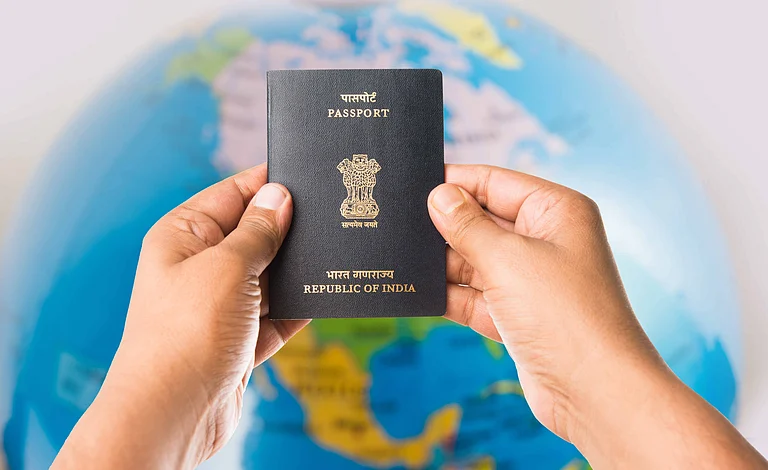
A summer in Switzerland, a Greek island-hopping adventure, or a business trip to Berlin—Europe remains high on the wishlist of Indian travellers. But for a growing number of applicants, those plans are being stalled before departure. Fresh data from the European Commission reveals that while India has emerged as one of the world's largest sources of Schengen visa applications, Indian travellers are also facing higher-than-average rejection rates, highlighting the challenges of navigating Europe's increasingly scrutinised visa system.
In 2025, Indians filed more than 1.15 million Schengen visa applications, making India the third-largest applicant country globally after China and Türkiye. Yet, despite this strong demand, around 181,000 applications were rejected. India's rejection rate stood at 15.8 per cent, slightly above the global average of 14.8 per cent. In practical terms, that means nearly one in every six Indian applicants did not receive a visa.
A Growing Demand
The numbers reflect India's expanding appetite for international travel. Rising disposable incomes, a growing middle class, stronger air connectivity, and increasing interest in both leisure and business travel have made Europe one of the most sought-after destinations for Indian travellers.
Of the 1.15 million applications submitted in 2025, nearly 967,000 visas were issued. A significant proportion were multiple-entry visas, signalling a growing pool of repeat visitors travelling to Europe for holidays, work commitments, family visits, and cultural experiences.
Yet, the headline figures reveal a more complicated reality. While overall Schengen visa demand has recovered steadily since the pandemic, approval rates remain far from uniform. Depending on which European country serves as the primary destination, applicants may encounter dramatically different outcomes—even under the same Schengen framework.
The disparity is striking. Countries such as Belgium, Denmark, Germany, Italy, and Switzerland recorded some of the highest approval rates for Indian applicants. Belgium approved more than 91 per cent of applications, while Denmark followed closely with an acceptance rate above 90 per cent. Germany, despite processing over 153,000 Indian applications—one of the highest volumes in Europe—maintained a relatively low rejection rate of around 10.5 per cent.
Rejection Rate Divide
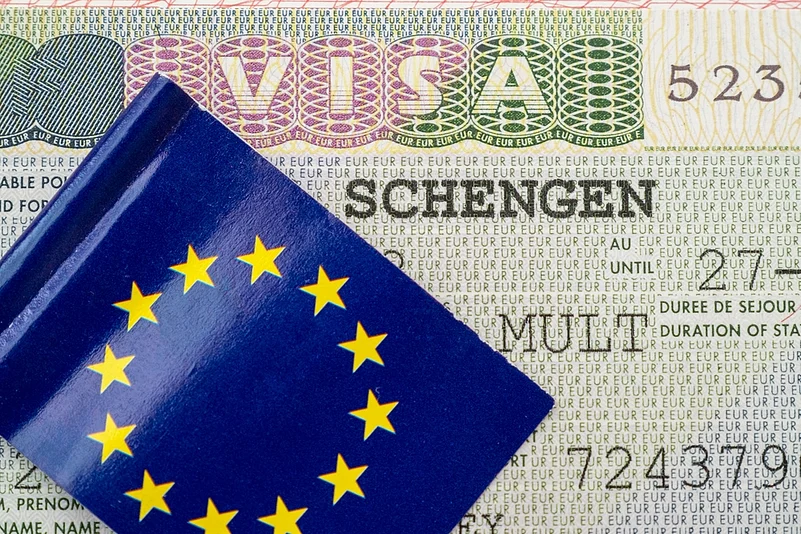

At the other end of the spectrum, several countries emerged as considerably more difficult destinations for Indian applicants. Slovenia reported the highest rejection rate, turning down nearly half of all applications it received from India. Bulgaria, Lithuania, Croatia, Greece, Malta, Slovakia, and Estonia also recorded notably high refusal rates.
Greece presents one of the most interesting examples. Despite being among the most popular European destinations for Indian travellers, it rejected roughly one-third of applications in 2025. Meanwhile, Germany, which handled significantly higher application volumes, maintained a far lower rejection rate.
Experts point out that rejection rates are influenced by several factors, including documentation quality, applicant profiles, local consular practices, and processing workloads. High-volume application centres often face enormous demand during peak travel periods, leading to greater scrutiny of submissions.
Another factor is documentation itself. Visa refusals frequently stem from incomplete paperwork, insufficient proof of funds, inconsistent financial records, weak evidence of ties to India, or vague travel plans. Travel insurance remains another common stumbling block. Schengen regulations require applicants to carry insurance coverage of at least EUR 30,000 for medical emergencies across member states, and policies that fail to meet the requirements can result in rejection.
Applying through the wrong consulate is another mistake that continues to catch travellers off guard. Under Schengen rules, applications must be submitted to the embassy or consulate of the country that serves as the main destination during the trip.
What Travellers Need
The latest data also suggests that timing may play a role. Peak travel months between May and September typically see longer processing periods, heavier appointment backlogs, and greater pressure on consular services. During these periods, travellers often face extended waiting times, with visa decisions sometimes arriving much closer to departure dates than expected.
For Indian travellers, the findings offer a useful reminder that a Schengen visa application is not merely a procedural formality. Strong financial documentation, a clearly planned itinerary, valid insurance, and convincing proof of return intentions have become more important than ever.
At the same time, the figures highlight India's growing importance to Europe's tourism economy. As one of the largest and fastest-growing outbound travel markets in the world, Indian travellers are contributing significantly to Europe's visitor numbers. However, with more than 181,000 applications rejected in a single year, visa uncertainty remains one of the biggest barriers standing between Indian travellers and their European holidays.
(With inputs from various sources)
FAQs
1. What was India's Schengen visa rejection rate in 2025?
India recorded a rejection rate of 15.8 per cent, slightly above the global average of 14.8 per cent.
2. Which Schengen country rejected the most Indian visa applications?
Slovenia had the highest rejection rate, refusing nearly 47 per cent of applications from India.
3. Which Schengen countries had the highest approval rates for Indians?
Belgium, Denmark, Germany, Italy, and Switzerland recorded some of the strongest approval rates.
4. What are the most common reasons for Schengen visa rejection?
Insufficient financial proof, incomplete documents, weak return ties, inadequate insurance, and applying to the wrong consulate.
5. How many Schengen visa applications did Indians submit in 2025?
Indian travellers submitted more than 1.15 million Schengen visa applications, making India the third-largest applicant nation globally.