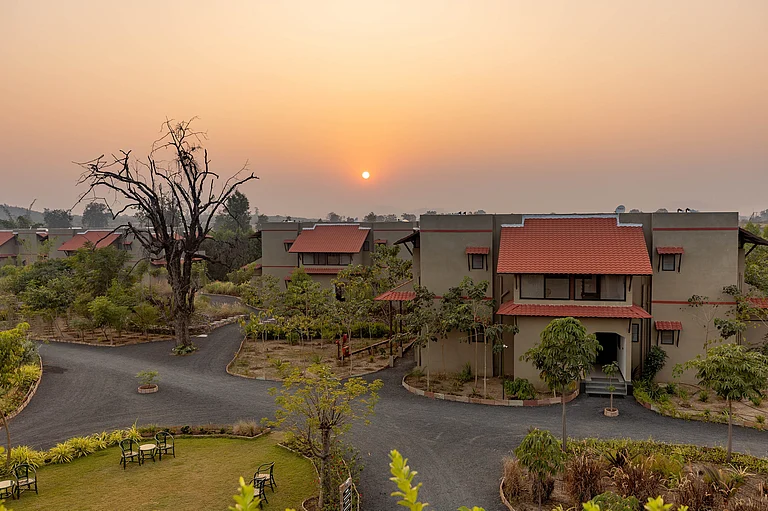
Satkosia has always existed slightly outside the usual vocabulary of Indian wildlife travel. In Odisha, where the Mahanadi River carves a deep gorge through the Eastern Ghats, the tiger reserve unfolds as a landscape of thick forests, river islands, and steep escarpments that has remained far quieter than many of the country’s better-known protected areas.
Dense sal forests, quiet riverbanks, crocodile habitats, and a silence broken only by birdsong have made it one of eastern India’s most compelling wildernesses. Now, the state is preparing to introduce a new chapter for the reserve, one that hopes to bring travellers closer to its wild beauty without compromising the fragile ecosystem that makes it so special in the first place.
Odisha is developing six new ecotourism hubs across Satkosia Tiger Reserve, spread between the Mahanadi and Satkosia divisions, in an effort to turn the protected landscape into a more accessible yet carefully managed nature destination. The project is being supported under the Centre’s Special Assistance to States for Capital Investment scheme, and aims to strengthen the reserve’s tourism infrastructure while keeping conservation firmly at the centre of the conversation.
A New Vision
The new hubs are planned across Chhamundia, Kusang, Purunakote, Jagannathpur, Baliput, and Tikarpada—locations chosen for their ecological significance as much as their visual appeal. Rather than introducing large-scale tourism infrastructure that feels disconnected from the landscape, the state appears to be focusing on smaller, low-impact interventions that allow visitors to experience Satkosia with more context and comfort.
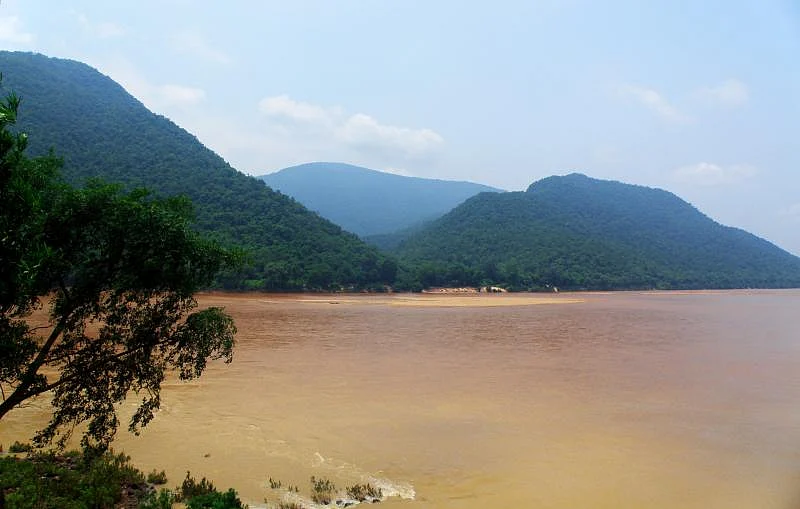
Across these sites, travellers can expect arrival plazas, interpretation centres, rest areas, canteens, and designated spaces for day visitors. In some locations, especially along the Mahanadi Gorge, riverside dining spaces and boating facilities are also being planned. The gorge itself remains one of the reserve’s defining features—a striking 21-kilometre stretch of river framed by forested hills, where fishing has already been prohibited to protect the endangered gharial population.
The idea is not simply to increase footfall, but to reshape how tourism works inside a protected forest. By distributing visitors across multiple zones instead of concentrating them in one area, authorities hope to reduce pressure on sensitive habitats while creating a richer, more immersive visitor experience.
Wildlife Returns

What makes this development more layered is that the tourism push is unfolding alongside a deeper ecological ambition. Satkosia is also preparing for the eventual return of tigers.
The National Tiger Conservation Authority approved the resumption of tiger translocation into the reserve in 2024 after an earlier relocation attempt in 2018 ended unsuccessfully. At present, neither of Satkosia’s two divisions has a resident tiger population, despite the reserve having all the natural ingredients needed to support one—prey base, forest cover, and river systems.
Before any translocation can begin, however, several conditions must be met. Among them is the relocation of two villages from the core area of the Mahanadi division, alongside a series of ecological and administrative measures outlined by the NTCA. The process is expected to be gradual, reflecting a more cautious approach than before.
That sequencing feels deliberate. First, build the infrastructure to support responsible visitation. Then, restore the wildlife that gives the landscape its deeper ecological identity. It is an unusually thoughtful approach in a country where tourism projects can often move faster than conservation planning.
People Included
For local communities living around the reserve, the new ecotourism model could bring more than just improved roads and visitor centres. Officials are positioning the project as a community-led tourism initiative, where residents can participate directly through guiding, transport, food services, hospitality, and small-scale enterprise.
That matters because sustainable tourism rarely succeeds when it excludes the people who know the forest best. By linking livelihoods to conservation, Satkosia’s redevelopment could encourage stronger local stewardship of the reserve while creating a more meaningful experience for visitors.
If executed with care, Satkosia may emerge as something India increasingly needs—an ecotourism destination that does not simply package wilderness for travellers, but protects the very landscape they come to see. In a time when many forest destinations are struggling to balance access with preservation, Odisha’s quiet experiment in Satkosia feels less like expansion and more like restoration.
FAQs
1. Where is Satkosia Tiger Reserve located?
Satkosia Tiger Reserve is located in Odisha, along the Mahanadi River in the Eastern Ghats.
2. How many ecotourism hubs are being developed?
Six new ecotourism hubs are being planned across the reserve.
3. Which areas are included in the project?
The sites include Chhamundia, Kusang, Purunakote, Jagannathpur, Baliput, and Tikarpada.
4. What facilities are being added?
Visitor centres, rest areas, eco-friendly amenities, boating zones, and interpretation spaces are part of the plan.
5. Why is the project significant?
It aims to improve tourism while supporting conservation and creating livelihoods for nearby communities.