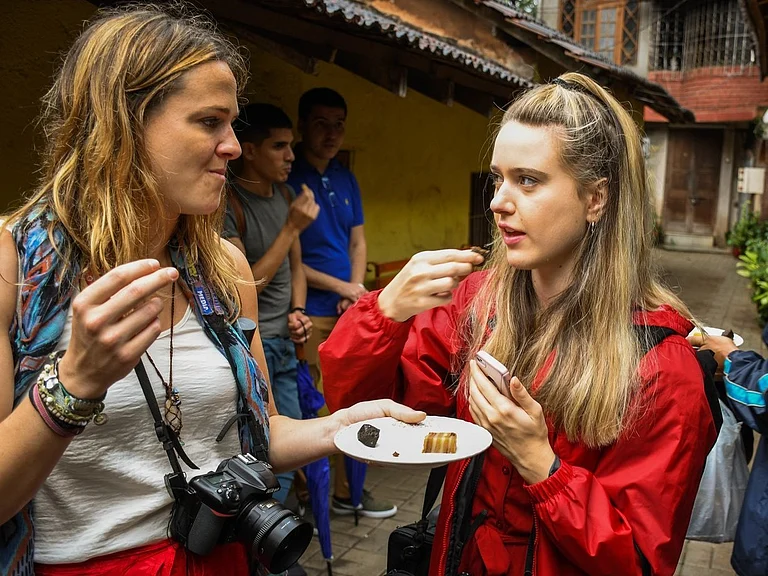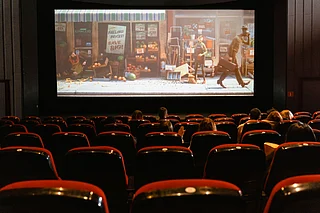


If you are in Goa right now, you could find yourself watching a Marathi film under the stars at Miramar Beach, catching a Konkani feature at Vagator's helipad, or heading to the open lawns of Ravindra Bhavan in Margao. Meanwhile, in Panaji, the streets and riverfront take on a distinctly cinematic atmosphere as filmmakers, actors, industry professionals, and film enthusiasts arrive for the International Film Festival of India (IFFI).
The 57th edition, being held from November 20 to 28, 2026, brings together more than 150 international films from 86 countries, alongside 76 films in 18 languages in its Indian cinema section. Spain is the Country of Honour, Russia the Partner Country, and the programme includes a special focus on BRICS cinema, restored classics, retrospectives, masterclasses, and emerging filmmakers. There is also the WAVES Film Bazaar, where the business of filmmaking takes centre stage. Established in 1952, the festival has called Goa its permanent home since 2004.
Can Film Festivals Boost Tourist Footfall?
'Do Film Festivals Attract Tourists?,' published in "Current Issues in Tourism," examined this question and found a positive relationship between hosting film festivals and inbound tourist numbers. The effect was more pronounced in countries with a stronger cultural and artistic orientation.
There are several ways this relationship can work. A festival draws people who might otherwise have no immediate reason to visit a particular city. They need accommodation, restaurants, local transport, and places to spend their free time. Industry professionals may stay longer for meetings and networking, while international media coverage introduces the destination to audiences who may consider visiting later. The festival can also influence how visitors perceive a city, encouraging them to return for reasons beyond the event itself.
International festivals offer some useful examples of how this relationship can translate into measurable economic activity. Consider the Sundance Film Festival in the United States. Its 2025 edition attracted 85,472 unique in-person attendees, of whom approximately 27,997, or 33 per cent, came from outside Utah, representing more than 20 countries. According to the festival's economic-impact report, out-of-state visitors spent an estimated USD 162.4 million in Utah during the event.


The Berlinale in Germany offers another interesting example, particularly because it combines a public film festival with a substantial industry marketplace. An assessment by Investitionsbank Berlin estimated that the 2024 edition generated approximately GBP 90 million in consumption-related economic activity, including spending by film enthusiasts, industry professionals, and journalists. One particularly revealing finding concerned the length of stay. The bank estimated that professional festival visitors remained in Berlin for approximately seven days, compared with an average of 2.5 days for an ordinary tourist.
With IFFI, Goa is building a similar connection between its international film event and its existing tourism economy.
What IFFI Brings To Goa
The WAVES Film Bazaar, which runs alongside IFFI, has grown from 204 delegates representing 18 countries in 2007 to a marketplace bringing together more than 2,500 film professionals from over 40 countries in 2026. It connects filmmakers, producers, buyers, and distributors through co-production opportunities, financing discussions, screenings, and networking. This brings a substantial professional audience to Goa, many of whom have reasons to engage with the destination beyond attending a film screening.
The festival's wider programme also creates opportunities for longer engagement. The 2026 edition includes the Creative Minds of Tomorrow initiative, which brings together 100 selected participants across 13 filmmaking crafts, alongside workshops, masterclasses, and panel discussions. Fourteen sessions are scheduled at Kala Academy, providing opportunities to interact with filmmakers and other industry professionals.
For travellers, this means IFFI offers more than a conventional red-carpet experience. One can attend screenings from different countries, discover regional Indian cinema, listen to conversations with filmmakers, and experience the professional and creative side of the industry. The festival creates a reason to visit Goa for a particular event, rather than simply choosing the state for its beaches or nightlife.
Cinema Beyond The Screening Hall

The most interesting part of IFFI's tourism potential perhaps lies outside its theatres. The festival has increasingly taken cinema into public spaces, making it accessible to people who may not necessarily be registered delegates or dedicated cinephiles.
At the 57th edition, screenings are spread across 13 indoor screens in Panaji, Porvorim, Margao, and Ponda, with a combined seating capacity of more than 4,000. But the programme does not end there. The official schedule includes open-air screenings at three locations: Miramar Beach, Vagator Beach's helipad area, and the open lawns adjoining Ravindra Bhavan in Margao. These screenings run between 7 p.m. and 10 p.m., bringing films into beachside and community settings. The selection includes familiar titles and regional cinema, with films such as “Natsamrat,” “Mukkam Post Bombilwadi,” and “The Wild Robot” featuring in the programme.
There is also IFFIMiles, a special festival space set up along the Mandovi promenade, opposite the Entertainment Society of Goa premises in Panaji. Open to registered delegates as well as the general public, it brings together activities celebrating cinema, art, culture, traditional crafts, and food. For someone visiting Goa during the festival, this offers a chance to experience the event without necessarily spending the day moving between screening halls.
The festival parade, themed "Celebrating the Joy of Cinema," is another public-facing attraction. Scheduled to move from the ESG premises towards Kala Academy, it features floats and cultural performances. There are also special screenings for children, introducing younger audiences to cinema through educational and entertaining films.
These initiatives encourage a wider exploration of the state. A visitor can spend the afternoon exploring Panaji's neighbourhoods, markets, and riverfront, stop for Goan food, and then attend an outdoor screening in the evening. Another might travel to Vagator or Margao for a film and combine it with time in the surrounding area. Cinema becomes an anchor for other experiences.

A Changing Travel Landscape
Goa's position as a major tourism destination is already established, with 10.8 million tourist arrivals in 2025, comprising approximately 10.28 million domestic and 517,802 foreign visitors. IFFI operates within this established tourism market. There is also a wider change in how people are approaching holidays. Sightseeing remains important, but travellers are increasingly looking for experiences that give a trip a particular character: attending a music festival, taking part in a food trail, watching a sporting event, or exploring a destination through its cultural calendar.
The 2025 India Holiday Report by Thomas Cook India and SOTC Travel offers an indication of this shift. Sixty per cent of those surveyed said they were seeking unique, experiential, or bucket-list holidays, while 54 per cent planned longer holidays, typically extending their trips by five to 10 days. The report also found that social media, OTT platforms, and films were increasingly influencing travel decisions for 60 per cent of respondents. India's film festival calendar is developing alongside these changing interests, and IFFI's strongest proposition is experiencing Goa not just as a place to unwind by the sea, but as a destination where, for nine days each November, the world of cinema becomes part of the holiday.
FAQs
1. When is the International Film Festival of India (IFFI) 2026 being held?
The 57th edition of IFFI is being held in Goa from November 20 to 28, 2026.
2. What can visitors expect at IFFI 2026?
Visitors can explore more than 150 international films from 86 countries, alongside 76 films in 18 languages in the Indian cinema section. The festival also features restored classics, retrospectives, masterclasses, industry discussions, and the WAVES Film Bazaar.
3. Where are the open-air screenings being held during IFFI 2026?
Open-air screenings are scheduled at Miramar Beach in Panaji, Vagator Beach's helipad area, and the open lawns adjoining Ravindra Bhavan in Margao. These screenings are scheduled between 7 p.m. and 10 p.m.
4. What is the WAVES Film Bazaar at IFFI?
The WAVES Film Bazaar is an industry marketplace held alongside IFFI. It brings together filmmakers, producers, buyers, and distributors for co-production opportunities, financing discussions, screenings, and networking.
5. How does IFFI contribute to tourism in Goa?
IFFI attracts filmmakers, industry professionals, international delegates, media representatives, and cinema enthusiasts to Goa. Its open-air screenings, public events, cultural activities, and industry programmes also encourage visitors to explore destinations beyond the state's beaches and conventional tourist attractions.