

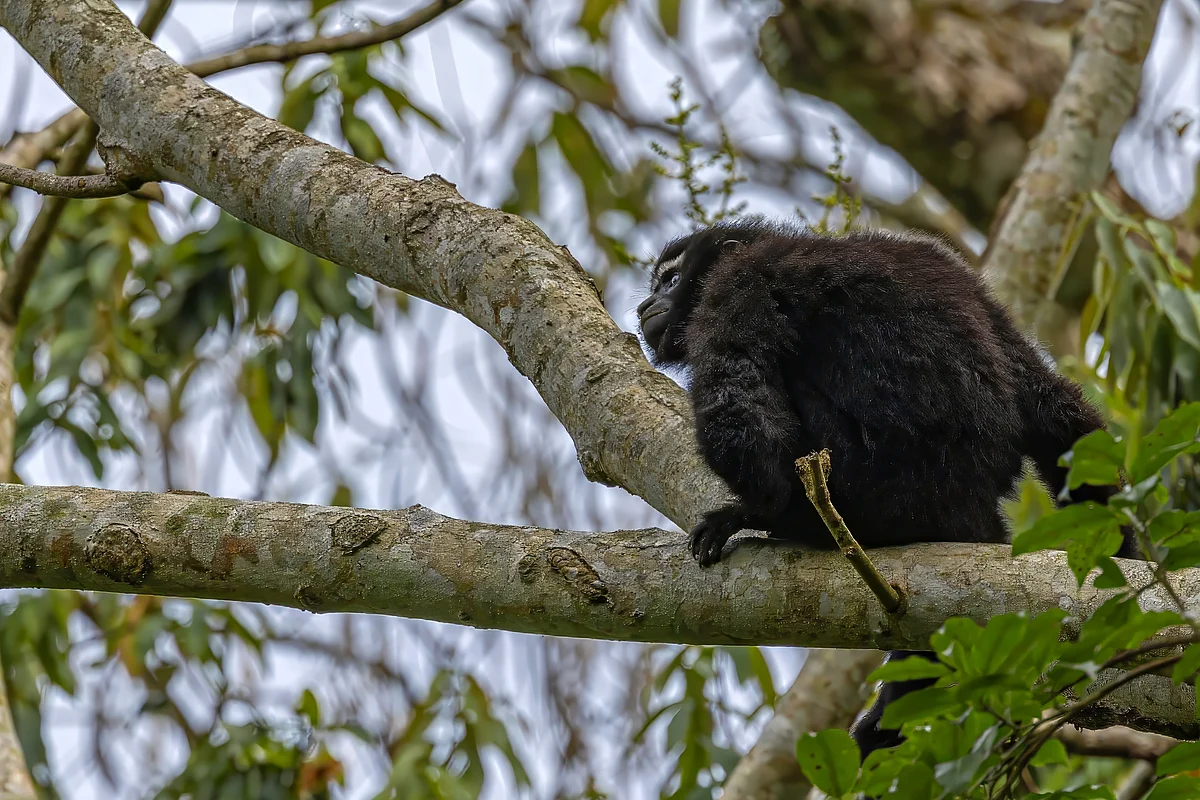
The Hollongapar Gibbon Sanctuary is home to India’s only ape species, the Western Hoolock Gibbons. The rare species continues to face an unprecedented threat from oil drilling projects and electrification of railways in the area.
Only 125 of them can be found in Assam, according to data released by a 2019 survey by the Wildlife Institute of India. These gibbons also occupy a place on the International Union for Conservation of Nature’s list of endangered species.
About The Hollongapar Sanctuary
The Hollongapar sanctuary gets its name from these gibbons. But it is also home to rich biodiversity including Bengal slow loris, stump tailed-macaque, northern pig-tailed macaque, Indian elephants, leopards, civets, wild boars and various types of squirrels, among other species. All these animals thrive under the canopy of the 12-13 m long Hollong trees.
The sanctuary spans 20.98 sq kms and has an eco-sensitive zone extending over 264.92 sq km. Eco-sensitive zones are areas rich in environmental resources and biodiversity that require special protection. Apart from its rich biodiversity, the sanctuary holds much ecological significance. It provides essential forest corridors that connect the Dissoi Valley Reserve forest and habitats in Nagaland.
What are Hoolock Gibbons?
While the total number of Hoolock gibbons remains unclear, they are mostly found in the forests of Nagaland, Meghalaya, Manipur, Arunachal Pradesh, Mizoram, and Assam. It is also one of the 20 gibbon species across the world that presently face existential threats. You can hear the calls of these 1.5 ft tall black and brown primates from afar.
The Hoolock gibbons are also built for an arboreal life. Their future relies on the restoration of dense canopies that enables their distinctive brachiation, which is a special form of arboreal locomotion. Its future relies on the restoration of forest cover and dense canopies that enable their locomotion. Intrusive oil-drilling expeditions and electrification of railways lines is becoming a threat to the sanctuary, and also to its wild inhabitant.
Oil Exploration Project Within The Sanctuary’s Eco-Sensitive Zone
An oil-exploration project valued at INR 264 crore that has been ratified by the state and central government has raised concerns about maintaining a balance between energy development and safeguarding the country’s wildlife. The exploration project is led by Cairn Oil & Gas, a subsidiary of the Vedanta Group.
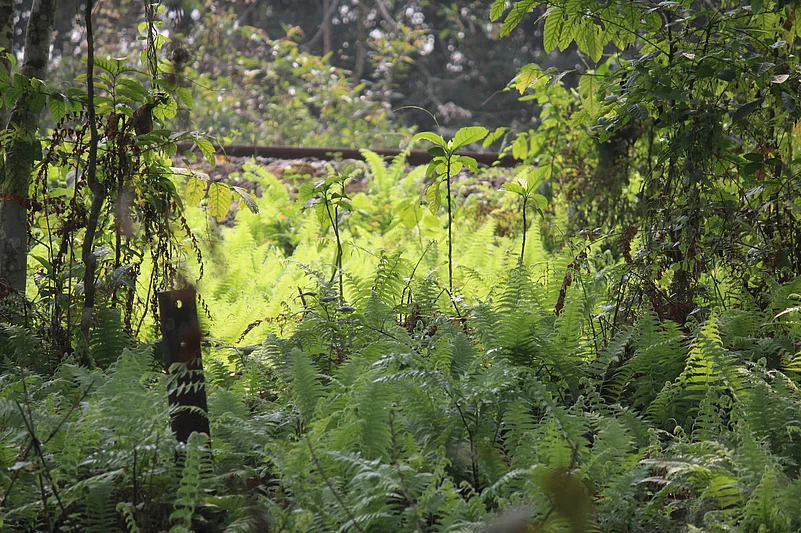

The site that has been chosen is 13 kms away from the Hollongapar Sanctuary, and covers around 4.5 hectares. Notably, it lies well within the sanctuary’s eco-sensitive zone.
The project started in August 2024 when the same was ratified by the state and central administration, including the Union Environment Ministry. Three months later, a site inspection took place on November 15, 2024.
Then, the team concluded that the exploratory drill would have limited environmental impact, and that the team has completely and strongly opposed any commercial drilling within the ESZ.
The project is defined as one being done for the purpose of hydrocarbon extraction and discovering its reserves. It is being conducted in the pursuit of Government of India’s aim to develop the northeast as a major hydrocarbon hub by 2030.
The National Board for Wildlife has imposed strict regulations including installation of digital surveillance systems in the area to monitor these drilling operations. It is also providing a detailed operational plan to regulatory bodies, ensuring minimal tree felling and strict pollution control measures.
Railway Line That Cuts Through The Sanctuary
The electrification of the nine-km-long Lumding-Dibrugarh section of the Northeast Frontier Railway has a 1.65 km stretch that also cuts through the sanctuary. Dividing the sanctuary into two unequal parts has concerned not only environmentalists, but also the locals.
The electrification of the stretch of the railway line that passes through the forest has affected the wildlife in the area and put their life at risk, as claimed by the locals. “I have submitted a written complaint with the forest department, state government, and even with the PMO. Allowing 25,000 watts to run through the railway line that cuts through a forest will prove to be lethal to our beloved wildlife,” said Jayanta Jyoti Sarmah, a naturalist who also runs the Gibbo eco camp.
The railway line also breaks the canopy that the endangered gibbons rely on for their locomotion and movement.