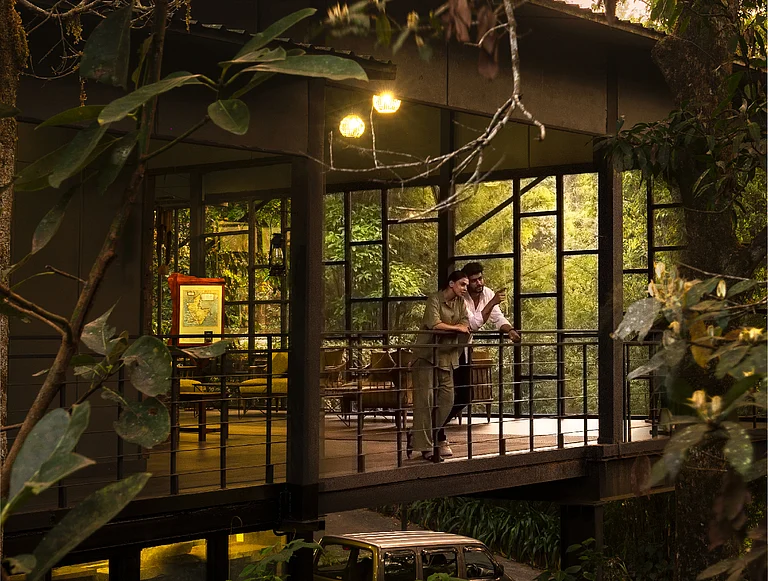
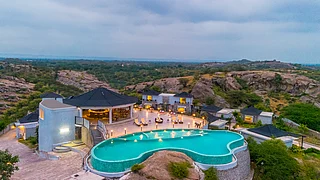
Somewhere between farms, forests, and mountain landscapes, a few people and initiatives are rethinking what it means to travel. This Earth Day, we take a look at six places that offer a chance to slow down and engage with nature more closely—not as a visitor passing through, but as a participant. Grounded in local knowledge and everyday sustainable practices, they open up ways to understand ecosystems, live alongside communities, and reconsider how our choices shape the environment.
Smell Of The Earth, Birbhum, West Bengal
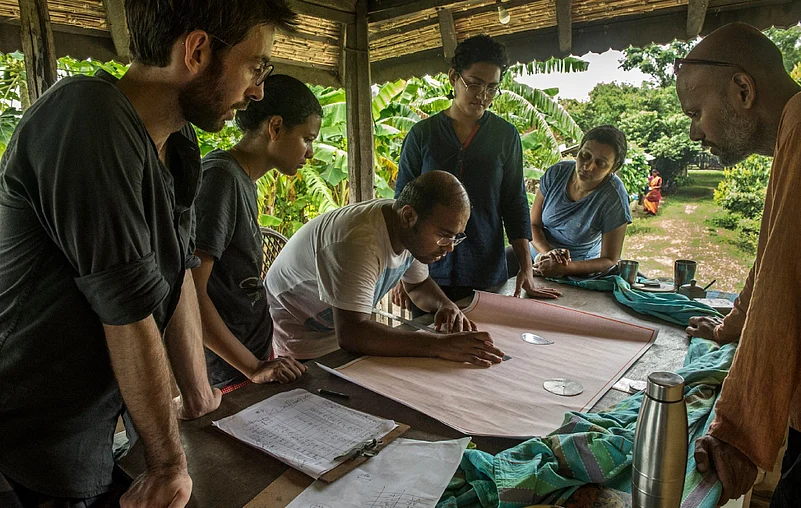

Tucked away in Birbhum, near Shantiniketan, Smell of the Earth is a quiet but powerful example of how sustainable living can be both intentional and deeply practical. Founded by Aparajita and Debal, a couple who left behind their lives in the United States to settle in Tagore’s homeland, the two-acre farmstead was once barren, degraded land. Today, it thrives as a self-sufficient ecosystem that meets nearly all of the family’s food needs—from rice, wheat, lentils, and vegetables to even fish.
At the heart of Smell of the Earth is the idea of reconnecting with how food is grown and understanding the environmental cost of conventional agriculture, which relies heavily on water, chemicals, fuel, and long supply chains. The farm demonstrates how permaculture principles can transform even small patches of land into highly productive, regenerative spaces.
Beyond farming, the space also functions as a learning hub. Aparajita and Debal, both certified permaculture designers, regularly host workshops and short courses on designing home food gardens and self-sustaining farms. Their message is simple yet radical: with the right design inspired by nature, even the smallest space can become a living, productive ecosystem.
Get In Touch
Phone: 097488 31271. Email: smelloftheearthkol@gmail.com. FB page: SmellOfTheEarth.
Address: PO Ruppur, West Bengal 731236
Spiti Ecosphere, Spiti Valley, Himachal Pradesh
High in the trans-Himalayan cold desert of Himachal Pradesh, Spiti is a landscape of stark beauty—rugged mountains, ancient monasteries, and fragile ecosystems that have sustained life for centuries. But this delicate balance is increasingly under pressure from unplanned tourism and climate stress.
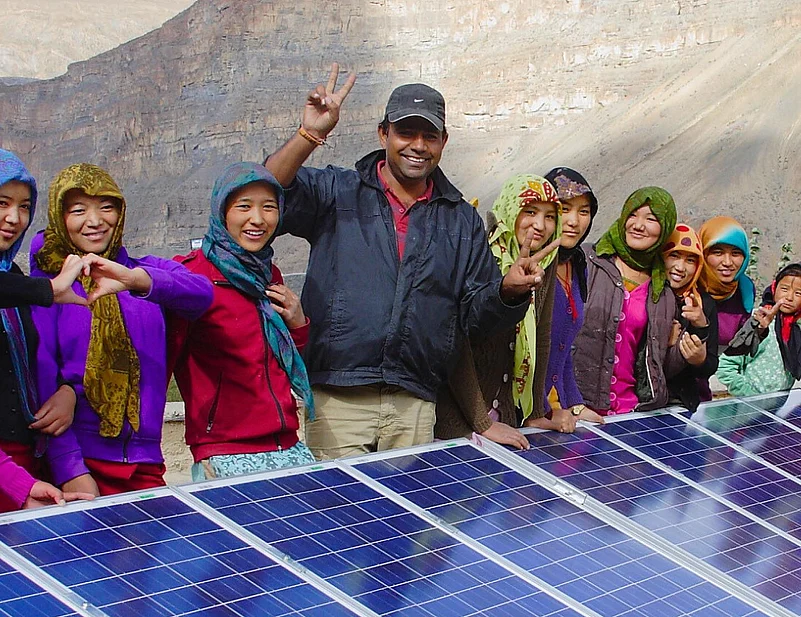
Spiti Ecosphere, based in the Spiti Valley, works to protect this environment while ensuring that local communities benefit directly from tourism. The organisation focuses on conservation-led travel and sustainable livelihoods, offering visitors a way to experience the region without adding to its ecological burden.
Travellers who take part in Ecosphere’s programmes stay in community-run homestays and explore the valley through low-impact treks that are designed to minimise pressure on the fragile terrain. Along the way, they are introduced to local efforts around water conservation, waste management, and adapting to life in a high-altitude desert.
The trips are designed to be carbon-positive, so tourism gives back more than it takes. Part of the income goes directly to local families and helps support livelihoods across the valley.
Alongside its travel work, Spiti Ecosphere supports community-led projects that mix traditional knowledge with practical sustainability measures, helping villages adapt to life in a changing high-altitude climate.
Get In Touch
Phone: 098994 92417. Website: spitiecosphere.com. FB page: EcosphereIndia.
Address: Main Market Kaza, Kaza, Spiti, Kaza Khas, Himachal Pradesh 172114
Kalinga Centre for Rainforest Ecology, Agumbe, Karnataka
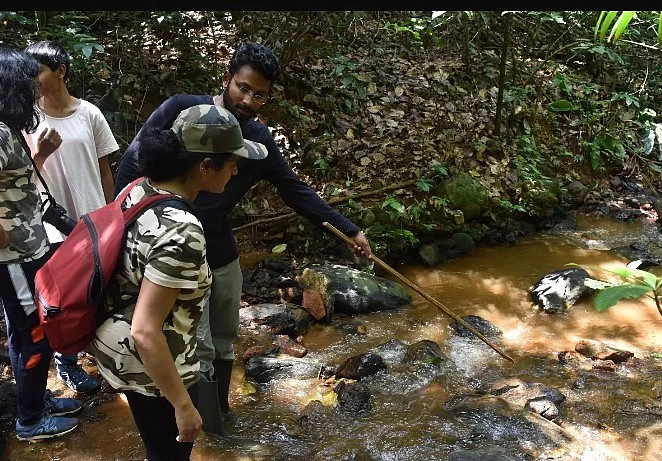
In the rainforests of Agumbe in Karnataka’s Western Ghats, the Kalinga Centre for Rainforest Ecology (KCRE) is a field-based hub for biodiversity work. Founded by herpetologist P. Gowri Shankar, it is known for its research on the King Cobra and other reptiles.
The centre runs hands-on training, workshops, and nature camps that bring participants into the field to learn about wildlife behaviour, ecology, and conservation practices. The place serves as both a field station and a learning space for those interested in biodiversity and conservation.
Alongside its research work, the centre is also involved in conservation efforts, including the rescue and relocation of King Cobras from nearby villages, while raising awareness about human–wildlife coexistence.
Set within dense forest and areca plantations, the Kalinga experience also offers simple, rustic stays and guided activities like night walks, stream treks, birdwatching, and wildlife photography—allowing visitors to experience the rainforest up close while learning from it.
Get In Touch
Phone: 094808 77670. Website: kalingacre.com. FB page: KaalingaCRE
Address: Kālinga Mane, Agumbe Hobli, Guddekere, Taluk, Thirthahalli, Karnataka 577411
Tieedi Forest Garden, Darjeeling, West Bengal
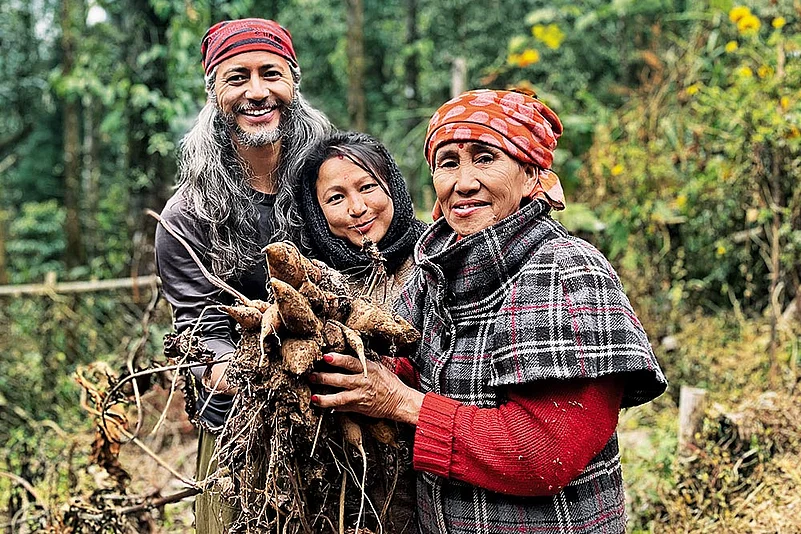
In the hills of Gorabari near Darjeeling, TIEEDI (Take It Easy, Easy Does It) is a regenerative living space built around permaculture and zero-waste principles. What was once a waste dump has been slowly transformed into a thriving forest garden since 2016.
The stays here are built using mud, bamboo and lime, keeping construction simple and in tune with the landscape. Options like the Air Dwelling and Brookside Dwelling are designed to blend into the forest surroundings rather than stand apart from them.
TIEEDI also functions as a working zero-waste farm, where large volumes of waste are processed daily and the land is steadily regenerated through permaculture. Visitors can join forest walks, help out in the gardens, and take part in small workshops such as bamboo weaving and soap making, with meals prepared from local, organic produce.
Get In Touch
Phone: 076028 13807. Website: tieedi.in. FB page: TIEEDI.
Address: 8 Mile, Gorabari, Darjeeling, West Bengal 734209
Vanvadi, Neral, Maharashtra
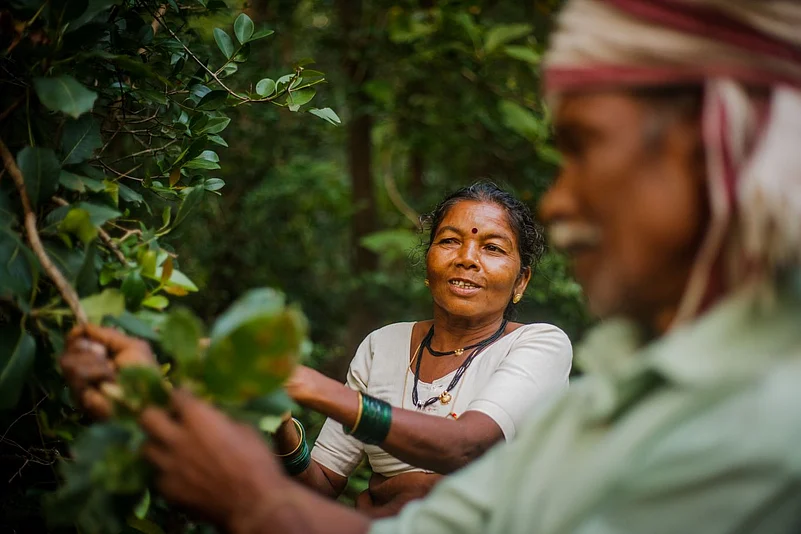
Near Neral in the Sahyadris, Vanvadi is a 65-acre patch of land that has been slowly turned back into forest since 1994. What was once a cleared, dry site is now thick with trees, streams in the monsoon, and a wide mix of native species.
The focus here is simple restoration. Adivasi women lead forest walks where visitors learn to spot and forage for wild foods. Small-scale natural farming is practised on the land, along with hands-on workshops on water harvesting, mud building, and other low-impact ways of living.
There’s little in the way of modern infrastructure, and that’s deliberate. Vanvadi runs on a low-resource model that keeps the land at the centre. Each year, it also hosts Vanutsav, a forest gathering that brings people together around ecology, food, and shared experience.
Get In Touch
They are in a remote location, without an address.
Website: vanvadi.in. FB page: vanvadiforest.
Wildernest Nature Resort, Chorla, Goa
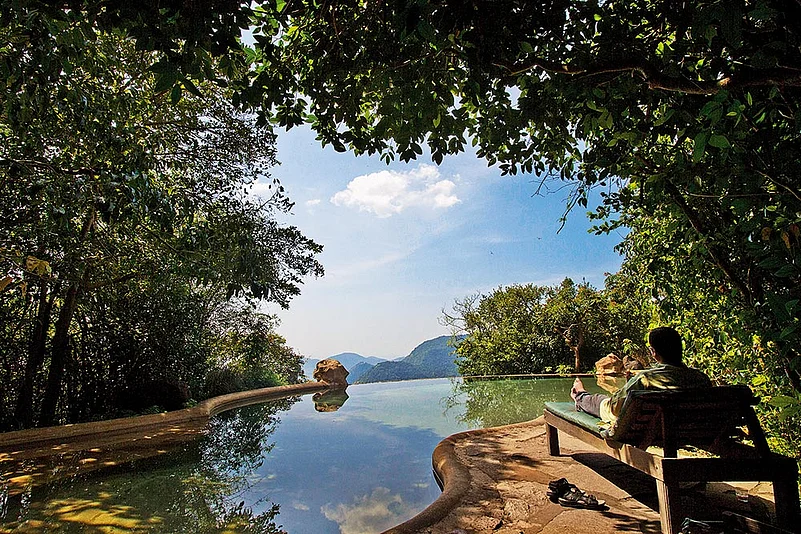
In the Mhadei region, where Goa, Karnataka and Maharashtra meet, Wildernest sits inside one of the Western Ghats’ most important wildlife corridors. It is a landscape that supports large mammals like tigers, leopards and wild dogs, but is also under constant pressure from mining and commercial agriculture.
Wildernest Nature Resort was built as a response to that threat. Started by Captain Nitin Dhond, along with conservationists like herpetologist Nirmal Kulkarni, the project was designed around the idea of minimal interference—keeping construction and human presence light on the land. It took years of careful planning and effort to create infrastructure that would blend into the forest rather than disrupt it.
Today, the resort operates on a small footprint within a much larger 900-acre private sanctuary called Swapnagandha Valley. Only a fraction of the land is built upon, while the rest remains forested and protected, helping safeguard water sources and reduce threats like poaching.
Alongside conservation, Wildernest also works with local communities by supporting alternative livelihoods and promoting low-impact practices such as waste recycling and reduced plastic use, making it both a tourism space and a working conservation model.
Get In Touch
Phone: 8314207954. FB page: wildernest.goa#. Website: wildernest-goa.com.
Address: Off Sankhali, Ghats, Chorla, Charavade, Goa 403708
FAQs
What is the common theme across these destinations?
All the places featured focus on sustainable living, conservation, and hands-on learning through travel experiences rooted in ecology.
Are these places just for tourism?
No, most of them combine travel with education, research, or community work—allowing visitors to actively engage with environmental practices.
What kind of experiences can travellers expect?
Experiences range from permaculture farming and forest ecology lessons to wildlife tracking, nature treks, and zero-waste living practices.
How do these initiatives support local communities?
They often work closely with local and indigenous communities by creating jobs, supporting livelihoods, and integrating traditional knowledge into their programmes.
Why are such places important today?
They offer alternatives to conventional tourism by reducing environmental impact and helping people reconnect with nature and sustainable ways of living.