The Karnataka forest department has ended open-vehicle safaris in tiger reserves and wildlife sanctuaries across the state after a string of wildlife-related incidents raised concerns over tourist safety. The decision comes days after a tourist was killed at the Dubare elephant camp in Kodagu.
Why The Ban Now
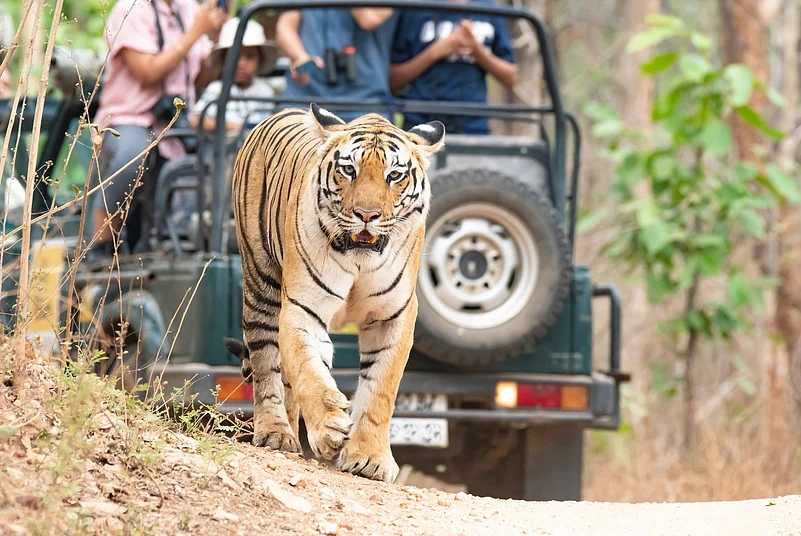
Bus safaris will replace the open-jeep model currently used in Karnataka’s tiger reserves and wildlife sanctuaries. Forest officials said existing safari vehicles will either be modified with iron mesh and reinforced glass or withdrawn in phases.
The move comes after several wildlife incidents reported across the state in recent months. Two leopard attacks were recorded at Bannerghatta earlier this year, while three people were killed in tiger attacks in the Bandipur-Nagarahole belt within a month last November. In another incident, a 10-year-old boy died after a leopard attack near Nagamale.
The state’s ecotourism sector had also been affected during a five-month halt on safaris, with estimated losses touching INR 3 crores a day.
Forest officials, however, pointed out that no tourist has been killed or injured during an open-jeep safari inside Karnataka’s tiger reserves. The decision to end the practice has been taken as a precautionary measure and will remain in force permanently.


Details Of The Ban And New Regulations
Affected areas: All five of Karnataka’s tiger reserves — Bandipur, Nagarahole, Kali (formerly Dandeli-Anshi), BRT, and Bhadra — along with major wildlife sanctuaries.
Vehicles: Open-top jeeps and campers are being phased out in favour of enclosed buses fitted with cages, iron mesh, or shatterproof glass.
Passenger safety: Tourists will not be allowed to step out of safari vehicles inside forest areas.
Emergency measures: The forest department is deploying ambulances and first-aid facilities near safari counters to respond to emergencies.
Impact On Wildlife
Studies on wildlife tourism have found that safari activities pose relatively little physical risk to visitors when regulations are followed, but can significantly disturb animals and forest ecosystems.
Behavioural changes: Vehicle movement, noise, and crowding can affect hunting behaviour, breeding patterns, and movement corridors, sometimes pushing animals away from core territories. The constant presence of vehicles causes documented spikes in stress hormones, which can affect reproduction and survival rates.
Habitat fragmentation: Roads, resorts, and tourism infrastructure reduce undisturbed forest cover and place added pressure on habitats already under stress, increasing the chances of human-animal encounters.
Disease transmission: Greater interaction between wildlife, humans, and domestic animals raises the risk of infectious diseases spreading within wild populations.
(With inputs from various sources)
FAQs
Why has Karnataka banned open-jeep safaris?
The state government said the decision was taken to reduce the risk of human-wildlife conflict and improve visitor safety inside protected forest areas.
Which areas are covered under the ban?
The ban applies to all five tiger reserves in Karnataka, along with wildlife sanctuaries operating safari services.
What will replace open-jeep safaris?
Forest authorities plan to introduce enclosed bus safaris. Existing safari vehicles may also be modified with iron mesh or shatterproof glass.
Have tourists been attacked during jeep safaris in Karnataka?
Forest officials have said there have been no recorded deaths or injuries involving tourists during open-jeep safaris inside Karnataka’s tiger reserves.
Why are conservationists concerned about safari tourism?
Researchers have pointed to issues such as disturbance to animal behaviour, habitat fragmentation and increased pressure on forest ecosystems due to tourism activity.