India’s aviation sector has entered an era of accelerated expansion, driven by rising passenger demand, infrastructure investment, and policy support. Over the last decade, the country has emerged as one of the world’s fastest-growing aviation markets, and by 2025, India had become the third-largest domestic aviation market globally. The growth trajectory has been supported by government-led initiatives to expand airport infrastructure.
Airport Expansion Accelerates In Flight
India’s operational airports have grown from 74 in 2014 to 165 today, with plans to expand the network up to 350 airports by 2047. The Airports Authority of India (AAI) has been central to this growth, overseeing airport development, infrastructure upgrades, and modernisation of air navigation systems. Major airport projects and terminal expansions are underway in cities such as Varanasi, Agra, Darbhanga, Jammu, Udaipur, Jodhpur, Bagdogra, and Hisar. Newly commissioned terminals in Patna, Datia, Satna, Tuticorin, and Purnea Airport are expected to improve regional connectivity and passenger movement.
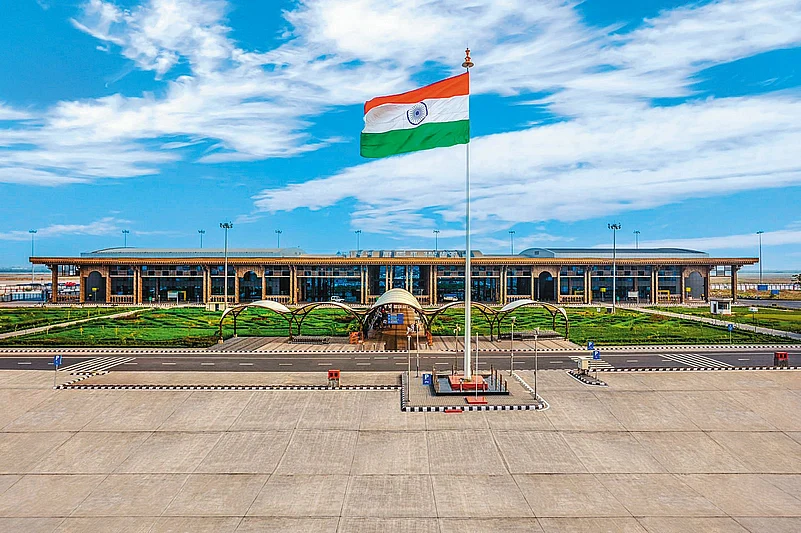

Regional aviation has expanded significantly under the “UDAN” (Ude Desh ka Aam Nagrik) scheme, launched in 2016 to improve connectivity in underserved and remote areas. The scheme has revived underutilised airstrips and improved access to regions where surface transport options remain limited. Under UDAN, 665 routes connecting 95 airports and heliports are operational, with more than 1.56 crore passengers using the service so far. Improved regional connectivity is increasingly supporting tourism, economic inclusion, trade, and emergency access in Tier-II & Tier-III cities. India’s aviation sector is projected to handle 500 million passengers annually by 2030, increasing demand for scalable infrastructure and efficient airport systems.
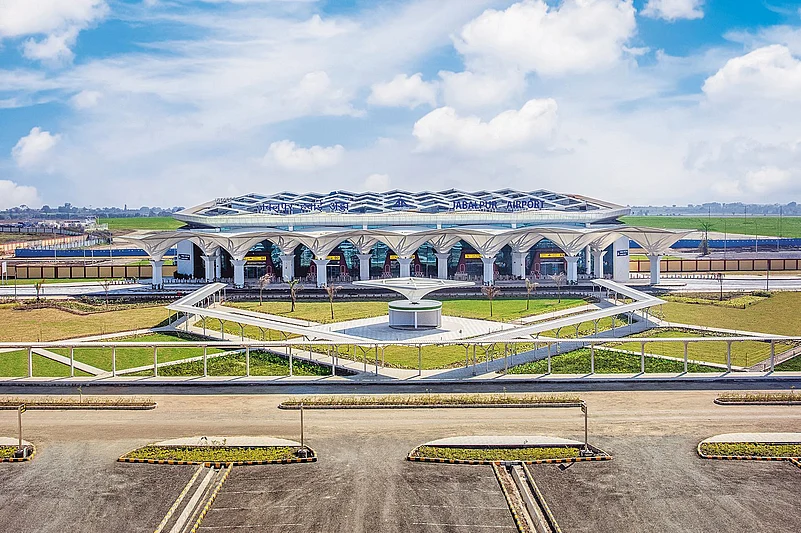
AAI has also strengthened aviation training and research through institutions in Prayagraj, Hyderabad, and Gondia, aimed at promoting innovation in air traffic management and airport operations, and at developing skilled aviation professionals.
India’s aviation ecosystem is also expanding through 40 operational Flying Training Organisations across multiple states, helping meet the rising demand for pilots and aviation personnel.
The Maintenance, Repair and Overhaul (MRO) sector is gaining momentum, supported by growing airline fleets and policies aimed at reducing reliance on overseas maintenance facilities. Industry experts believe a stronger domestic MRO industry could reduce foreign-exchange outflows, improve aircraft turnaround times, and create employment opportunities.
Digital Systems & Sustainability
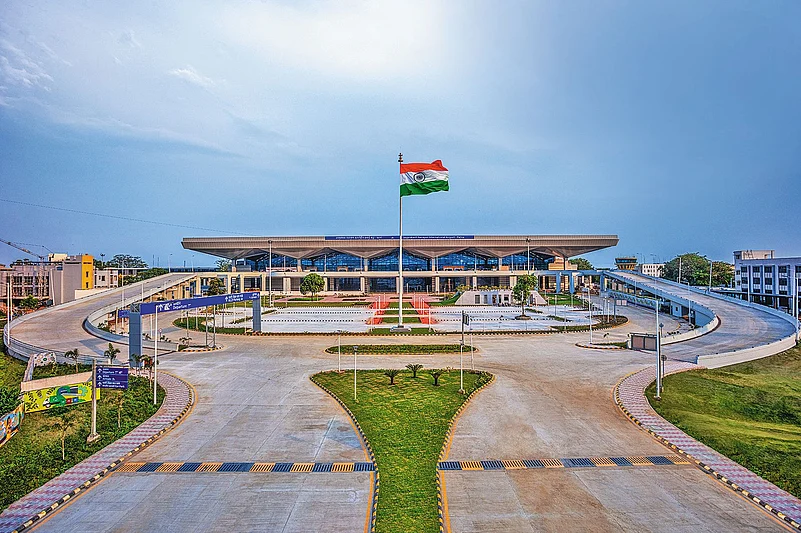
Technology adoption is transforming India’s aviation sector and passenger experience. Launched in 2022, Digi Yatra enables paperless, contactless airport travel using facial recognition. By March 2025, the platform had recorded 52.2 million users and 12.1 million app downloads.
AAI’s Sustainable Green Airports Mission (SUGAM), launched in 2023, promotes eco-friendly airport operations. Currently, 94 AAI airports run entirely on green energy, supporting India’s net zero goals. Airports are also increasingly incorporating regional art and cultural heritage into terminal design, reflecting a sense of place.
Aviation is expected to remain a key driver of India’s economic growth, mobility, and infrastructure expansion. India aims to become a globally competitive and selfreliant aviation hub by 2047.