


If Jaipur is called the Pink City, then Padmaa, with its salmon pink walls, perfectly fits in the narrative. Tucked away in a narrow lane behind Chaura Rasta, a little away from Maniharo Ka Rasta, Padmaa, Jaipur, is one such heritage boutique hotel where you come to escape the chaos and the daily adrenaline rush.
I found myself at Padmaa on an early December morning. The streets were still, shops’ shutters down. The walled city of Jaipur was yet to wake up.
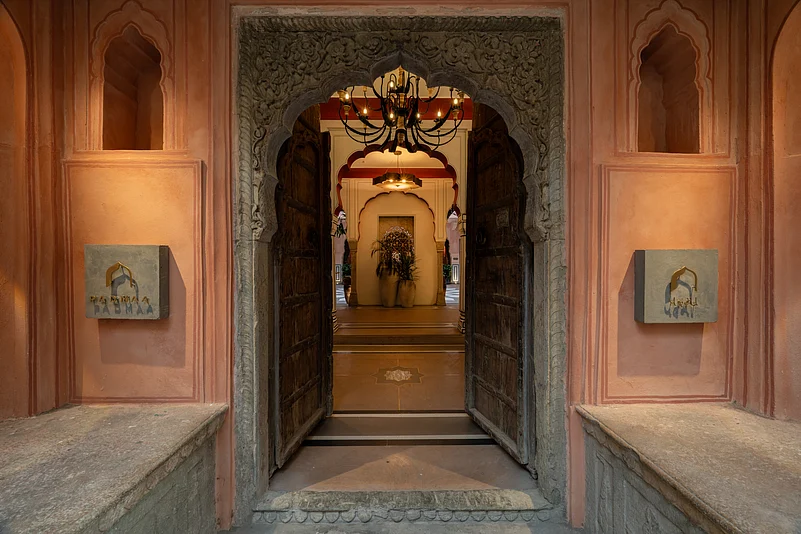
Indian classical music played as I entered through the doors of this 18th-century haveli. The wooden entrance door, carefully reinstated during restoration, still holds the authority of centuries. Outside, Chaura Rasta carried on as it always has, a historic thoroughfare once meant for royal processions and elephant marches, now a dense cultural corridor of temples, craft shops, and daily life. Inside, the tempo changed.
Padmaa stands deep within Jaipur’s walled city, restored into an all-suite luxury boutique hotel, yet anchored firmly in its original identity. It offers both retreat and context, allowing travellers to remain within the lived heart of old Jaipur rather than observing it from a distance. The first impression is not spectacle but continuity.
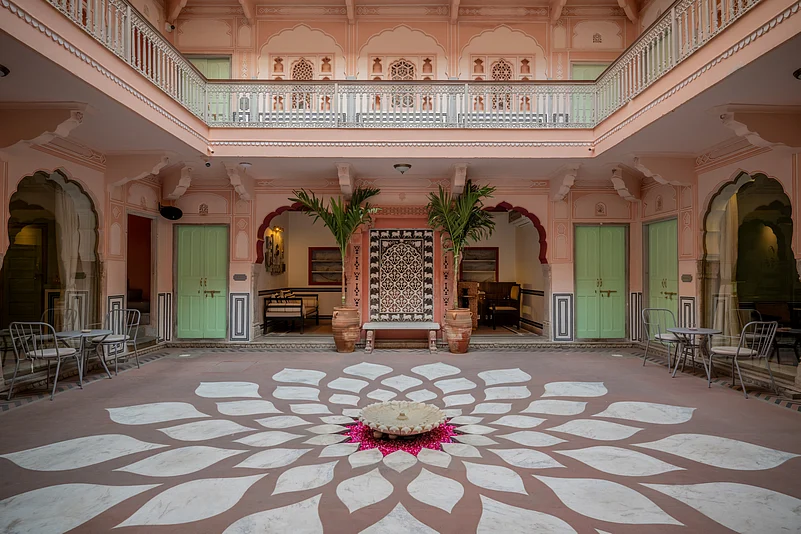

I took a tour of the property before heading to my room. The inner courtyard forms the core of the haveli, preserved with intricate stonework that recalls its domestic past. Hand-carved wooden jharokhas overlook the space, restored rather than replaced, their presence more architectural than decorative. Several sections of the haveli have been left untouched, which, I was told, was a deliberate choice that acknowledges time as a collaborator rather than an inconvenience.
Padmaa, Jaipur: A History
The history of the haveli is inseparable from the history of Jaipur itself. The foundation stone was laid in 1735 by Shri Seva Ram Ji at the royal summons of Sawai Jai Singh II. What began as a jewellery gaddi in Chaura Rasta gradually evolved into a family residence. Over seven generations of the Shah family, the four-room structure expanded into a haveli shaped by courtyards, chandnis, and domestic rituals. It has witnessed private celebrations and public transitions, absorbing both into its fabric.
The property takes its name from Shrimati Padmaa Devi Shah, the family’s grandmother, whose influence continues to define its ethos. The restoration has been led by her sons and grandchildren, the Shah family, also known as the custodians of Umrao Jewels, Jaipur’s heritage jewellery house. Their approach to Padmaa reflects a similar sensibility: respect for provenance, restraint in intervention, and an emphasis on longevity over novelty.
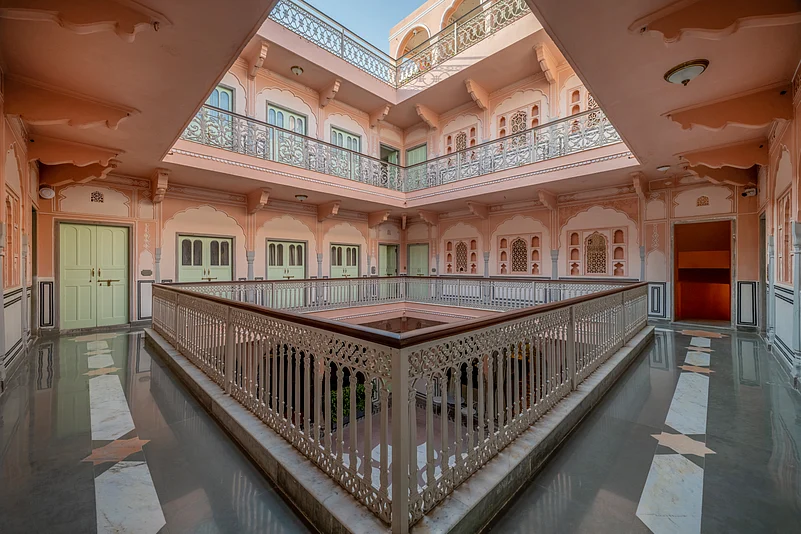
The architectural revival was led by Gagan Sharma, whose work in heritage conservation is known for its contextual clarity. Interiors were designed by Vaishnavi Bazaz of Studio Navee, who introduced a measured palette, heirloom references, and fine craftsmanship that align with the haveli’s original scale. The result is a property that bridges past and present without resorting to imitation or excess.
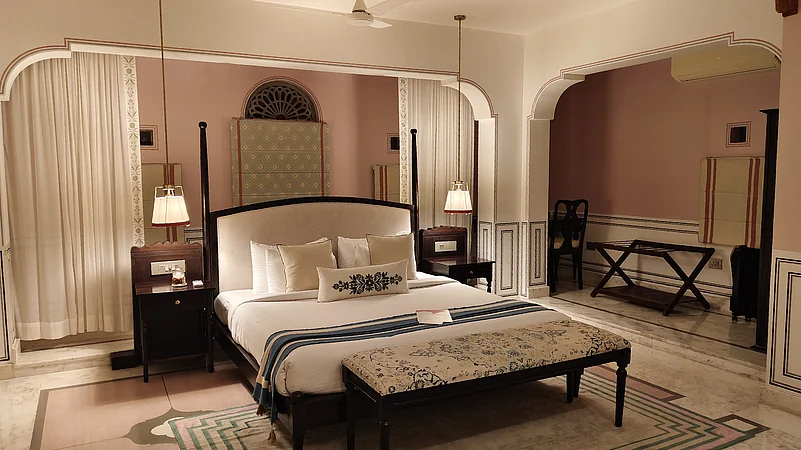
When I entered my room, the intent became clear. Each of Padmaa’s 15 suites is individually designed, drawing from the family’s legacy while offering contemporary amenities. The rooms prioritise comfort and proportion over ornamentation. There are nine Luxury Suites and six Heritage Suites, all shaped to feel residential rather than performative.
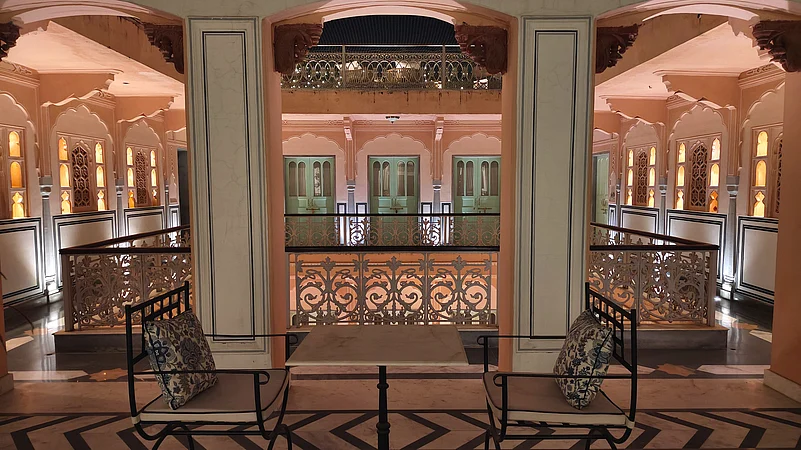
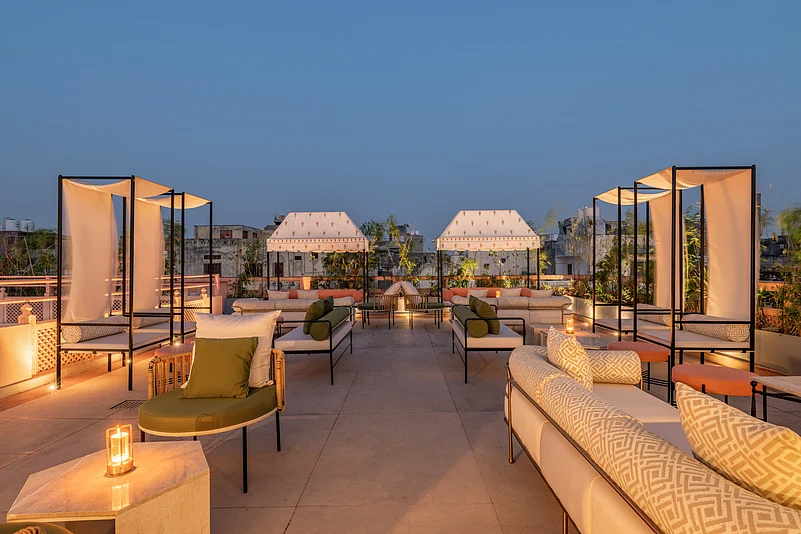
As evening arrived, I made my way to the upper levels of the haveli. Chandni, located on the second floor, offers insight into traditional architectural planning, functioning as both a passage and a pause. From there, the rooftop opened up to the city. Dinner was set on the open terrace, where Jaipur’s skyline stretched outward, layered, and familiar.
Meals At Padmaa, Jaipur
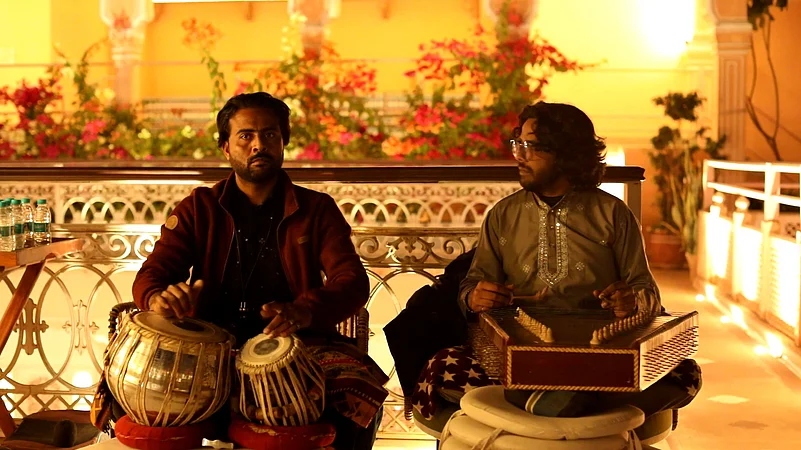
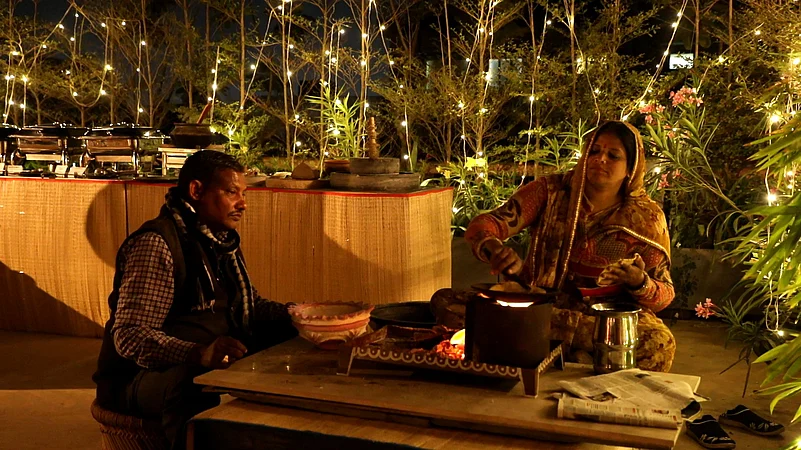
On the moonlit terrace, a local couple was preparing bajre ki roti beside a steady woodfire, its glow cutting through the December chill and lending the evening a welcome sense of warmth in Jaipur. Two musicians kept playing a Hindustani raga, a santoor accompanied by the tabla.
Dinner that night leaned firmly towards tradition. Along with bajre ki roti and garlic chutney, and familiar comforts like palak paneer, I was served raab. Known as bajre ki raab or raabdi, this winter staple from Rajasthan is a thin, soup-like preparation made from pearl millet flour cooked with buttermilk or water, valued for its nourishment, warmth, and ability to restore energy.
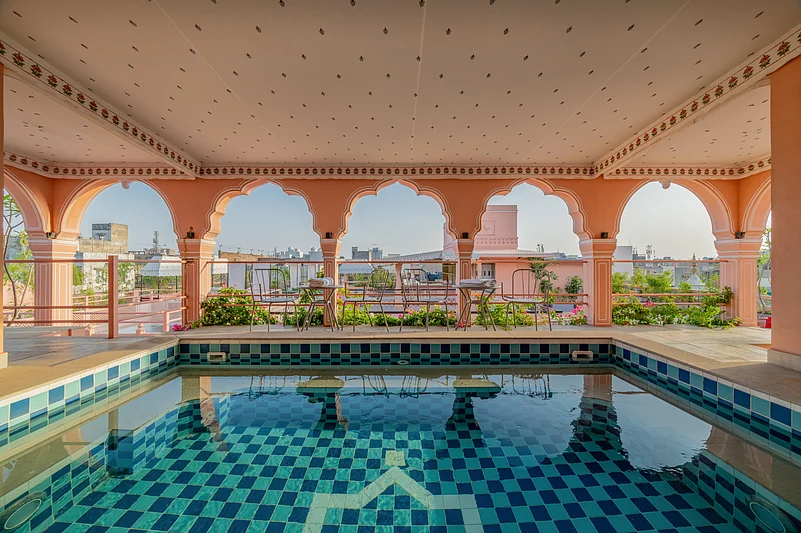
The rooftop also houses a bar and a pool, positioned to frame the changing colours of the sky. I ordered a picante, and it swept away most of the fatigue I had carried through the day. Padmaa, Jaipur features two bars in total, one within the courtyard and another on the terrace, both designed to complement their surroundings rather than compete with them.
The in-house restaurant, set within the courtyard, offers a menu that shifts comfortably between global fare and Rajasthani recipes preserved within the family for generations. If it is the taste of homemade daal baati churma you are after, this is where you will find it. Breakfast, too, is generous in both scope and time, with South Indian staples like idlis on offer and service extending till noon. “We want guests to feel at home,” Prateek Shah of the Shah family told me. “People arrive tired or seeking quiet. There is no reason to rush. Stay, settle in. Like Sundays or holidays growing up, when you woke up late, and breakfast was still waiting at home.”
What To Do While At Padmaa, Jaipur
Beyond dining, the property includes a rooftop plunge pool and an in-house spa, offering spaces intended for recovery rather than indulgence. Sunlit terraces and calm corners encourage stillness without prescription.
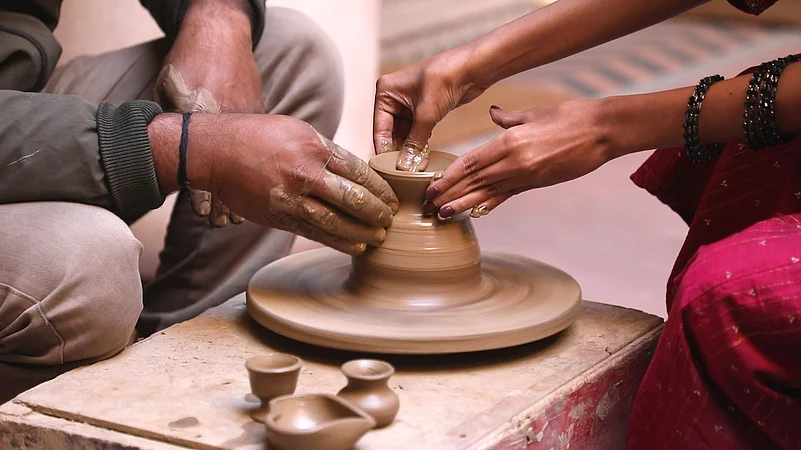
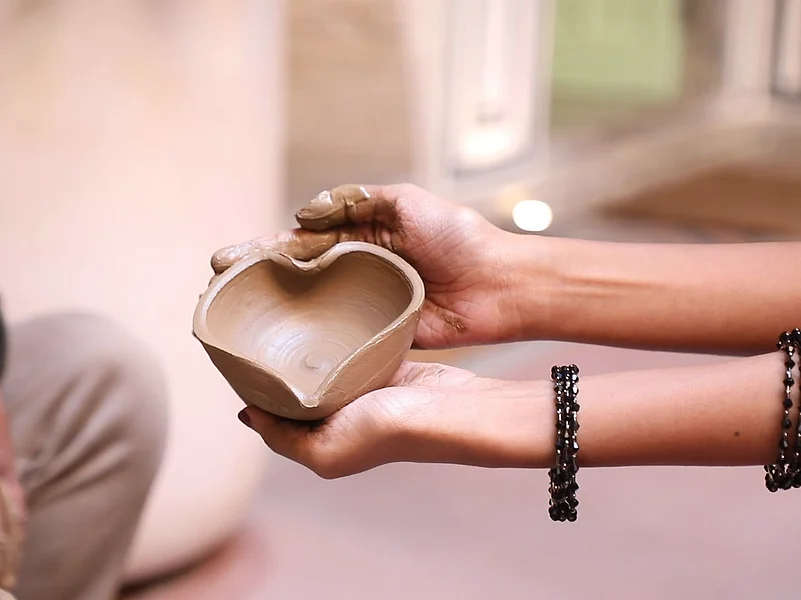
During my stay, I joined a morning pottery session and shaped a diya under the guidance of an expert who works with the property. Guests are welcome to participate in these sessions, which are conducted on-site and offer a tactile way to engage with traditional craft.
Padmaa also curates experiences that move beyond the haveli, placing guests within Jaipur’s larger cultural landscape. From getting customised lac bangles made at Maniharo ka Rasta to shopping through Bapu Bazaar or Johri Bazaar, the city reveals itself easily. Just beyond the walled city lie Amer Fort, Jal Mahal, and the City Palace, each within reach. These experiences are not positioned as add-ons, but as natural extensions of the family’s longstanding relationship with Jaipur.
By the time I left Padmaa, Jaipur, one thing that stood clear was that the haveli was not trying to preserve the past, nor was it eager to escape it. It exists in conversation with its history, shaped by family memory, careful restoration, and an understanding of place. Padmaa does not offer spectacle or nostalgia packaged for effect. It offers continuity. In a city accustomed to performance, it stands apart as a residence that has learned to host, where luxury is measured, hospitality is instinctive, and Jaipur is experienced not as a backdrop, but as a lived inheritance.
The Information
How to reach Padmaa, Jaipur: Padmaa is located in Jaipur’s walled city near Chaura Rasta. Jaipur International Airport is about 25 to 30 minutes away by taxi. Jaipur Junction railway station is a short drive, while Choti Chaupar and Badi Chaupar metro stations are within walking distance. Due to narrow lanes, the final approach is often by auto-rickshaw, with assistance from the hotel if needed.
Tariffs: Padmaa, Jaipur has 15 suites in total, including six Heritage Suites and nine Luxury Suites. Heritage Suites start at INR 17,500 plus taxes, with an approximate all-inclusive rate of INR 20,650. Luxury Suites start at INR 19,500 plus taxes, with an approximate all-inclusive rate of INR 23,010.
To book rooms, guests can call +91 96801 31132 or visit https://padmaajaipur.com/stay/
FAQs
1. Where is Padmaa located in Jaipur and why is its location significant?
Padmaa is located inside Jaipur’s walled city near Chaura Rasta, placing guests in the lived, historic heart of the Pink City rather than on its outskirts. The location allows easy access to markets, temples, craft lanes, and heritage landmarks.
2. What makes Padmaa different from other heritage hotels in Jaipur?
Padmaa is a restored 18th-century family haveli that prioritises continuity over spectacle. Instead of theatrical heritage décor, it offers lived-in luxury shaped by family history, careful restoration, and everyday rituals rooted in old Jaipur.
3. How many rooms does Padmaa, Jaipur have and what are the suite categories?
Padmaa has 15 all-suite rooms, including nine Luxury Suites and six Heritage Suites. Each suite is individually designed to feel residential, blending modern comforts with the haveli’s original proportions and architectural character.
4. What kind of dining experience can guests expect at Padmaa?
Dining at Padmaa focuses on slow, traditional meals served in the courtyard or on the rooftop terrace. Guests can expect Rajasthani dishes like bajre ki roti, raab, and daal baati churma alongside global options, with breakfast served unhurriedly until noon.
5. What activities and experiences are offered to guests staying at Padmaa?
Guests can participate in on-site experiences such as pottery sessions and enjoy amenities like a rooftop pool, spa, and bars. Padmaa also curates local experiences including market visits, craft shopping, and heritage sightseeing across Jaipur.


