

Santosham. Samadhanam. Samptripti. (Malayalam)
Happiness. Peace. Contentment.
The words have appeared repeatedly during my stays in Kerala over the years. In conversations, in brochures explaining Ayurveda, hotels focusing on wellness. Three simple words, yet they seem to describe something increasingly difficult to find.
A curious thing has happened to travel over the past few years. Rest, once an unremarkable part of a holiday, now comes packaged under various names—wellness retreats, digital detoxes, calmcations. Hotels promise fewer distractions, deeper sleep, and a temporary escape from the demands of modern life.
In Kerala, nobody seems particularly interested in giving it a new name.
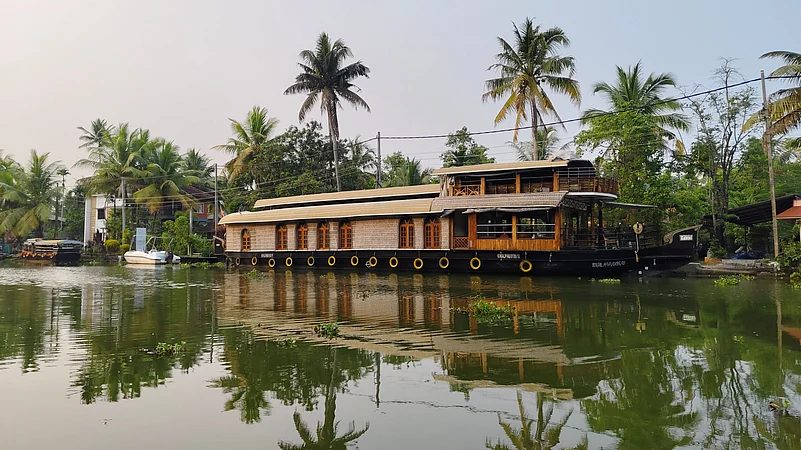

The backwaters continue to flow at their own pace. Fishermen continue to cast their nets at dawn. Ayurvedic treatments remain part of everyday life rather than a passing trend. Life proceeds much as it always has, largely indifferent to whatever terminology the travel industry may have invented this season.
It was this promise of stillness that brought me to Kumarakom and, eventually, to Niraamaya Retreats Backwaters and Beyond.
A Retreat Built Around The Lake
The road to Kumarakom grows greener with every kilometre. Coconut palms begin appearing in clusters. Water flashes intermittently between them. Then the Vembanad Lake arrives, vast enough to dominate the landscape.
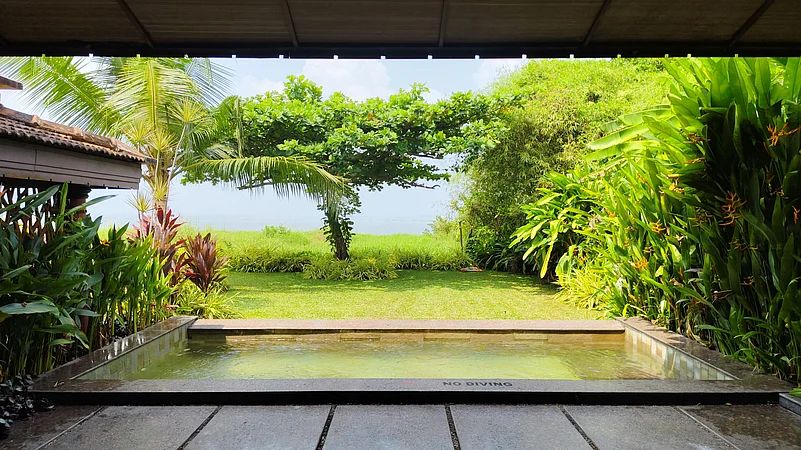
Niraamaya occupies seven acres along its banks. Pathways wind through gardens, linking villas, lawns, and common spaces. The lake remains a constant presence. It appears between rows of palms, beyond stretches of grass, and at the end of many walks through the property.

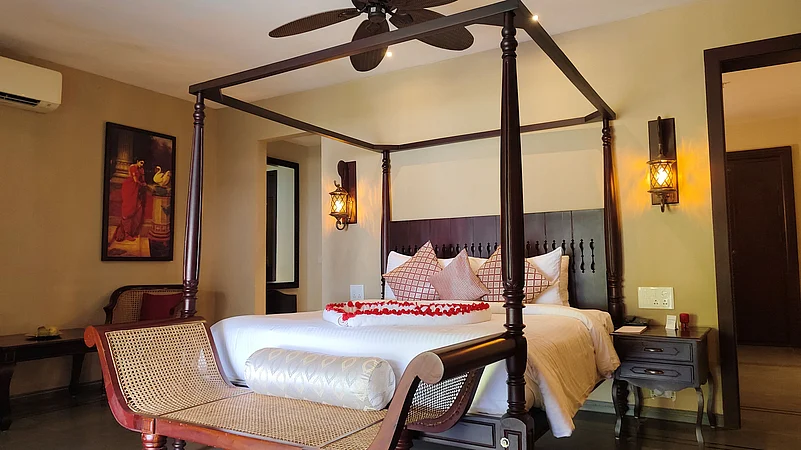
The retreat has 27 villas and suites spread across the grounds. I stayed in Tharavadu, a waterfront villa named after Kerala’s traditional ancestral homes. The architecture borrows from local design traditions—pitched roofs, wooden detailing, and deep verandahs designed for shade rather than display.
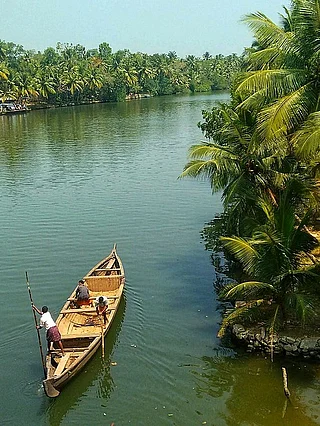
Most mornings began outdoors. A cup of tea or warm herbal water called chukku vellam, a light breeze from the water, and the occasional houseboat making its way across the lake. Fishermen passed by in narrow wooden boats. Egrets occupied the shallows.
Days acquired a gentle structure. Breakfast stretched longer than intended. Walks around the property often ended beside the water. Books remained open for hours. Nobody appeared particularly concerned with accomplishing very much.
That seemed perfectly acceptable in Kumarakom.
Into The Villages Of Kumarakom
The following morning, I boarded a small boat and headed into the villages that line the backwaters.
The journey took only a few minutes. We turned into narrower channels where homes stood close to the water and coconut palms leaned over the banks. At one such house, a family welcomed us into their courtyard and introduced us to the tree that appears to hold half of Kerala together.
The first lesson involved coir.
A mound of coconut husks occupied one corner of the yard. The fibres extracted from them were twisted into rope using a simple spinning device. The process looked straightforward while someone else was doing it. My attempt suggested otherwise. The rope I produced lacked both shape and conviction. The woman guiding me corrected it within seconds.

Mat weaving followed.
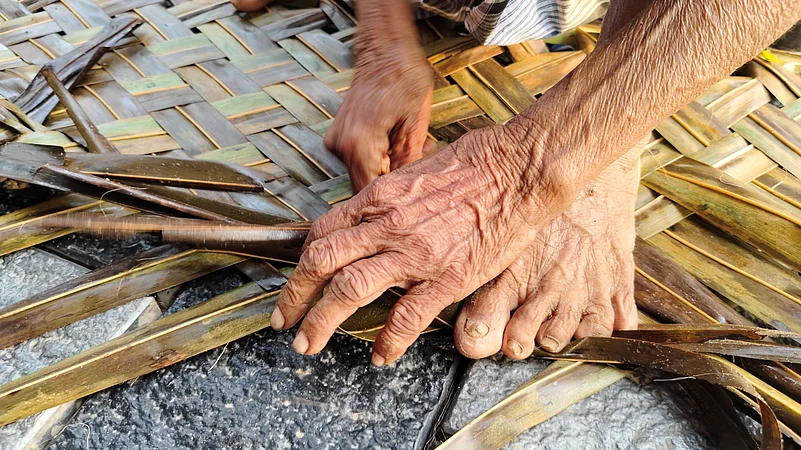
Seated on the floor, I watched palm fibres disappear into an intricate pattern. The woman beside me worked steadily, barely glancing at her hands. My own efforts required considerably more concentration and several helpful interventions.
A little further away, an elderly woman sat among stacks of coconut leaves. One by one, she folded and tied them into roofing panels. The movements were quick and economical. A pile of loose leaves gradually became a neat stack ready for use.
Another lesson came from the garden. One of the women plucked a handful of hibiscus leaves and showed me how they are transformed into a herbal shampoo commonly used at home.

The coconut palm surfaced again before long, this time in liquid form.
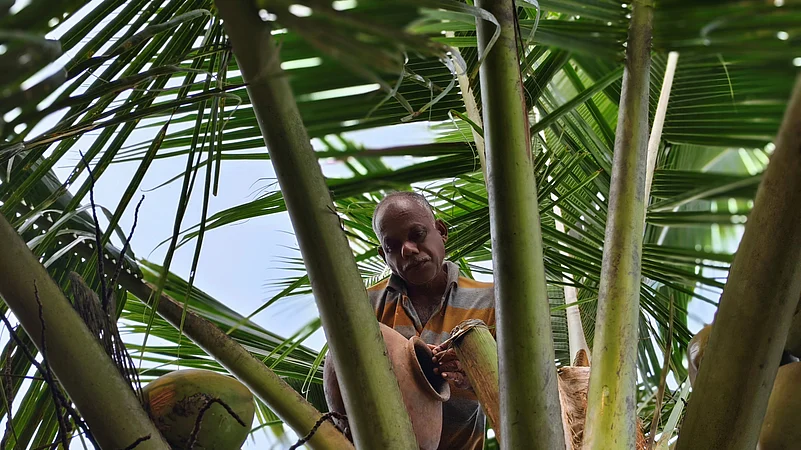
A toddy tapper arrived carrying a collection pot and a length of rope. Before the explanation was complete, he was already halfway up a coconut tree. Looking up from below, I found myself less interested in the toddy than in the climb. He moved with the assurance of someone repeating a task performed thousands of times before.
Fishing occupied the remainder of the morning.
A fisherman demonstrated traditional techniques used in the backwaters and spoke about water levels, seasons, and fish movements. The conversation moved easily between stories and instruction. Every answer seemed to reveal another layer of knowledge accumulated over the years on the water.

The remaining boat ride followed the same route. The channels were unchanged. So were the fishing boats and coconut palms. Yet the landscape appeared richer in detail.

Kumarakom Bird Sanctuary
The boat ride continued towards the wetlands surrounding the Kumarakom Bird Sanctuary. By then, the afternoon light had begun to soften, casting long shadows across the water. Kingfishers flashed between the trees in electric blue bursts. Egrets stood in the shallows, motionless and patient. A cormorant surfaced briefly before disappearing again. The waterways around the sanctuary are lined with mangroves, reeds, bamboo, and screw pines, creating a habitat for hundreds of resident and migratory bird species.

The life beneath the water is no less varied. Vembanad supports pearl spot fish, prawns, shrimp, catfish, and mullet, sustaining both the ecosystem and the fishing communities that depend on it. Every now and then, our boatman pointed towards a movement in the water or a bird hidden among the reeds, spotting details that most of us would have missed entirely.
As we entered the open waters of the lake, conversation gave way to silence. The egrets began returning to their roosts. A few darters skimmed low over the water. The sky shifted from gold to copper, then to a deep shade of pink. By the time the sun slipped below the horizon, Kumarakom had put on its final performance of the day. We turned the boat around and headed back to the resort.

The Spread At Cafe Samsara
Back at the resort, the evening unfolded on the performance deck overlooking the water. A Bharatanatyam recital marked the transition from day to night, accompanied by a round of mocktails. The sky was turning indigo by then, the last houseboats heading home across the lake.

Dinner followed, and as always in Kerala, I knew exactly what I wanted.
No trip to the state is complete without karimeen for me. This time was no different. The pearl spot arrived as meen pollichathu, wrapped and cooked in banana leaf, its flesh carrying the flavours of spices, coconut oil and curry leaves. Alongside came squid and a plate of crisp-fried kozhuva, better known across Kerala as netholi.

The retreat also offers cooking classes for guests interested in taking a piece of Kerala home with them. The previous afternoon, under the guidance of the chef, I had attempted a prawn curry enriched with coconut milk. My version required a little more encouragement than the chef’s, but the lesson made lunch considerably more satisfying.

Another highlight was the traditional sadya served on a banana leaf, complete with rice, sambar, avial, thoran, olan, pachadi, kichadi, pappadam, pickles, and payasam. For those skipping alcohol, the mocktails deserve special mention. Tropical Zest—a lively combination of raw mango, curry leaves, lemon, chilli, black salt, and soda—worked particularly well in the Kerala heat. The Tamarind Ginger Cooler proved equally memorable, balancing sharpness and spice in every sip.

Preventive Wellness In Practice
At Niraamaya, wellness is approached through the lens of prevention rather than treatment. The idea is simple: maintain balance before the body is forced to demand it. That philosophy shapes everything from the Ayurvedic therapies and yoga sessions to the food served at the restaurant.

The process begins with a consultation with the resident Ayurvedic doctor. In addition to recommending therapies, the doctor can also suggest dietary changes tailored to individual needs. Some guests follow customised meal plans during their stay, while others seek advice on habits they can carry home. The focus remains on everyday well-being rather than quick fixes.
Practices such as wellness walks, trataka meditation, bonfire cleansing rituals, sound healing sessions, and yoga encourage guests to build sustainable habits that support physical vitality, mental clarity, and emotional well-being, Gourav Deb, chief of operations at Niraamaya Life, shared with Outlook Traveller.

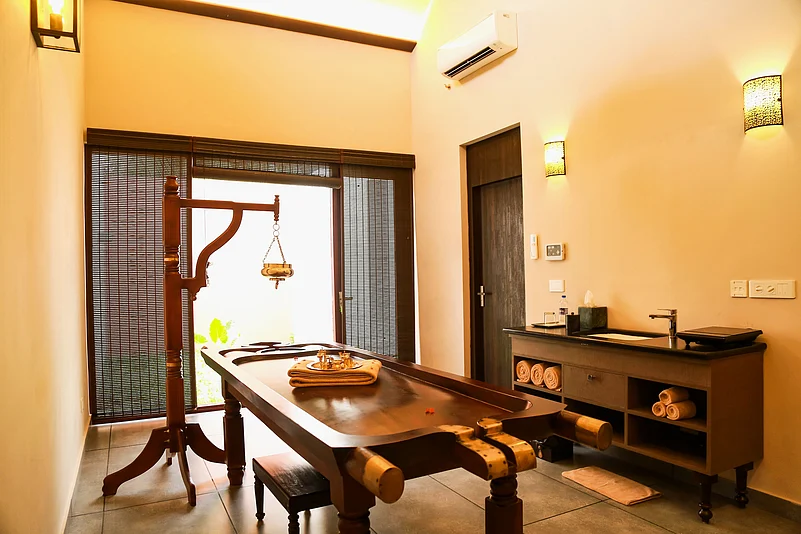
One afternoon, after returning from the village excursion, I headed to the spa for an Ayurvedic treatment. Warm herbal oils like Ksheerabala, Balaswagandhadi, Karpooradi, and Nalpamaradi, practised hands, and an hour with nowhere else to be proved a welcome combination. The next morning, a yoga session by the backwaters would offer a gentler start to the day than my usual relationship with an alarm clock.
Wellness at the retreat isn’t limited to the spa. There are activities designed to occupy the mind as much as the body. I signed up for a pottery session and spent half an hour at the wheel attempting to turn lumps of clay into something recognisable. Under the instructor’s guidance, I managed a drinking glass and a small vase—both far from perfect, but considerably better than they had any right to be.

Sustainability forms another part of the experience. Guests can participate in activities such as planting coconut saplings; I planted one myself during my stay.
Like much else at Niraamaya, the experience required patience, attention, and a willingness to slow down.

Kerala’s approach to wellness has always struck me as refreshingly practical. It isn’t presented as a grand reinvention of the self. It is woven into everyday habits—what you eat, how you move, when you rest, and how closely you pay attention to your body.
On my final afternoon, the glass and vase from the pottery session were left to dry in a corner of the workshop. The fishermen were still out on the lake. Houseboats continued their slow progress across the water. Nothing much had changed in Kumarakom during my stay.
The backwaters remained where they had always been. The coconut palms continued to sway above the canals. The routines of village life carried on as they had the day before and the day before that.
I was the one returning home.

FAQs
1. What makes Niraamaya Retreats Kumarakom different from other wellness resorts?
Niraamaya Retreats Kumarakom combines Ayurvedic therapies with village experiences, backwater cruises, local cuisine, yoga, meditation, and sustainable activities, creating a holistic approach to preventive wellness.
2. What wellness experiences are offered at Niraamaya Retreats Kumarakom?
Guests can enjoy Ayurvedic consultations, spa therapies, yoga sessions, sound healing, trataka meditation, wellness walks, bonfire cleansing rituals, and customised wellness programmes.
3. What local experiences can travellers enjoy in Kumarakom?
Visitors can explore village life through coir making, mat weaving, toddy tapping, fishing demonstrations, herbal shampoo preparation, and backwater boat rides.
4. Is Niraamaya Retreats Kumarakom suitable for nature lovers?
Yes. The retreat sits on the banks of Vembanad Lake and offers easy access to wetlands, birdwatching areas around Kumarakom Bird Sanctuary, and scenic backwater experiences.
5. Does Niraamaya Retreats Kumarakom focus on sustainability?
The resort incorporates sustainability initiatives such as coconut sapling plantation, community-based village experiences, local sourcing, and wellness practices rooted in Kerala’s traditional lifestyle.