

The first clue that the architecture here has lived many lives is the threshold. At Kumarakom Lake Resort, beside Vembanad Lake, the wooden padi at Ettukettu restaurant rises higher than a modern doorway would demand. In a traditional Kerala home, it helped keep out monsoon water, snakes and insects. Stepping over it also prompts a visitor to lower their head slightly, a gesture traditionally seen as a sign of respect towards the house being entered.
Originally located more than 14 km away from the lake, the mansion was commissioned by King Marthanda Verma for a martial arts guru in appreciation of his teachings. It was dismantled, transported piece by piece and reassembled at the resort over four years, becoming part of a property built around the architectural heritage of old Kerala homes. Over the years, 106 homesteads and architectural elements were bought or salvaged from houses across the state and given new uses here. Another mansion, once belonging to a family of Ayurvedic practitioners, was dismantled and reconstructed as Ayurnama, the resort’s Ayurveda spa.


A House In Pieces
Moving an old Kerala house is possible because of the way many of them were originally built.
Traditional wooden architecture in the state often relied on precisely cut joints rather than nails. “Every piece is unique, and the pieces fit into one another,” said Monolita Chatterjee, architect, heritage conservation specialist and Chairperson of the Kerala Chapter of the Indian Institute of Architects.

During dismantling, the ashari, or carpenter, and his team number every component. A beam cannot simply be replaced by another of roughly the same dimensions. Ideally, the same craftsmen then reconstruct the house at its new site.
Relocation brings another challenge. Bathrooms, wiring, plumbing and other modern requirements must be introduced into structures that were never designed for them. Chatterjee is careful, however, about calling this heritage conservation. Once a building is removed from its original location and context, she said, the process is better understood as recycling and repurposing. But that too has value. “Otherwise, all these beautiful wooden structures would become nothing more than firewood.”

What The Water Remembers
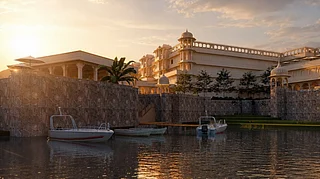
For Chatterjee, however, Kumarakom’s conservation story extends beyond timber and architecture. The landscape is defined by canals and drainage networks feeding Vembanad Lake. Retaining these channels, she said, is an important form of topographical conservation, particularly as encroachment and blocked waterways can contribute to flooding further inland. For a resort built so closely around the backwaters, that relationship with water has not always been picturesque.
Just before 6 am on July 27, 2002, two years after the resort opened its gates, news reached the property that a government ferry travelling from Muhamma had capsized in Vembanad Lake, barely a kilometre from Kumarakom jetty. The resort’s boat drivers and crew headed onto the lake and, alongside local fishermen, began helping pull passengers from the water. Many were saved that morning; others did not survive. For Chairman Paul P John, the incident came to define something fundamental about the property’s relationship with Kumarakom. “It reminded us that we are not simply a resort on the lake; we are part of the community that lives on it.”

The resort has accumulated lighter memories, too. When Prince Charles, then Prince of Wales, celebrated his 65th birthday here with Camilla, Duchess of Cornwall, one experience reportedly stayed with him: bathing beneath the stars in one of the resort’s open-to-sky bathrooms.
More than two decades of guests have since passed through Kumarakom Lake Resort. But perhaps its most enduring story remains embedded in the buildings themselves. The houses have travelled, their purposes have changed, and the families who once occupied them are gone. Yet a threshold still asks you to bow your head.
The Information
Address: Kumarakom North Post, Kottayam, Kerala 686563
Keys: 72 rooms, heritage villas and houseboats
Connectivity: Approx. 75 km from Cochin International Airport and 15 km from Kottayam Railway Station. Kottayam is around a 30-minute drive from the resort.
Website: kumarakomlakeresort.in