

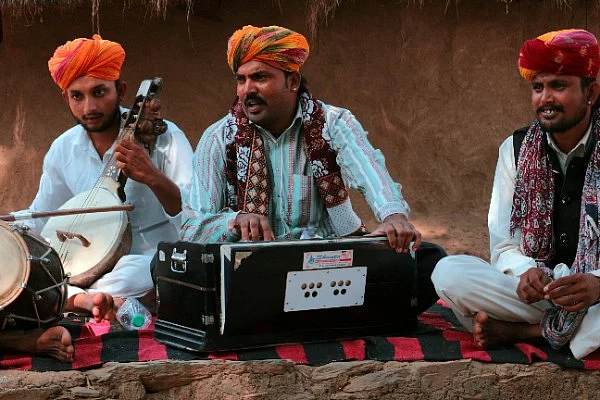
Rajasthan’s music is a living link to its past. From instruments rooted in ancient traditions and epic tales to the sounds heard in villages, temples and desert gatherings, music has long been part of everyday life. The Dholak, Khartal, Sarangi, Algoza, and Ravanahatha each have their own story, while communities such as the Langa, Manganiyar, and Bhopa have carried these traditions across generations. As times change, many of these sounds are becoming harder to hear. Here are the instruments and musical traditions that make Rajasthan’s cultural landscape so unique.
Kamaicha
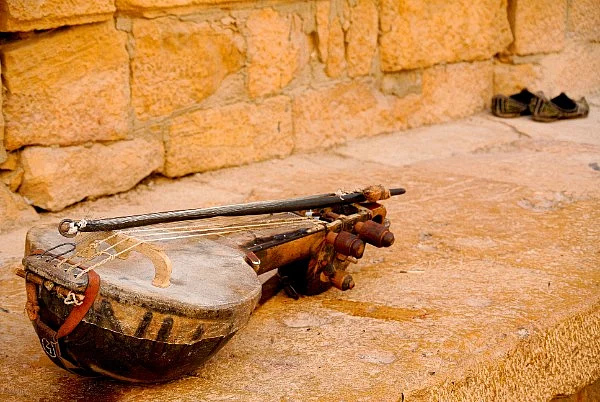

The Kamaicha is a traditional bowed instrument with a rounded wooden body carved from mango wood and covered with goatskin. It has 10–17 strings, including main and sympathetic strings, which create its deep, warm and resonant sound. Its bow is traditionally made from Khejari wood and horsehair, sometimes decorated with tiny bells. The instrument is closely associated with the Manganiyar community, a hereditary Muslim musician community of the Thar region known for preserving Rajasthan’s folk music. Once performed in royal courts, the Kamaicha is still central to Manganiyar music, accompanying songs about love, devotion, history and everyday life and keeping the musical heritage of western Rajasthan alive.
Sindhi Sarangi
The Sindhi Sarangi is a bowed string instrument known for its rich, voice-like sound. Traditionally carved from a single piece of sheesham or tali wood, it has a slightly waisted body, four main strings and around 22 sympathetic strings that add depth and resonance. Played upright with a bow, it is used to accompany folk singers and traditional songs, especially in western Rajasthan. The instrument is closely associated with the Langa community, a hereditary Muslim musician community of the Thar Desert. Langa musicians who specialise in it are known as Sarangiya Langa. Their music has been passed down through generations, making the Sindhi Sarangi an important part of Rajasthan’s desert musical heritage.
Tandura
In Rajasthan’s villages, music is closely woven into devotion and storytelling. The Tandura is one of the instruments that brings these performances to life. It is a four-stringed, plucked instrument used by folk and devotional singers to keep a steady pitch, rhythm and drone while singing bhajans and epic ballads. The Tandura is especially linked with Baba Ramdevji, a beloved folk deity of Rajasthan. It is traditionally played by the Kamads, a community of devotees and singers who perform songs dedicated to him, as well as by other rural saints and folk performers. Its simple wooden body and resonant strings create a steady musical foundation.
Morchang
The Morchang is a small, mouth-held musical instrument made of iron or steel, with a horseshoe-shaped frame and a flexible metal tongue. The player holds it against the teeth and plucks the tongue, using the mouth as a resonating chamber to create its distinctive twanging sound. With a history of at least 1,500 years, it is an important part of Rajasthan’s folk heritage. Traditionally played by Langa and Manganiyar musicians, hereditary Muslim musician communities of the Thar region, it accompanies folk singing and dancing. Its rhythmic, pulsating sound adds a lively beat and distinctive character to Rajasthan’s desert music.
Khartal
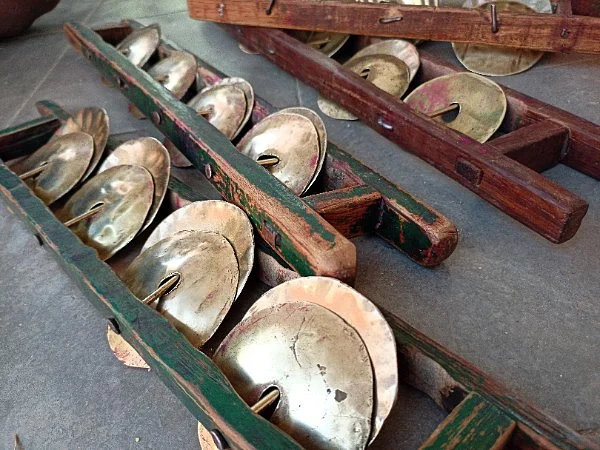
The name Khartal comes from the Sanskrit words kar, meaning “hand,” and tal, meaning “rhythm” or “beat”—literally, the rhythm made by the hands. It is a simple handheld percussion instrument central to Rajasthan’s folk and devotional music. Made from wooden clappers, it produces a sharp, lively sound when struck together, creating rhythmic patterns. The Khartal has long been part of India’s devotional traditions and became especially popular in Rajasthan through Bhakti music and folk performances. It is played by folk singers, devotional performers and Manganiyar musicians during songs, bhajans and dances. When played with the dholak, the Khartal provides quick, crisp beats that complement the dholak’s deeper rhythm.
Algoza
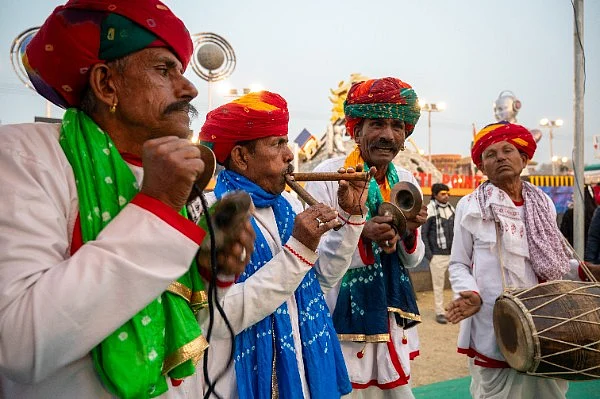
The Algoza is a traditional double flute deeply rooted in the folk music of western Rajasthan and the Thar Desert. Made from bamboo or wood, it has two pipes played together—one carries the melody while the other provides a steady drone. Musicians blow into both pipes at once, using quick breaths to create its lively, continuous rhythm. In Rajasthan, Langa and Manganiyar musicians use it to accompany singers and dancers during village gatherings, celebrations, devotional performances, and folk storytelling.
Bhapang
The Bhapang, often called the “talking drum,” is a unique one-stringed folk instrument from Rajasthan. Its pitch changes as the player tightens or loosens the string, giving it a distinctive, voice-like sound. Traditionally made from a hollow gourd shell with a single drumhead, it has a string running through the centre, attached to a small wooden stick. In Rajasthan, it is especially associated with the Mewati community of Alwar and Hindu Jogi musicians. It is played during bhajans, poetic songs, and folk performances, both as a solo instrument and alongside the dholak and sarinda. Its expressive sound adds character to Rajasthan’s storytelling and devotional traditions.
Jantar
The Jantar is a traditional string instrument of Rajasthan, best known for its role in devotional storytelling. It has a long wooden or bamboo body, frets, metal strings and two large gourd resonators, or tumbas, that enrich its sound. Worn with a strap around the neck, it can be played while standing and moving during performances. The Jantar is closely associated with Bhopa storytellers, traditional singer-narrators who perform the epic of Devnarayan, a revered folk deity of Rajasthan. Its deep, resonant sound supports the rhythm and drama of their singing. More than an instrument, the Jantar is part of Rajasthan’s oral storytelling tradition, helping preserve legends across generations.
Dholak
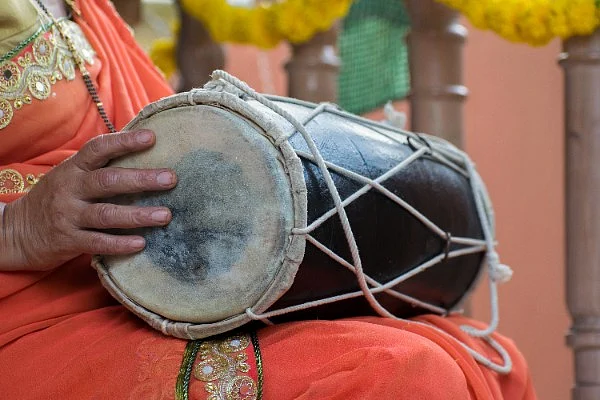
The Dholak is the rhythmic backbone of Rajasthan’s folk music, working alongside other instruments to keep the music together. It is a barrel-shaped, double-headed hand drum with two leather heads—the smaller produces bright, sharp tones, while the larger creates deep bass sounds. Played with both hands, it sets the pace for singers and dancers. Widely used by Manganiyar and Langa musicians, as well as Kalbelia performers, Bhopas and village musicians, it accompanies folk songs, bhajans, dances and celebrations. It is often played with the Khartal, while the Kamaicha, Sarangi and Algoza add melody and texture to the performance
Manjira
Manjira is a small pair of metal cymbals deeply rooted in Rajasthan’s folk and devotional traditions. Usually made of brass, bronze or bell metal, the two discs are connected by a cord and struck together to produce a bright, ringing sound. In Rajasthan, it is commonly heard during bhajans, temple singing, folk performances, fairs and religious gatherings. Devotional singers, wandering saints, temple musicians and folk performers use it to keep the beat and support the voice. Its use is especially prominent in Rajasthan’s devotional and community music traditions. Unlike the dholak’s deep, resonant beat, the Manjira creates short, sharp accents that add clarity and energy to the performance.
Ravanahatha
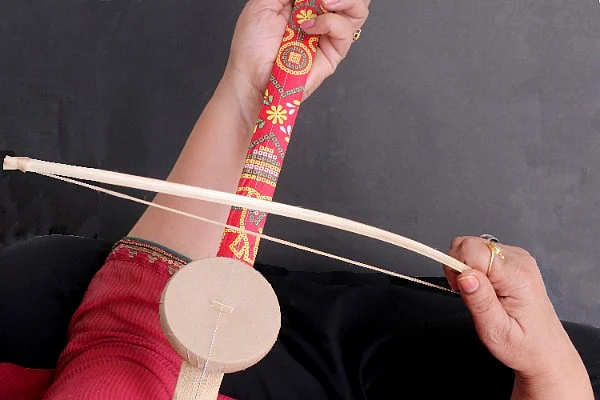
The Ravanahatha is a traditional bowed string instrument closely associated with Rajasthan’s Bhopa storytellers, who use it while singing devotional epics and folk tales. Its name means “Ravana’s hand,” linking it to the legend of Ravana’s devotion to Lord Shiva. The instrument has a long neck, strings, a bow and a small resonating body, traditionally made with a coconut shell or gourd covered with skin. Its raw, expressive sound suits Rajasthan’s oral storytelling tradition. Bhopas use it to accompany songs about Pabuji and other folk heroes, helping bring stories to life. What makes the Ravanahatha special is its deep connection to Rajasthan’s ancient storytelling and devotional culture.
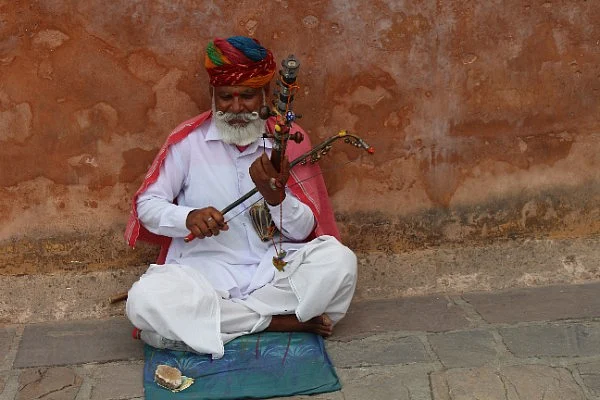
Preserving Rajasthan’s traditional instruments is about more than just music; it’s about safeguarding the rich stories, beliefs, and memories of communities like the Langa, Manganiyar, and Bhopa. Instruments such as the Sindhi Sarangi, Kamaicha, Algoza, and Ravanahatha embody this heritage. They not only represent cultural identity but also the skills acquired through years of listening, practice, and oral teaching.
As modern music and changing livelihoods lead to a decline in traditional performances, there is a risk that this invaluable knowledge may vanish with the older generation. By keeping these traditions alive, we not only protect Rajasthan’s cultural identity but also provide younger musicians with the opportunity to carry these legacies forward.
FAQs
1. What are the traditional musical instruments of Rajasthan?
Rajasthan’s traditional instruments include the Kamaicha, Sindhi Sarangi, Ravanahatha, Algoza, Morchang, Dholak, Khartal, Manjira, Bhapang, Tandura and Jantar.
2. Which communities are known for Rajasthan’s traditional music?
The Manganiyar and Langa communities are renowned for their musical traditions, while Bhopa storytellers are known for devotional and epic performances.
3. What is the Kamaicha used for?
The Kamaicha is mainly used by Manganiyar musicians to accompany folk songs, devotional music and songs about history, love and everyday life.
4. Why is the Ravanahatha important in Rajasthan?
The Ravanahatha is closely linked to Bhopa storytellers, who use it to accompany performances of traditional epics and stories about folk heroes such as Pabuji.
5. Why should Rajasthan’s traditional instruments be preserved?
These instruments preserve more than music. They carry the stories, skills, memories and cultural traditions of Rajasthan’s musician communities, many of which are becoming less common as musical tastes and livelihoods change.