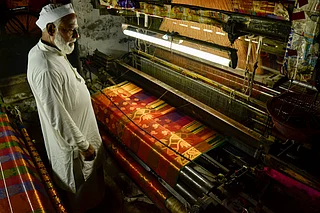
Madhya Pradesh is developing two new Craft Handloom Tourism Villages building on the success of Pranpur, recognised as India’s first Craft Handloom Tourism Village. The new villages are being developed at Keriyakhedi near Maheshwar, centred on the Maheshwari weaving tradition, and Kukshi in Dhar district, dedicated to Bagh print. When completed as planned, Madhya Pradesh will become the only state in India with three such villages, creating a tourism model that puts craft communities at the centre of the travel experience.
This initiative changes the way travellers can experience handloom heritage. Instead of encountering textiles primarily as products in markets or shops, visitors can see where they are made, meet the communities behind them and, in some locations, stay within the village itself. In Madhya Pradesh, the approach also connects craft preservation with rural tourism and local livelihoods, making handloom an integral part of the destination.
From Chanderi Sarees To A Craft Tourism Model


Pranpur, located around 3–4 kilometres from Chanderi, has long been home to weavers whose traditional craftsmanship has produced Chanderi textiles. Around 450 weaving families in the village continue to produce Chanderi textiles on traditional pit looms, keeping the craft closely connected to everyday livelihoods. The village was recognised as the country’s first Craft Handloom Tourism Village and received the Best Tourism Village Award from the Ministry of Tourism in 2024.
The next phase takes that model beyond a single craft destination. Keriyakhedi near Maheshwar will focus on Maheshwari weaving, while Kukshi will centre on Bagh print. The Ministry of Textiles has appreciated the Madhya Pradesh model and encouraged other states to replicate it, suggesting that craft tourism is being considered as a framework for distributing tourism activity beyond established destinations.
What Travellers Can Expect In Maheshwar
The development at Keriyakhedi gives an indication of how this model could work on the ground. A Textile Tourism Village is being developed with an investment of INR 5.11 crore, with plans for 10 homestays, a modern cafeteria, trekking trails, and improved riverfront facilities. Visitors are expected to be able to observe the weaving process and buy textiles directly from artisans. The village has around 125 handlooms, a sector that provides employment to approximately 125 weavers from 60–70 families.

That changes the role Maheshwar can play for travellers. The town is usually described as a destination for religious tourism, but its textile heritage provides another reason to visit and a different way of understanding the place. A trip centred on its temples and riverfront could therefore extend into the weaving communities around it, allowing visitors to connect the cultural landscape with the livelihoods that continue to shape it.
Women are central to this production system. Their involvement spans yarn preparation, dyeing, weaving, designing, and finishing, meaning the proposed tourism model is tied not only to the preservation of craft but also to the economic role of women within these communities.
Why Craft Tourism Matters Beyond Shopping

For travellers, one of the most significant aspects of the model is the possibility of buying directly from the people who make the products. The markets of Chanderi and Maheshwar already attract visitors from India and abroad, who purchase textiles from weavers, cooperative societies and craft centres. Direct sales can give artisans better prices, reduce dependence on middlemen and retain more of the tourism economy locally.
Madhya Pradesh’s three-village model therefore offers a different way of thinking about rural tourism. Its stated focus is on keeping economic benefits within local communities while ensuring that development does not place pressure on the social fabric of villages. If the approach succeeds, the traveller gets more than an opportunity to buy regional textile, the journey becomes a way of understanding some of India’s living craft traditions more intimately.
(With Inputs from Madhya Pradesh Tourism Board)
FAQs
1. How many Craft Handloom Tourism Villages will Madhya Pradesh have?
Madhya Pradesh is developing two new villages at Keriyakhedi near Maheshwar and Kukshi in Dhar district, adding to Pranpur near Chanderi.
2. What is special about Pranpur?
Pranpur is recognised as India’s first Craft Handloom Tourism Village and is home to around 450 weaving families producing Chanderi textiles on traditional pit looms.
3. What craft will be showcased at Keriyakhedi?
Keriyakhedi near Maheshwar will focus on the Maheshwari weaving tradition.
4. What craft will Kukshi be known for?
Kukshi in Dhar district will centre on Bagh print, a traditional textile printing technique.
5. What can travellers expect at the new craft tourism villages?
The planned experiences include opportunities to see craft production, interact with artisans, buy textiles directly and, at Keriyakhedi, stay in homestays.


.jpg?w=320&auto=format%2Ccompress&fit=max&format=webp&dpr=1.0)