

Having kombucha is the newest sign of healthy drinking and living. If you have ever found yourself in a café debating between an iced latte and kombucha, the good angel on your shoulder would have whispered, “Choose the latter! Didn’t you want to decrease the amount of caffeine in your diet?” Kombucha indeed has some benefits if consumed in the right quantity. Making it at home solves the problem of heading out, while also making it easier to include it in your daily diet.
What Is Kombucha And Why Should You Have It?
Kombucha is a fermented drink made from tea, usually black or green, sugar, healthy bacteria, and yeast. It traces back over 2,000 years to ancient China and was respected by emperors as the "Tea of Immortality" for its supposed healing and energising properties.
The fermentation process adds a small amount of alcohol to kombucha, typically below 0.5%. The brew usually sits and ferments anywhere from a week to a month. The end result is a lightly carbonated drink with a slightly vinegary taste. The purported benefits of the drink include limiting inflammation, aiding weight loss, strengthening the immune system, fighting cancer, supporting detoxification, and improving heart health.
That is a good enough reason to try brewing kombucha at home.

Checklist Before You Buy the Ingredients
Things to have ready before you start the prep:
1 green or black tea bag, or 1 teaspoon loose-leaf tea
¼ cup sugar (white, coconut palm, or raw sugar)
3 cups filtered water
SCOBY/pellicle or ½ cup leftover kombucha
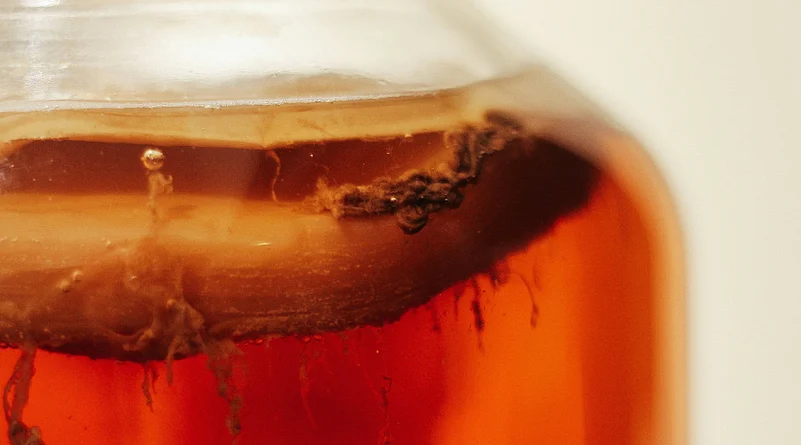
Quick clarification: SCOBY stands for Symbiotic Culture of Bacteria and Yeast. These microorganisms consume the sugar in your tea and convert it into healthy acids. A pellicle is the physical by-product that these microbes spin out at the surface of the liquid as they digest.
While getting hold of these might be difficult and expensive, let us look at a recipe using leftover kombucha, which you can purchase from some of these brands in India.
Let Us Make It Now
Boil a cup of water. Take a jar and make a sweet tea with the boiling water, tea, and sugar.
Stir the remaining 2 cups of water into the jar and allow the tea to cool to room temperature.
Now add the leftover kombucha, and if you have a chunk of pellicle, add it as well.
Cover the jar with a piece of cloth, paper towel, or coffee filter. Secure it properly with a rubber band or the jar ring.
Leave the jar to ferment in a warm location for 3–7 days. The duration will vary depending on the room temperature.
To check if the process is finished, taste it. If it is optimally sour, consider this part of the process finished.
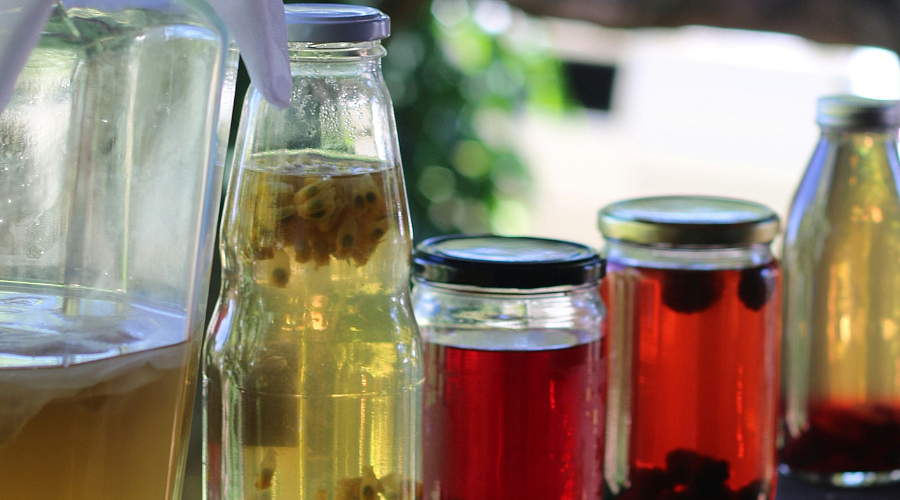
After this, strain the liquid into a bottle for the second fermentation. Do not forget to reserve a little for the next batch. At this point, you can add flavour by including fresh fruits, a vanilla bean, or ½ cup of juice. Allow it to ferment for another 1–5 days until it has carbonated. After that, refrigerate it and consume it within a month.
How to Serve
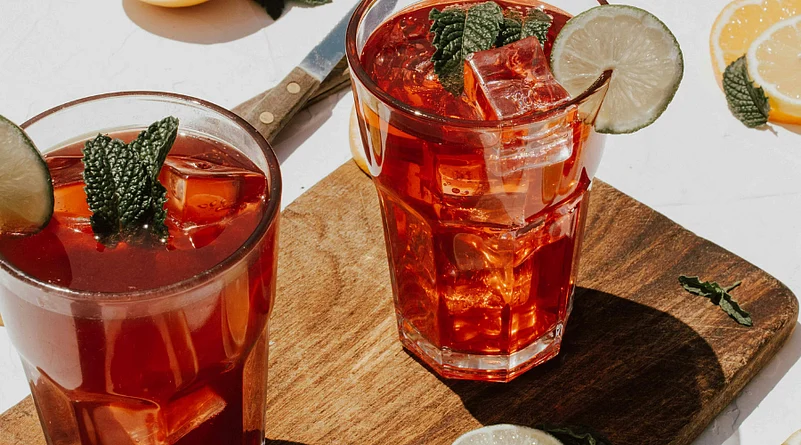
Serve it chilled, not at room temperature. The chill softens the acidity and enhances the fizz. You can use wine or cocktail glasses to elevate the experience during brunches or dinners. Divide it into different bottles before the second fermentation so you can create a variety of flavours, like citrusy, floral and spicy. Avoid shaking the bottle before pouring, as you do not want the fizz to overflow during your meal. Pair it with contrasting flavours such as a cheese plate, chaat or other tangy snacks, fresh salads, or dark chocolate and berry desserts if you prefer a sweeter palate.
(Inputs from various sources)
FAQs
How long does it take to make kombucha at home?
The first fermentation usually takes 3–7 days, depending on the room temperature. If you opt for a second fermentation to develop carbonation and flavour, allow an additional 1–5 days before refrigerating.
Can I make kombucha without a SCOBY?
Yes. You can use unflavoured, unpasteurised leftover kombucha as a starter culture. If you have a pellicle from a previous batch, you can add that too, but it is not essential to begin brewing.
Which tea works best for homemade kombucha?
Black and green teas are the most commonly used because they provide the nutrients needed for fermentation. Avoid flavoured or herbal teas for your first few batches, as they may interfere with the brewing process.
How do I know when my kombucha is ready?
Taste is the best indicator. It should have a pleasant balance of sweetness and tanginess. If it tastes too sweet, let it ferment longer; if it becomes too sour, shorten the fermentation time for your next batch.
How should homemade kombucha be stored?
Once the desired level of carbonation is reached, refrigerate the bottled kombucha. It is best consumed chilled and within a month for the freshest flavour and fizz.