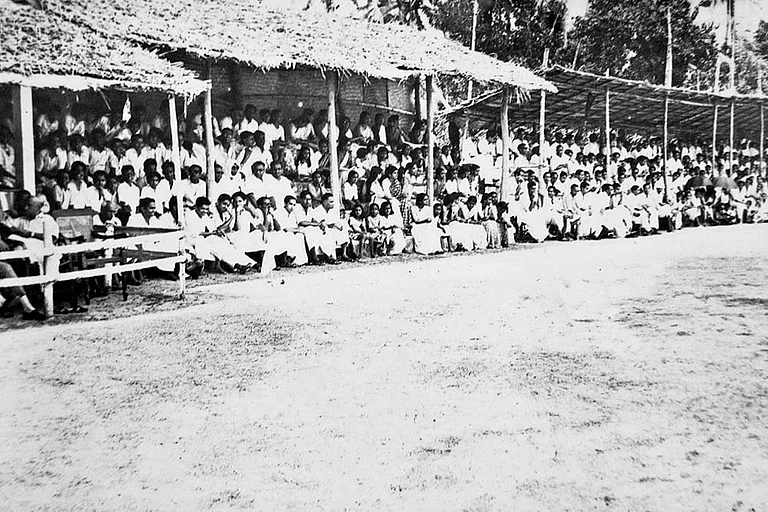


In late March and early April, I found myself campaigning in the Kerala state Assembly elections—over 18 days, travelling across 12 districts for 59 UDF candidates, delivering the message that Kerala wants a change. I played the chenda with a Christian candidate, danced on stage with Muslim girls of the Vanitha Youth League, and started a day’s campaign outside a Hindu temple. In all of this, I found myself revelling in the cultural and social unity of a land that I had only returned to 17 years ago, when I left a three-decade career abroad to enter Indian politics in the place I now proudly regard, four victories later, as “my own constituency,” Thiruvananthapuram.
The loud shouts of the campaign trail have finally faded into the quiet stillness of the ballot boxes. With the election frenzy over, my mind has drifted away from numbers and margins. Instead, I find myself thinking of the people and the sights I’ve seen over the last few months. I travelled through 59 constituencies across 12 districts. It wasn't just a political trip; it was a pilgrimage into the very heart of Kerala.
To travel through Kerala is to walk through layers of living history. I began in my own home, Thiruvananthapuram. For four terms, the people here have shown me a kindness and faith that humbles me. This is the sacred land of Lord Sree Padmanabha Swamy, where a king once dedicated his entire realm to the divine, creating a deep bond of duty between the leaders and the people. Today, that ancient spiritual legacy sits side by side with our new identity as India’s "Space City," reaching for the stars.
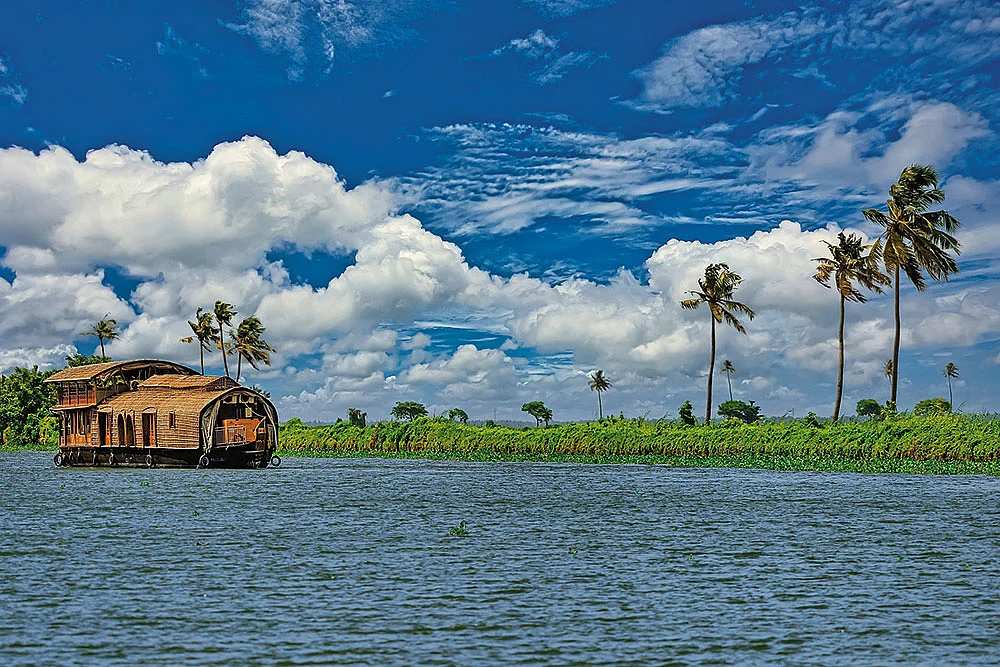
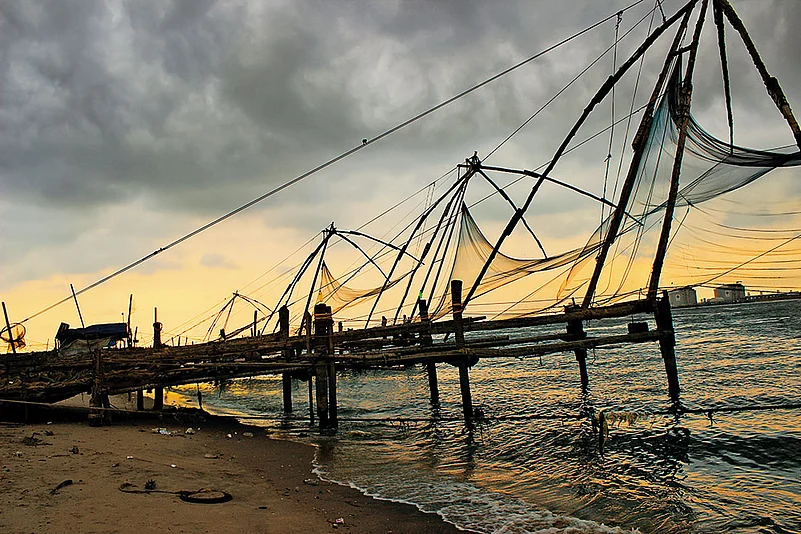
Moving north, the air changed. Kollam whispered stories of ancient ships and the hard-earned living of cashew workers. Alappuzha greeted us with its quiet, winding ribbons of water. In Pathanamthitta, I felt the deep, shared faith of different religions living as one. In Kottayam, the scent of rubber trees filled the air in a land that long ago woke up to the power of the written word. In Ernakulam, history feels grand and vibrant. This is the melting pot of Kochi, where for centuries, the world, from China and Arabia to Europe, came seeking our spices. From the salty coast, we climbed into the cool, misty clouds of Idukki, where tea and cardamom grow on hills once carved out by British planters. We passed through the forest tunnels of Kuthiran to reach Palakkad, our golden granary guarded by tall palm trees, before arriving in Thrissur, the beating heart of our art and culture.
The journey grew warmer with the genuine kindness of the people in Malappuram. Further north, we reached Kozhikode. Long before European ships arrived to change the world, this was a place of welcome, where local rulers made the coast a home for spice traders from across the seas. Finally, we touched the soil of Kannur, a land of proud weavers and ancient warriors.
These settings, some steeped in the timeless serenity of Kerala’s heartland, ending in the bustle of the state capital, compel a consideration in this “rediscovered Keralite” of what truly constitutes home. For a writer, home is often an architecture of the mind, a sanctuary constructed from language and memory. But for one whose life has been a relentless, decades-long trajectory across continents and across the fraught divide of global service and local politics, the question of where the heart truly resides is far less simple.
We are a land where the church bell, the mosque’s call, and the temple chant blend into one single song
For me—born in London, raised in Bombay, Calcutta and Delhi, educated in the United States, and having served the United Nations in Geneva, Singapore and New York—returning to India in my early fifties to represent the people of Kerala in Parliament has transformed the meaning of “home” through an essential, at times unsettling, metamorphosis. It is not a static point on a map, but a dynamic, evolving commitment—a concept that has stretched from the abstract universality of a global ideal to the profound, tangible particularity of a constituency in Thiruvananthapuram. It is, ultimately, a magnificent synthesis of the three vital pillars of our existence: People, Places, and Planet.
My initial, protracted definition of home was the Planet itself. For 29 years, my allegiance was pledged to the ideals of the United Nations. In the grand, sprawling, and often frustrating theatre of global diplomacy, my identity was that of the global citizen. My “Place” was less a fixed location than a succession of temporary outposts: Geneva, Singapore, New York, and a dizzying inventory of conflict zones and suffering nations.

In that life, my “People” were a majestic abstraction: the six, later seven, billion inhabitants of the globe, the displaced, the oppressed, the war-ravaged, the aspirational youth across the world. My sense of belonging was intellectual, a fierce loyalty not to a particular flag, but to the collective enterprise of multilateralism. My writings from this era—many of which were cerebral, cosmopolitan, steeped in the grand narratives of history—reflect a mind grappling with the epic, macro-level challenges facing humanity, from genocide prevention to the intricacies of global climate negotiations. But I still managed, in this time, to look back on my own land through creative fiction, both satirical and savage, in three largely well-reviewed novels.
In the UN, home was a deliberate state of unmooring. You sacrifice the emotional comfort of the known for the moral conviction of the universal. The sense of belonging was derived not from shared cultural idiom but from shared, high-minded values. I was a child of the world, and my home was the idea of a better, more equitable world order. This was a sophisticated, if somewhat rarefied, home—a sanctuary built on principles, not on paddy fields.
The decision to forsake the gilded cage of international civil service for the dust and din of Indian public life 17 years ago was not a mere career shift; it was a profound act of re-rooting. I transitioned from addressing audiences in the UN General Assembly to answering questions about water scarcity in a village panchayat and promoting the idea of a UAE consulate for travellers from my state. The shift was seismic: from the Planet to a very specific, demanding Place—my beloved Kerala, and even more specifically, my constituency, my karmabhumi.
Suddenly, the theoretical gave way to the tangible. My “People” narrowed down from abstract humanity to my voters, my neighbours, the teeming, vibrant, and fiercely articulate constituents of Thiruvananthapuram. The meaning of home ceased to be a high-flying, philosophical ideal and became something grounded, visceral, and utterly real. It is the smell of the monsoon hitting the laterite soil, the taste of a truly authentic sadya, the intricate rhythm of Malayalam spoken in its many native cadences.
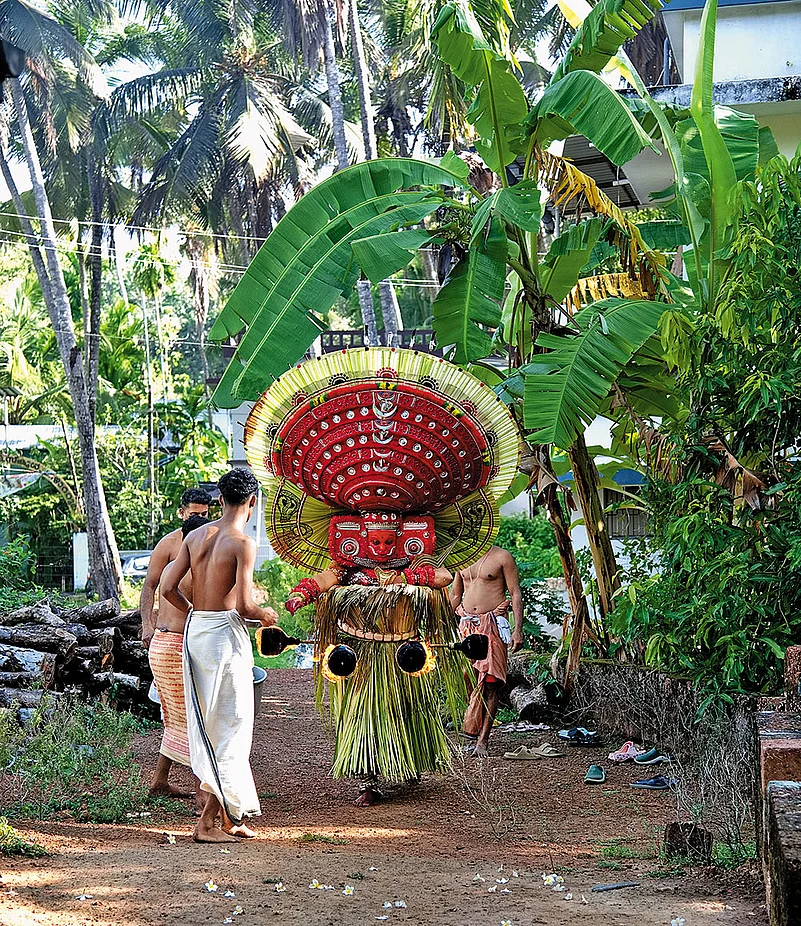
This home, the home of the politician, is far more demanding. In politics, you are accountable for the specifics: the unpaved road, the local clinic, the validity of a ration card. This is where the sheer intellectual breadth cultivated at the UN must be distilled into effective, granular public service. Returning to my ancestral soil has been profoundly restorative, compelling me to shed the aloofness of the global expert and embrace the immediate, messy complexity of local identity. Kerala, with its fierce political engagement and rich cultural syncretism, provides the essential anchor, the Place that lends gravity and purpose to all my previous experience.
So, what is home to Shashi Tharoor today? It is neither the world, despite the enthusiasm of those in Kerala who call me a “Vishwa-pouran,” a global citizen, nor the constituency exclusively. It is a double-rooted existence: a wonderful synthesis where the global mind must meet the local heart. My rootedness in Thiruvananthapuram provides the necessary emotional and cultural ballast, while the three decades spent at the UN furnish the moral and intellectual framework.
My perspective on People, Places, and Planet is therefore inherently layered. When I speak to my constituents (the People), I frame their needs within the context of global and national economic forces. When I celebrate the cultural heritage of Kerala (the Place), I do so with an awareness of its unique position as a microcosm of global migration and intellectual ferment. And when I speak of the Planet—be it climate justice or multilateral reforms—I do so not merely as an internationalist, but as a political servant who knows these global challenges directly impact the lives of specific families in a specific place, my “home.”
Home is, for me, the confluence where the universal river meets the particular sea. It is the comfortable tension of having a passport that is Indian and a mind that remains global. It is the ability to walk the streets of my constituency and know that the local concerns I champion are, in their essence, universal human struggles. This duality is my strength, my burden, and my deepest source of belonging.
To be home is not to be static; it is to be accountable—accountable to the soil you walk upon, the people you represent, and the ideals you have served. And in the inspiring setting of Kerala, I find a powerful symbol of this synthesis: a Place that welcomes global People for dialogues concerning the fate of the Planet. In the end, the most beautiful thing about Kerala is how we live together. We are a land where the church bell, the mosque’s call, and the temple chant blend into one single song. This harmony, reflected in the campaign experiences with which I began this reflection, is our greatest gift. It is a light that we hold up, hoping the rest of the country might see how beautiful it is to live in “God’s Own Country.” It is here, at the heart of my rooted reality, that I feel most wholly, truly, and complexly at home.
Looking for more such exciting and meaningful stories? Grab our latest issue on Amazon.