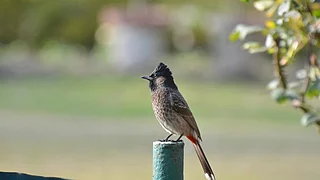


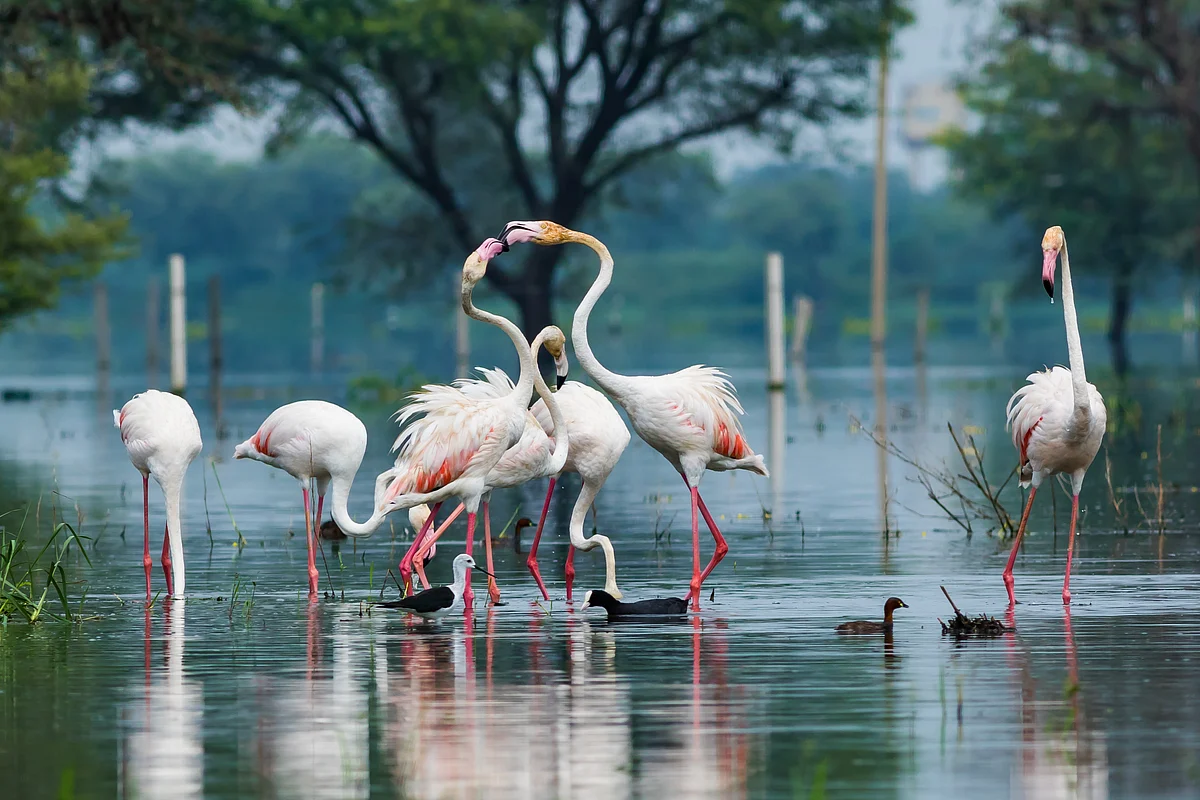
India’s ecological identity is often defined by its dense forests and flagship mammals, including the Bengal tiger and one-horned rhino. Yet, for those who look toward the horizon, the country’s truest biological wealth is found in its flyways. As a vital bridge between the frozen Palearctic and the tropical south, the Indian subcontinent serves as a seasonal refuge for millions of birds.
By February, the winter migration has reached its zenith. The birds are in their prime plumage, the monsoon-swollen wetlands have receded to manageable levels, and the crisp air of the northern plains begins to soften. For travellers, birdwatching in India is a front-row seat to one of the planet’s most ancient and awe-inspiring migrations. Here are the six premier birdwatching destinations to visit this February.
Top Birdwatching Destinations In India
1. Keoladeo National Park, Rajasthan


Keoladeo, formerly known as Bharatpur, is perhaps the most famous bird sanctuary in the world. Once the private duck-hunting grounds of the Maharajas, it was transformed into a protected sanctuary that now holds UNESCO World Heritage status. What makes Keoladeo geographically unique is its boundary wall, which completely encloses the 29-square-kilometer park, creating a stark, protected island of biodiversity amidst a sea of human settlement.
Historically, Keoladeo was the primary wintering ground for the Siberian Crane. While these iconic birds are no longer regular visitors, the park remains a powerhouse of avian activity. February is the ideal time to witness the massive nesting colonies of Painted Storks. Navigating the park is uniquely charming; motorised vehicles are banned, meaning you explore on foot or via bicycle or a cycle rickshaw.
Address: Agra-Jaipur Highway (NH-11), Bharatpur, Rajasthan 321001.
Entry Fees: For Indian Nationals: INR 75 – INR 150; for Foreign Nationals: INR 500 – INR 800; Students (Indian): INR 20 (with valid ID)
Winter timing (October-March): 6:30 AM-5:30 PM
Summer timing (April-September): 6 AM-6 PM.
Best time to visit: October to March
2. Nalabana Bird Sanctuary, Chilika Lake, Odisha
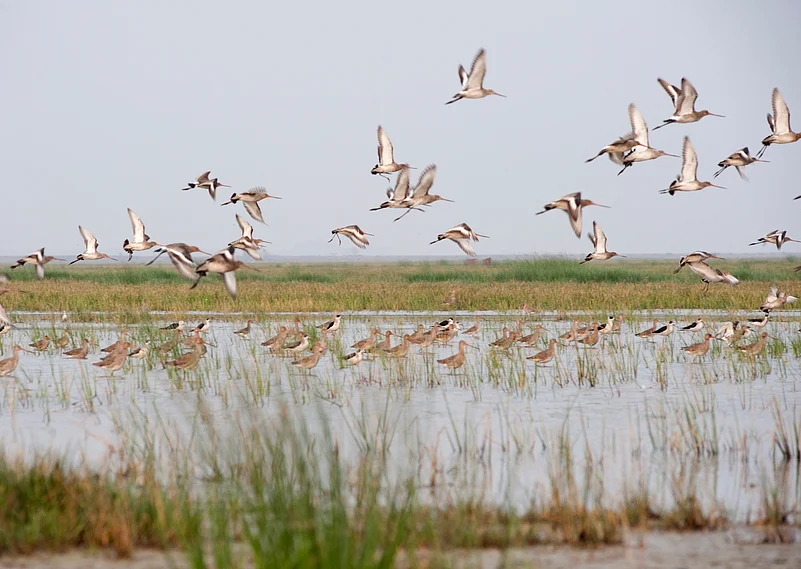
As Asia’s largest brackish water lagoon, Chilika Lake in Odisha is a vital birding location on the Central Asian Flyway. The scale of life here is difficult to comprehend without seeing it firsthand. According to the official census data from January 2026, Chilika recorded over 11 lakh birds belonging to 196 species.
The heartbeat of this lagoon is Nalabana Island, a core zone that disappears during the monsoon and emerges in winter to provide a sanctuary for high bird congregations. The most recent data identifies the Northern Pintail as the most populous visitor this season. To truly experience Chilika, one must visit Mangalajodi, where former poachers have turned into fierce conservationists, rowing visitors through narrow water channels in silent wooden boats. Within arm’s reach, you might find Purple Heron, Godwits, and Black-winged Stilts, while the horizon is frequently stained pink by massive flocks of Greater Flamingos.
Address: M7RV+5HF, Nalaban, Odisha 752032
Entry Fees: No entry fee; costs are mainly linked to hiring boats and other services.
Timing: Opens daily from 6:00 AM to 6:00 PM
Best time to visit: November to March
3. Thattekad Bird Sanctuary, Kerala
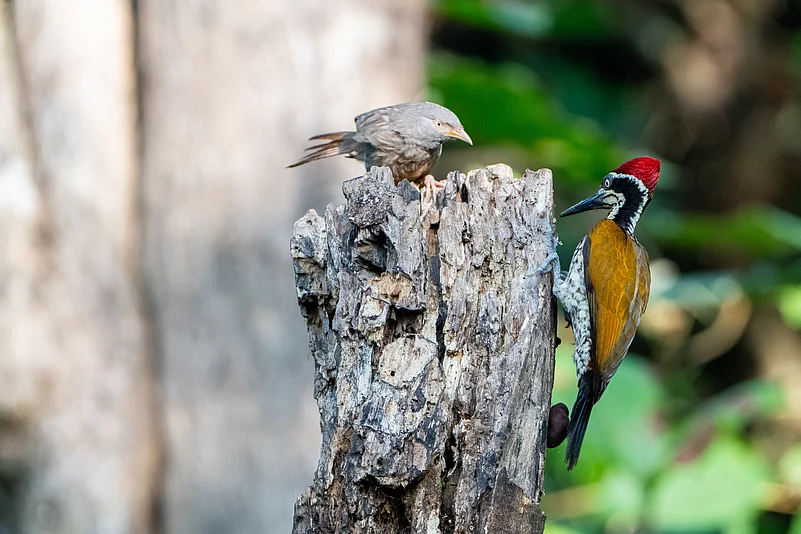
In the tropical south, Thattekad, also known as the Salim Ali Bird Sanctuary, offers a different, more cerebral birding experience. It does not boast the million-strong flocks of the north; instead, it offers rare, high-quality sightings of forest specialists within the Western Ghats. Dr. Salim Ali, the "Birdman of India," once described this as the richest bird habitat in peninsular India, and that claim holds true in 2026.
February provides the perfect light for photography under the dense canopy. The star of the show is undoubtedly the Sri Lanka Frogmouth, a nocturnal bird so perfectly evolved to look like a dry leaf that you could stand a foot away and never see it. The sanctuary is also a stronghold for the Malabar Trogon, a bird of such intense crimson that it feels out of place in the real world. For the dedicated birder, the challenge of spotting the Malabar Grey Hornbill among the fruiting trees is a highlight of any Kerala itinerary.
Address: Kothamangalam, Nyayapally PO, Pooyamkutty - Mankulam Rd, Thattekad, Kerala 686681
Entry Fees: Adults (Indian): INR 60, Children (Indian): INR 45; Foreign Nationals: INR 200 (Note: Additional costs may apply for cameras, guides, and specialised trekking)
Timing: 7 AM-5 PM (According to the official website, it is best to arrive the sanctuary entrance before 4 PM to get enough time to explore.
Best time to visit: November to February
4. Kaziranga National Park, Assam

Kaziranga’s fame usually rests on its rhinos, but its avian population is just as impressive. In a 2024 waterbird census, Kaziranga was recognised as one of India's top five migratory destinations. This status was reaffirmed by an October 2025 survey that documented 146 species in a single sweep of the park’s northern and eastern ranges.
While the wetlands (beels) are filled with migratory ducks, the real prize lies in the tall elephant grass. The Agoratoli Range is a critical habitat for the critically endangered Bengal Florican, a bird known for its dramatic jumping mating displays. February is the window where the grass is often burnt or receded, making these rare birds easier to spot.
Address: NH-37, P.O .Bokakhat ,Dist .Golaghat, Assam 785612
Entry Fees: Indian Nationals: INR 100, Foreign Nationals: INR 650
Jeep Safari (Gypsy): INR 7,700–9,700 per vehicle
Safari timing: Morning Jeep Safari: 8 AM-10 AM; Afternoon Jeep Safari: 2 PM-4 PM
Best time to visit: November to April
5. Eaglenest Wildlife Sanctuary, Arunachal Pradesh

For those willing to travel to the remote corners of the Northeast India, Eaglenest offers a birding experience that borders on the spiritual. This sanctuary covers an incredible range of altitudes, meaning you can experience several different climate zones in a single day.
Eaglenest is famous for the Bugun Liocichla, a bird that serves as a symbol of modern discovery. While first spotted in 1995, it was not formally described as a new species until 2006. It is found nowhere else on Earth. February in Eaglenest may offer sightings of the Ward’s Trogon, the Beautiful Nuthatch, and various laughingthrushes. The silence of the Himalayan foothills, broken only by the calls of birds that exist in no other mountain range, makes this one of the most exclusive wildlife experiences in Asia.
Address: 493X+H6J, Arunachal Pradesh 790003
Permits: An Indian National needs to obtain ILP (Inner Line Permit) and foreign nationals need RAP (Restricted Area Permit) from Arunachal Resident Commissioner.
Best time to visit: Mid-October to Mid-May
6. Kachchh Desert Wildlife Sanctuary, Gujarat

The Kachchh Desert Wildlife Sanctuary is a vast saline desert that transforms each winter into one of India’s most crucial wetlands. Spanning over 7,500 square kilometres, it is the largest sanctuary in Gujarat and encompasses the legendary "Flamingo City." In late 2025 and early 2026, the region witnessed record-breaking flamingo arrivals, with hundreds of thousands of birds painting the mudflats in varying shades of rose and crimson.
The sanctuary is globally famous for being the only known area in India where Greater Flamingos breed regularly. Visitors can also observe the Rosy Pelican, Black-necked Stork, and the elusive MacQueen’s Bustard, a master of desert camouflage. The raptor population here is equally impressive, with Steppe Eagles, Tawny Eagles, and Peregrine Falcons surveying the flat horizon.
Address: Kutch Desert Wildlife Sanctuary, Bhuj, Kachchh, Gujarat (Entry via Kalo Dungar or Dholavira)
Entry Fees (2026): Indian Nationals: INR 250 (Weekdays)/INR 280 (Weekends); Foreign Nationals: INR 1,200 (Weekdays)/INR 1,500 (Weekends)
Winter Timing (October–March): 6:00 AM – 6:00 PM (Best for Flamingo City and migratory raptors)
Summer Timing (April–September): 7:00 AM – 6:30 PM (Note: Many areas are inaccessible during the monsoon due to flooding)
Best Time to Visit: November to February
FAQs
1. Why is February ideal for birdwatching in India?
February coincides with peak winter migration, offering optimal weather, clearer wetlands and birds in prime plumage.
2. Which is the most famous birdwatching destination in India?
Keoladeo National Park is widely regarded as India’s most iconic bird sanctuary.
3. Where can I see the highest concentration of birds in winter?
Nalabana Bird Sanctuary records some of the highest winter bird congregations in Asia.
4. Which destination is best for rare forest birds?
Thattekad Bird Sanctuary is renowned for rare Western Ghats forest species.
5. Can birdwatching be combined with a wildlife safari?
Yes. Kaziranga National Park offers excellent birding alongside large mammal safaris.