Your first drink at a new bar is rarely the first thing you notice. You observe the room, the music, the table beside you. Someone arguing over too much ice in their whisky, perhaps, or asking whether the beer is “bhayankar chilled.”
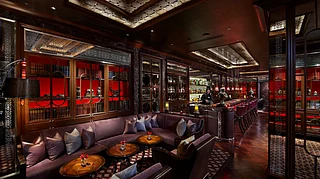
Then you find yourself at M-29 in Greater Kailash II’s M Block Market. You climb past a café, catch the faint smell of old books and step into Sidecar, where warm timber and shelves of bottles welcome you. When Minakshi Singh and Yangdup Lama opened its doors in 2018, they were asking a compelling question: what if the best drink on the menu began somewhere in the city itself?
That question shaped Dear Delhi, a menu inspired by the capital’s food traditions. One cocktail reimagined Mohabbat Ka Sharbat through rose, milk and fruit, while others borrowed from familiar ingredients and eating habits rather than established European flavour profiles. The menu presented a recognisable Delhi in an unfamiliar form and encouraged bartenders to look beyond London, New York and Singapore for inspiration. Chandni Chowk, Coorg, Kannauj and countless places in between began entering the country’s cocktail vocabulary.
The change was not limited to regional ingredients. Delhi also showed that the kitchen and bar could speak the same language. At Top Banana, drinks such as Fat Chance, Burn After Reading and Salt Before Senses are built around flavour rather than a preferred spirit. Clarified juices, ferments and house-made condiments appear in the glass, and the Monsoon menu even uses the restaurant’s own hot sauce. The cocktail is approached almost like a dish, assembled through layers rather than defined by the bottle at its base. Once bars began treating place as more than a decorative reference, research moved beyond the counter. At Barbet & Pals, with outposts in Delhi and Mumbai, the menu often begins on the road. For Bird’s Eye View, founders Jeet Rana and Chirag Pal travelled through Meghalaya, walking through markets and spending time in family kitchens. They returned with fish mint, fragrant jatira or Khasi lemon, fermented bamboo shoot, Khasi pine and sohiong, a tart wild berry. These ingredients were woven into combinations of citrus, smoke, fermentation and fruit, allowing each cocktail to carry something of the landscape and the people encountered during the journey. The menu suggests that a bar can introduce guests to a region before they even travel there.
In Dehradun, CinCin takes the idea of discovery in a more personal direction. Instead of asking guests to begin with gin, whisky or rum, the bar asks about their mood, personality and taste preferences before matching them with a drink. Ingredients such as buransh and pahadi noon may feature, but founder Shruti Gupta is less interested in displaying them as curiosities than in drawing attention to the producers and traditions behind them.
In nearby Rishikesh, Gagan Sharma, who designed the cocktail menu at The Terrace at Aloha on the Ganges, believes that adding one local ingredient is not enough to capture a city. “The streets are where the city is,” he says. Markets, neighbourhoods, sounds, garnishes, glassware and the rhythm of service all contribute to the experience. A drink can recall a place, but only when it reflects the atmosphere around it as much as its flavours.
That same idea of capturing a city's character finds another expression in Indore. At Atelier V, Vedant Newatia recommends Piyo, a fruity, creamy mix of mango, gondhoraj and juniper that feels unmistakably local.
Sometimes, however, a city reveals itself through familiarity. At Nutcase Etc. in Kolkata, regulars trust the bar beyond the menu, returning for comfort foods and unexpected creations. Drinks like Tangra Town and Good Luck transform chilli chicken and payesh into cocktails that capture Kolkata’s appetite, nostalgia and sense of belonging.
Travellers once chased tables; now they chase bars. In a glass, they find a place’s flavours, memories and rhythms—a drink that captures not just a city’s taste, but its soul.
Looking for more such exciting and meaningful stories? Grab our latest issue on Amazon.