For both astronomy enthusiasts and casual stargazers, the night skies promise a spectacular start to the New Year as we enter January 2025. This month, the universe presents a celestial show that combines fascinating science with stunning scenery. The Northern Hemisphere's cold winter nights make the ideal setting for celestial spectacles, such as shooting stars and planetary conjunctions. These astronomical occurrences hold great cultural significance for Indians in addition to their aesthetic value. Here are five must-see celestial wonders that light up January's skies, regardless of your level of expertise with astronomy or your simple appreciation of the wonders of stargazing.
The Cluster Messier 41 (January 1)


Skywatchers can marvel at M41, a magnificent open star cluster in the constellation Canis Major, in January. M41, which rises to an impressive 40 degrees above the southern horizon, is easily visible to the unaided eye under clear skies. It reaches its peak visibility around midnight on 1 January. At around 8:52 PM, the cluster can be seen from New Delhi. It rises steadily to its highest point before descending and disappearing from view at 3:55 AM. Its culmination moves a little earlier each night, making it a delightful celestial target for those who appreciate the cool winter evenings.
Asteroid 14 Irene At Opposition (January 3)
Throughout January, asteroid 14 Irene will be clearly visible in the constellation Gemini, providing astronomers with the ideal chance to see it high in the night sky. The asteroid will peak at midnight local time, regardless of your location. From 7:14 PM to 5:42 AM, 14 Irene will be visible to people in New Delhi. At 7:14 PM, it will first emerge on the eastern horizon, reaching a height of 21 degrees. At 12:28 AM, it will reach its highest point, almost 88 degrees above the southern horizon. Its visibility will end at 5:42 AM when it disappears beneath the western horizon.
Venus At Greatest Elongation East (January 10)
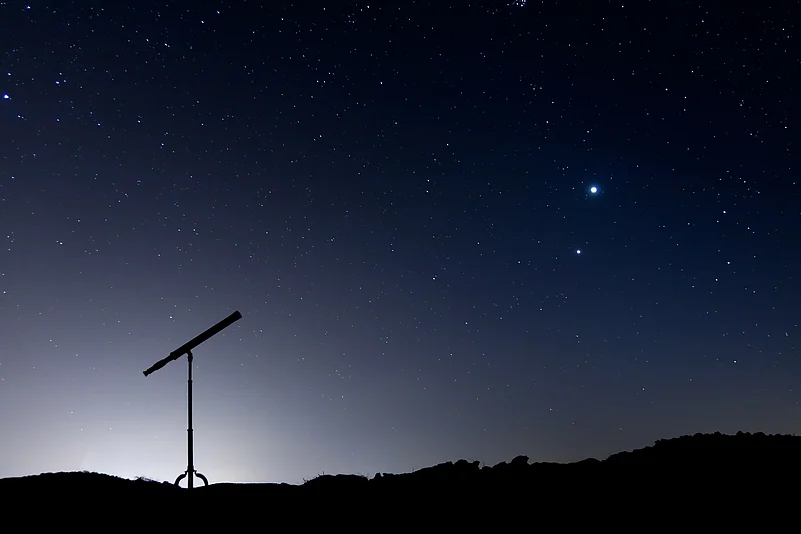
During its 2024–2025 evening apparition, Venus will shine brightly on 26 January, 2025, as it approaches its greatest separation from the Sun. In the evening sky, the planet will be clearly visible at a startling magnitude of -4.4. Venus will be perfectly positioned from New Delhi, rising to a maximum elevation of 43 degrees above the horizon at sunset, making it a must-see for anyone interested in stargazing. Catching one of the brightest objects in the sky as it fades into the night is made possible by this event.
Asteroid 887 Alinda At Opposition (January 13)
Throughout the night, asteroid 887 Alinda will be in a favourable position within the Gemini constellation, providing astronomers with an excellent opportunity to observe the stars. In any case, it will peak in the sky at midnight local time, wherever it is. Beginning at 6:43 PM (IST), 887 Alinda will be visible from New Delhi in the evening sky. As dusk approaches, it will rise to 22 degrees above the eastern horizon. At 11:54 PM, it will reach its highest point, which will be an amazing 88° above the southern horizon. Until it descends below 21 degrees above the western horizon at around 5:07 AM, the asteroid will still be visible.
The Beehive Cluster Is Well Placed (January 30)
In the upcoming weeks, the Beehive open star cluster (M44, NGC 2632, also called Praesepe) will be clearly visible in the evening sky. The highest point will occur around midnight local time on 30 January and will end four minutes earlier each night after that. The cluster will be visible from 6:57 PM to 5:51 AM from New Delhi. Around 6:57 PM, it will first be visible, rising 16 degrees above the eastern horizon. It will peak at 81 degrees above the southern horizon at 12:24 AM and then fall below 16° above the western horizon at 5:51 AM.