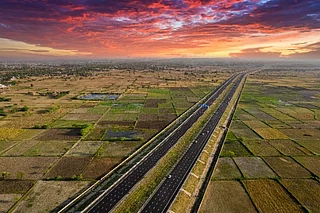
The winter arrived with a soft whisper against the tracks and the faint, lingering scent of sarson (mustard) in the air. On one of those crisp mornings, the world seemed to stand still as the Amritsar Swarna Jayanti Shatabdi pulled into the station. A reliable veteran of this route, the train offered a promise of punctuality and comfort for a price of 1,400 to 2,000 Indian rupees.
Our trip began in Delhi: two families merging into one lively unit for a journey that we hoped would be more than just spiritually enriching; we hoped it would bring us closer than we had ever been.
The Rhythm Of The Cabin
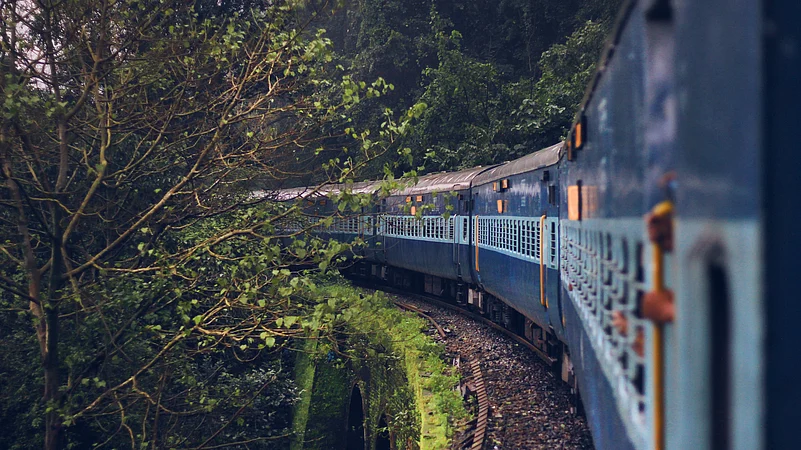

Within an hour of departure, the formal seating arrangement dissolved, much like the Marie Gold biscuits we dunked into our first round of tea. The once-sleepy travellers were now brimming with energy. My friend and I leaned over our backrests, gossiping about school, while the sound of opening crisp packets filled the air.
The modern world, however, soon caught up with us. As we scrolled through reels and shared memes, our mothers made a bold proposal: Could we survive the trip without our phones? After some contemplation, we reluctantly agreed to use them for pictures only.
The transition was immediate. The dads moved from small talk to deep debates about changing government policies, while the mothers shifted from coddling us with breakfast to lost-in-time conversations amongst themselves.
Fields Of Gold And Handcrafted Moments

Left without our devices, my friend and I turned to the offerings of the window. The mustard fields spread over long acres, the tiny yellow flowers resembling bright splashes of paint. It felt like a scene from an iconic, old Bollywood movie 'Dilwale Dulhania Le Jayenge' (1995); one could almost expect to see Raj (Shahrukh Khan), with a maroon mandolin in hand, eagerly waiting for his Simran.
Watching the world rush by at 110kmph gave me a sense of peace that one hardly finds in a cramped car or a silent airplane cabin. I decided to spend the time playing made-up games and crocheting a coaster. As I progressed with my creation, its rhythm matching the clickity-clack of the tracks, an old woman watched me intently. We exchanged a knowing smile, a silent exchange in which she seemed to be reminiscing about her past designs while I was just beginning my journey with the craft.
Entering The Holy City
As the train passed through the industrial hubs of Ludhiana and Jalandhar, the air grew heavier. The local dialect shifted, moving from the sharp tones of Delhi to the melodic lilt of Punjabi.
By 1pm, a mild panic set in as we scrambled to pack our items so nothing would be forgotten. When the train finally pulled into Amritsar Junction, the air felt different, thicker, warmer, and buzzing with energy. We stepped off not exhausted, but fuelled by the arrival.
The transition to the city was seamless. Within thirty minutes, we were dropped off near the Golden Temple, where the sun reflected off the dome in a way that felt like a personal welcome.
The Golden Sanctuary: Harmandir Sahib
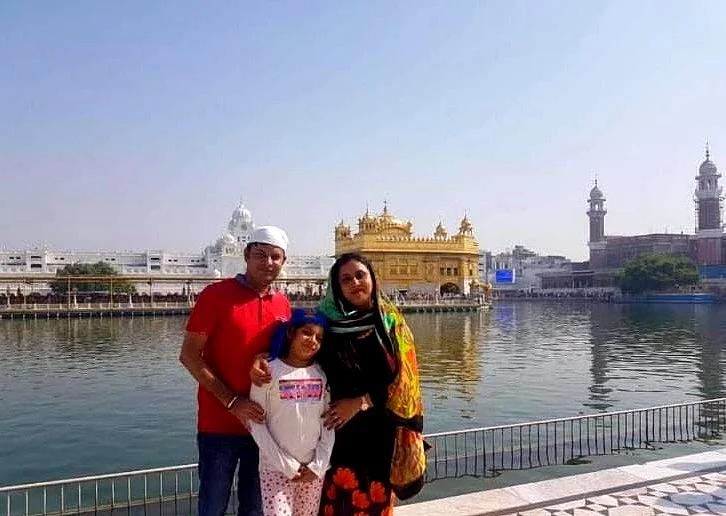
Stepping into the Harmandir Sahib is like entering a different dimension where time slows down. The first thing that hits you is the sound of the melodic Gurbani (hymns) echoing over the shimmering water of the Amrit Sarovar (pond).
We walked down the marble steps and joined the sea of people moving in a quiet, rhythmic circle around the pool. The sights that I once saw in the movie 'Rab Ne Bana Di Jodi' (2008) slowly came to life as we explored the temple that preached the teachings of the Guru Granth Sahib.
The Gurudwara isn't just famous for its gold dome; it is the Langar, based on the simple principle of Seva (selfless service), that truly moves the heart. We were served simple dal and roti by volunteers who worked with joy. In that hall, there were no rich or poor, just people sharing a meal in silence.
The Sacred Grace: Kada Prashad
As we exited, we were served Kada Prashad, a simple yet delightful halwa made with grainy wheat, sugar, and ghee, bound to make one feel at home.
There is a beautiful, informal ritual that follows eating the Prashad. As the last bit vanished, we followed the age-old tradition of rubbing the remaining ghee into our palms. Instead of reaching for a tissue, we rubbed our hands together, moving the fragrant oil over our wrists and skin. It is a tradition that is part practical moisturiser and part spiritual "no-waste" policy, ensuring the Guru’s blessings stay with you long after the meal is over.
The Border And The Bazaar
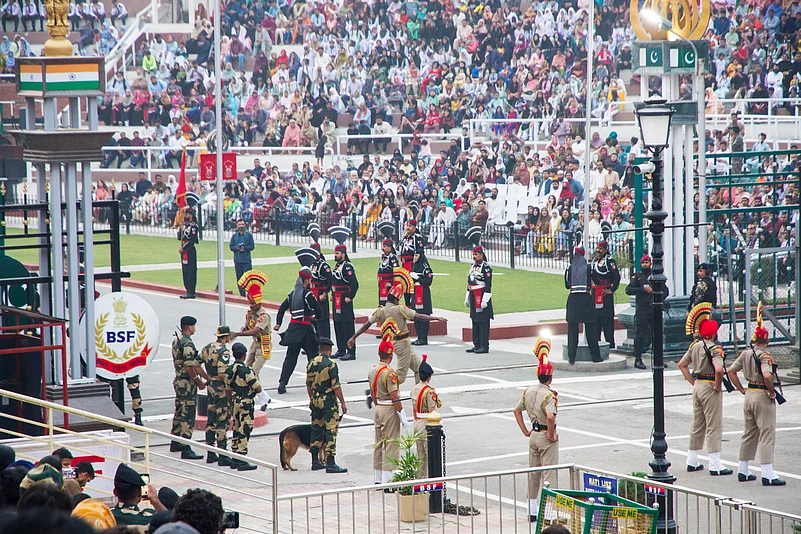
Later that afternoon, at around 4pm, we drove 30 kilometres to the Attari-Wagah Border, an atmosphere that was the polar opposite of the Temple. The "Beating Retreat" ceremony is a masterclass in millitary theatre. We watched as the Border Security Forces soldiers, in their fan-tailed hats, marched with high-octane energy, their boots thumping against the ground in perfect unison with the Pakistan Rangers on the other side. As the sun dipped below the horizon and the flags were lowered, a brief, solemn handshake between the soldiers marked the end of the day.
The next day brought a new excitement as we set out to explore the local market. We ended our journey at two must-see spots in Amritsar: the famous Hall Bazaar and Katra Ahluwalia. The narrow lanes were filled with local Punjabi women with parandis dangling down their long braids, looking through stones overflowing with Phulkari dupattas. These intricate, hand-embroidered shawls looked like gardens woven into cloth, a pattern distinct to the Majha region.
Amritsar is equally famous for its red-soled leather juttis, often called "Desi Louboutins." Leaving without a pair embroidered with beads and mirrors can be treated as an utmost sin.
The Final Flavours

We finished our shopping spree by buying "Chaand Baaliyaan" and long, glistening parandis before moving on to the final and most important part of Amritsar: eating local food.
You cannot leave the market without the smell of frying Amritsari Kulchas pulling you in. We sat at a tiny wooden table, tearing into layers of flaky, butter-soaked kulchas stuffed with spiced potatoes. All was washed down with a tall, frothy glass of lassi so thick that you almost needed a spoon to finish it.
As the train came to take us home, I slowly bid goodbye to the station filled with colourful turbans and the steam from hot tea being poured into glasses. I was just a tiny part of the hustle that dated back to the times of the Sikh Gurus. The same yellow flower farms lined the tracks as I went back to crocheting. By the time I reached Delhi, I was done weaving my creation, while the trip to Amritsar had woven itself beautifully into my life, taking a special place in my heart.
Paridhi Chawla is a Class 11 student and an art-loving bibliophile who finds joy in painting, debating the nuances of Shakespeare, and exploring vintage aesthetics, all while keeping a watchful, "grammar nazi" eye on every semicolon.