Travel in India is entering a new phase. For decades, our tourism story was built around persuading people to come and see India. Today, it is increasingly about Indians choosing to explore their own country. Travel is no longer a rare escape or a once-a-year indulgence. It has become a part of everyday life for more Indians, shaped by rising incomes and easier connectivity.
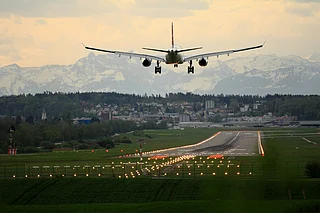
Domestic tourist visits reached 2,948.19 million in 2024, and the airport map has expanded from 74 airports in 2014 to over 160 operational airports. When travel becomes easier, it does not merely respond to demand; it creates it. A highway, a runway, or a new rail link can turn a distant place into a weekend possibility. Once that happens, it changes how people imagine the boundaries and topography of their country.
That is why the most interesting travel trends in India are no longer about destinations alone, but about motives. Indians are travelling for faith, for food, for music, for sport, for the feeling of being present at something memorable.
The surge of spiritual travel
The old binary between pilgrimage and leisure no longer holds. A family heading to Ayodhya is not very different in travel behaviour from a group flying to a concert weekend or driving hours for a celebrated meal. With pilgrimage travel rising 19 per cent in FY25 across 56 spiritual destinations, and with PRASHAD and Swadesh Darshan steadily building the infrastructure around sacred circuits, religious tourism is becoming one of the most important engines of domestic travel. This shift is also cultural. India’s pilgrimage tradition remains the same, but scale, comfort, and experience have transformed. Cities like Ayodhya, Varanasi, Tirupati, Shirdi, and Prayagraj have become full-fledged travel ecosystems, attracting families, first-time visitors, and younger pilgrims.
Technology now plays a key role—Ayodhya uses AI-enabled monitoring to manage crowds, while the Maha Kumbh in Prayagraj showed how digital systems, including lost-and-found centres, can safely manage massive gatherings and reunite thousands of people.
I have seen this transition from another angle as well. When we built “Incredible India” and Kerala’s “God’s Own Country,” we were working in a very different media age. We did not have Instagram then. Discovery moved through brochures, newspaper features, travel writing, and the authority of word of mouth. A destination had to be introduced, explained, and patiently built into the public imagination. Today, the same destination can become desirable overnight because social media has collapsed the distance between curiosity and booking.
Travelling for unique experiences
That is especially true in food. Chef Prateek Sadhu, who gave India the highly regarded Masque experience, understood something deeply human when he opened Naar in Kasauli, well away from the urban centre of gravity. The distance is part of the appeal. The exclusivity, the planning, the slight friction of the journey, all add to the myth of the place. That is the new psychology of travel, and it explains why destination dining has become such a powerful trigger. A restaurant is no longer just where you eat. It is where you go.
When travel becomes easier, it does not just respond to demand; it creates it. A highway, or a new rail link can turn a distant place into a weekend possibility
The same instinct is visible in live events. India is in the middle of a concert boom, changing the logic of travel. Industry reports say the organised live events sector crossed the INR 12,000 crore mark in 2024, with nearly half a million fans travelling between cities for live music. That matters because it spreads demand beyond obvious destinations. It is also why places like Ahmedabad, Mumbai, and Ziro in Arunachal Pradesh have become part of the new travel map.
The Hospitality Sector Boom
What has changed just as much as the reason for travelling is the quality of the stay. Earlier, in many two-tier and three-tier cities, travel was held back by a basic lack of clean rooms, working bathrooms, and dependable service. That is no longer the case. Across India, domestic hotel chains have filled that gap with a wide range of properties that have made short business trips, family travel, and road journeys far more practical. At the same time, boutique resorts have begun to interpret India for travellers in a more immersive way, drawing on local architecture, food, landscape, and craft rather than copying a standardised template. Wildlife tourism has also matured, with organised lodge and safari operators making forests, reserves, and edges of the wild more accessible without stripping them of character.
Better Infrastructure, Easy Travel
Infrastructure is what makes all this possible. The expansion of India’s airport network has dramatically widened the geography of movement, but airports alone do not create tourism. What creates tourism is the ability to connect arrival with experience, and experience with memory. Roads, rail, sanitation, signage, digital booking systems, and urban design all matter because they determine whether a traveller feels welcomed or merely transported.
This is where policy becomes important. Schemes like PRASHAD and Swadesh Darshan have shifted tourism focus towards infrastructure, circuit-based development, and destination renewal. The key opportunity lies in building connected circuits rather than isolated sites, treating tourism as an ecosystem that includes livelihoods, hospitality, transport, culture, and curation. India’s strength is its variety at scale, where faith, food, music, heritage, and hospitality can all be experienced within a single journey.
That multiplicity is India’s strength. It is also why the future of travel here will not belong to one kind of traveller alone; it will belong to a country that has learned to make movement meaningful.
Looking for more such exciting and meaningful stories? Grab our issue on Amazon.