


India recently expanded the network of entry points available to foreign travellers holding e-visas. It added 11 international ports to its roster from August 10, 2026. The new additions include two airports, Raja Bhoj Airport in Bhopal and Tirupati International Airport, and nine land ports, including Attari in Punjab, Moreh in Manipur and Dawki in Meghalaya. The expansion increases the total number of designated entry points for e-visa holders to 88, comprising 37 airports, 38 seaports, and 13 land ports.
The expansion is part of the government's effort to make India's electronic visa system more accessible, while also maintaining immigration and security controls through digital infrastructure. The e-visa scheme, introduced in 2014 for citizens of 43 countries, is now available to nationals of 172 countries across 17 categories, including tourism, business, medical, student, transit, mountaineering and cruise travel. Around 95 per cent of e-visa applications are processed within 72 hours, while electronic visas now account for about 78 per cent of all visas issued by India.
More Options Beyond Major Airports
For international travellers, the immediate effect of the change is a wider choice of where to begin a trip to India. Until now, travellers using an e-visa had to plan their arrival around designated airports, seaports and a smaller number of land crossings. The addition of Bhopal and Tirupati gives eligible visitors direct access to central and southern India. The nine land ports expand the possibilities for travellers entering overland from neighbouring countries.
The newly designated land ports are Agartala in Tripura, Darranga in Assam, Gede, Ghojadanga, Haridaspur and Jaigaon in West Bengal, Dawki in Meghalaya, Moreh in Manipur and Attari in Punjab. Their inclusion could be particularly relevant to travellers combining India with neighbouring destinations, as well as those whose itineraries begin in border regions rather than at major international airports.
However, this does not mean that an e-visa has itself changed in terms of eligibility or validity. The change with the new expansion is that a traveller can use it to enter India. Travellers will still need to check the conditions of their specific e-visa category and ensure that their intended point of entry is among the officially designated ports.
What The Expansion Means For Regional Travel
The addition of land borders is significant because it extends the e-visa system beyond conventional air travel. Cross-border itineraries involving India and neighbouring countries can now potentially be planned with greater flexibility, particularly around crossings such as Moreh, Dawki, Jaigaon, and Attari. The government has described the expansion as a means to facilitate legitimate international travel while strengthening technology-led border management.
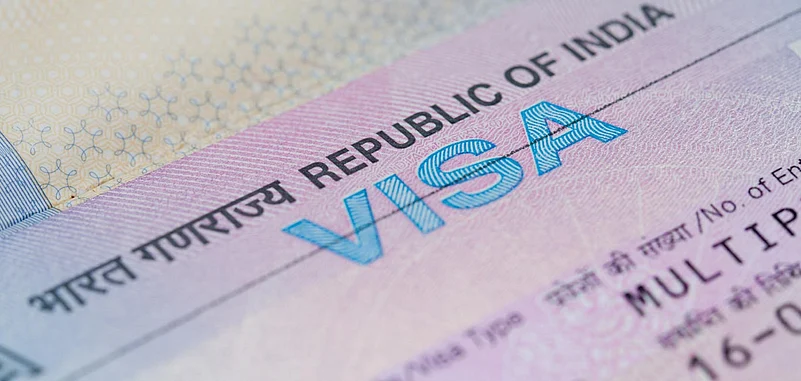

The change also brings different modes of international entry under a more consolidated framework. The updated network is further linked to the Immigration and Foreigners Act, 2025, bringing airports, seaports, land borders and rail posts under a common framework. For travellers, the significance lies less in the legislation itself and more in the availability of clearly designated channels for using an electronic visa across different modes of arrival.
Attari And The Limits Of The New Access
Attari is a significant addition because it sits on the India-Pakistan border. Its inclusion means that border crossing there is now part of the designated network for eligible e-visa holders. However, travellers holding Pakistani passports, as well as those of Pakistani origin, cannot use the e-visa facility and must apply for a regular visa through an Indian Mission.
For other eligible foreign travellers, the significance of Attari and other land ports lies in the possibility of incorporating overland travel into an India itinerary without first arriving through one of the country's major international airports. The expansion makes the e-visa system more useful without removing the immigration checks that apply at international borders.
India's e-visa programme has grown substantially since its launch in 2014, from covering nationals of 43 countries to 172 today. With 88 designated entry points and electronic visas accounting for roughly 78 per cent of visas issued, the latest expansion is another step towards making digital visas the more widely used route for international visitors. For travellers, the immediate takeaway is straightforward: an Indian e-visa now opens the door through more airports, seaports and land borders, but the permitted entry point and visa category still need to be checked before travelling.
FAQs
1. How many e-visa entry points does India have now?
India now has 88 designated entry points for e-visa holders, comprising 37 airports, 38 seaports and 13 land ports.
2. Which new airports have been added for Indian e-visa holders?
Raja Bhoj Airport in Bhopal and Tirupati International Airport have been added to the e-visa entry network.
3. Which new land ports can e-visa holders use to enter India?
The new land ports are Agartala, Darranga, Gede, Ghojadanga, Haridaspur, Jaigaon, Dawki, Moreh and Attari.
4. Can Pakistani passport holders use India's e-visa facility?
No. Pakistani passport holders and travellers of Pakistani origin cannot use India's e-visa facility and must apply for a regular visa through an Indian Mission.
5. Does the expansion change Indian e-visa eligibility or validity?
No. The expansion adds designated points of entry but does not itself change the eligibility or validity conditions of individual e-visa categories. Travellers should check their visa conditions and ensure that their intended entry point is authorised.


