


Hotels may still be the default choice for many travellers, but homestays, holiday rentals and serviced apartments are increasingly finding a place in India’s travel plans. Whether it is a family holiday, a group getaway or a work trip, travellers are looking for stays that offer more space, flexibility and a closer connection to the destination.
Booking.com’s fourth edition of its How India Travels 2026 – The Home Edit report, prepared in partnership with travel advisory and research firm VIDEC Consultants, looks at how alternative accommodation is becoming an important part of the country’s travel industry. The segment’s gross booking value (GBV) is projected to reach INR 415 billion by FY29, against an overall travel market estimated at INR 8,200 billion.
The report points to a market that is growing not just in size, but also in the way properties are managed, destinations are discovered and travellers choosing the places to stay.
Alternative Accommodation Is Becoming Mainstream


The number of digitally distributed alternative accommodation listings in India rose from 1,02,200 in FY23 to 2,15,000 in FY26. While supply growth is expected to slow after a 26 per cent increase in FY26, the segment’s gross booking value is projected to grow at a compound annual growth rate of 21.2 per cent through FY29.
There is still room for further growth. Alternative accommodation accounts for around 13 per cent of lodging GBV, while online searches for these stays increased by 6 per cent between FY24 and FY25, compared with 2 per cent for hotels.
Santosh Kumar, Regional Head, South Asia at Booking.com, sees this as a turning point for the sector. “We are seeing a fundamental shift where alternative accommodation is no longer just supplementary inventory, it is actively driving tourism expansion in non-metro markets and regional hubs,” he said.
Smaller Cities Are Seeing More Options
The growth of alternative accommodation is also opening up destinations that may not have enough conventional hotel rooms to meet rising demand. While metros and established holiday destinations accounted for 46 per cent of the segment’s inventory in FY26, smaller cities and emerging leisure destinations are gaining ground.
Between June 2025 and June 2026, alternative accommodation listings more than doubled in Greater Noida, Ghaziabad, Indore and Ayodhya. The report also points to an estimated shortage of more than two lakh hotel rooms in India, highlighting the potential for alternative stays to add capacity in underserved destinations and during major events.
For travellers, this could mean more options in places where accommodation has traditionally been limited. For local property owners, it offers an opportunity to participate in tourism without necessarily operating a conventional hotel.

Travellers Want More Than Just A Place To Sleep
The appeal of alternative stays goes beyond having an extra room or a kitchen. According to the report, 87 per cent of surveyed travellers said these stays help create more meaningful memories, while 85 per cent associated them with authentic local experiences.
Space and practicality also matter. Around 83 per cent of respondents considered alternative accommodation ideal for families and groups, while the same proportion saw it as offering good value for money. A similar share viewed these stays as a more sustainable choice.
These preferences reflect how accommodation is becoming part of the holiday itself. A homestay can offer a different way to experience a neighbourhood, while an apartment may make a longer trip more comfortable for a family. The choice is increasingly about finding a stay that fits the purpose of the journey.
Business Travel Is Expanding Beyond Hotels
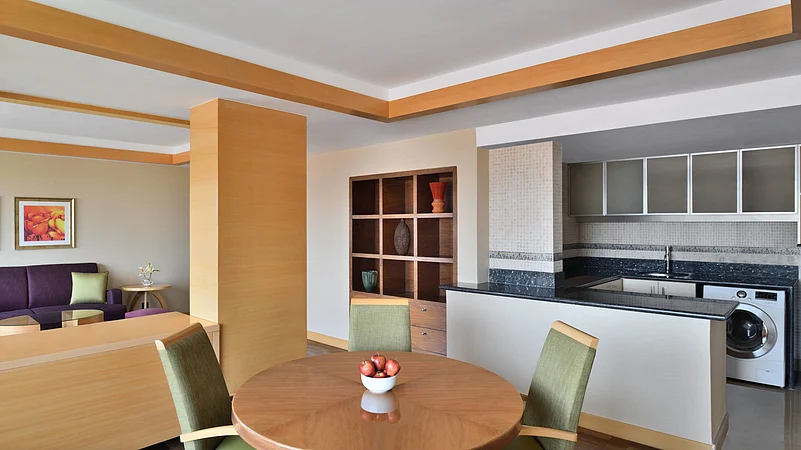
Alternative accommodation is also attracting business travellers. They accounted for 19 per cent of bookings in the segment in FY26, a share projected to rise to 21 per cent by FY27.
Apartments and aparthotels are particularly suited to professionals who need space to work as well as unwind. According to the report, 41 per cent of business travellers cited additional living space or a separate bedroom or workspace as a reason for choosing these properties. The ability to accommodate family members or colleagues was another consideration for 40 per cent.
The trend suggests that these stays are no longer limited to holidays or extended work assignments. They are increasingly being considered for shorter business trips, too.
Better Technology, More Professional Hosts
As demand grows, technology is changing how alternative accommodation is managed. The report found that, across seven Indian markets, properties with high dynamic-pricing scores generated between 108 and 190 per cent higher revenue per available room (RevPAR) than those using fixed pricing. Goa recorded the highest difference.
Virendra Jain, Co-Founder and CEO of VIDEC Consultants, said the segment was entering a new phase of maturity, with digital distribution and improving operating capabilities supporting its growth. He added that greater formalisation, technology adoption, consistent quality and better destination infrastructure would be important for the sector’s future.
Government initiatives are also expected to play a role. Programmes such as MUDRA, UDAN, PM Gati Shakti, Swadesh Darshan 2.0 and PRASHAD aim to support financing, connectivity and tourism infrastructure. Shri Bhuvnesh Kumar, Secretary of the Ministry of Tourism, highlighted the importance of helping small homestay owners access finance and navigate loan applications.
For alternative accommodation to sustain its growth, however, more listings alone will not be enough. Reliable information, consistent standards, smooth check-ins and dependable guest support will be essential to building traveller confidence.
As India’s travel market expands, alternative stays are becoming more than an additional choice alongside hotels. They are creating new possibilities for travellers and local businesses alike, with their next phase of growth likely to depend on how well the industry balances scale with quality and the character of each stay.
FAQs
1. What is alternative accommodation?
Alternative accommodation includes stays such as homestays, holiday rentals, holiday homes and serviced apartments that offer an option beyond conventional hotels.
2. What is the projected size of India's alternative accommodation market?
According to Booking.com's How India Travels 2026 – The Home Edit report, the segment's gross booking value is projected to reach INR 415 billion by FY29.
3. How quickly is alternative accommodation growing in India?
The report says digitally distributed alternative accommodation listings increased from 102,200 in FY23 to 215,000 in FY26. Gross booking value is projected to grow at a compound annual growth rate of 21.2 per cent through FY29.
4. Why are travellers choosing alternative accommodation?
The report points to demand for more space, flexibility, value for money and local experiences. Alternative stays can also be practical for families, groups and travellers on longer trips.
5. Which Indian destinations are seeing growth in alternative accommodation?
The report identifies Greater Noida, Ghaziabad, Indore and Ayodhya among the cities where alternative accommodation listings more than doubled between June 2025 and June 2026.