If the past few years were about reopening doors, 2026 is about stepping into entirely new rooms. Around the world, museums and cultural institutions set to open this year aren’t content with being quiet repositories of objects. They’re arriving as destinations in their own right—designed to slow you down, make you think, and, increasingly, make you travel differently.
When Museums Become Destinations: The Cultural Institutions Worth Travelling For In 2026
Across the world and in India, museums opening in 2026 reflect how culture, architecture, and travel now intersect

Advertisement
What links these new openings is a shared shift in how culture is experienced today. Less reverence, more relevance. Fewer velvet ropes, more conversation. Architecture isn’t just a container anymore; it’s part of the narrative. And the most compelling museums of 2026 understand that visitors are no longer looking to tick boxes—they’re looking for ideas, atmosphere, and a reason to linger.
From AI-driven art environments in Los Angeles to adaptive reuse projects in historic Indian buildings, this is a year where cultural itineraries feel as intentional as culinary ones. Here’s where the world—and India—is breaking new ground.
Global Museum Openings To Watch Out For In 2026
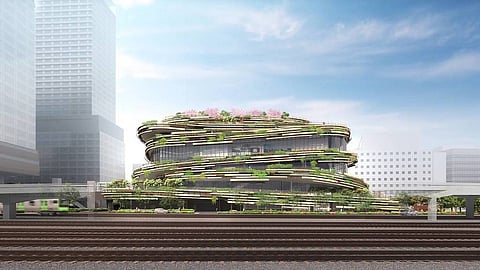
From adaptive reuse to futuristic design, new museums reflect shifting ideas of access, relevance, and engagement MoN Takanawa: The Museum of Narratives
New Museum Expansion, New York
Reopening in March 2026, New York’s New Museum marks a major moment for contemporary art on the Bowery. Designed by OMA, the expansion nearly doubles the museum’s gallery space while improving circulation and accessibility, longstanding challenges in the original structure.
Advertisement
The relaunch exhibition spans disciplines and geographies, examining technology, memory, and identity through a distinctly future-facing lens. With expanded artist residencies, public forums, and a reimagined Sky Room overlooking the city, the New Museum’s next chapter is built around return visits. It’s still intellectually demanding—but far more generous in how it asks you to engage.
MoN Takanawa, Tokyo
Opening beside the sleek Takanawa Gateway Station, MoN Takanawa feels calibrated for modern travel. Designed by Kengo Kuma, the museum’s wood-and-greenery-clad form rises gently, more invitation than monument.
Inside, rotating exhibitions blend traditional Japanese arts with popular culture, technology, food, and mixed-reality storytelling. Programming shifts seasonally, and terraces, performance spaces, workshops, and dining areas blur the line between museum visit and cultural immersion. MoN Takanawa isn’t just about looking—it’s about inhabiting Tokyo’s layered sense of time.
V&A East Storehouse, London
Opening in Stratford in April 2026, the V&A East Storehouse anchors London’s evolving East Bank cultural district. Spread across five levels, the museum focuses less on objects as artefacts and more on the human impulse to make things.
Advertisement
Early exhibitions foreground east London’s cultural contributions—music, fashion, design—while community collaboration shapes the curatorial voice. With excellent transport links, generous social spaces, and a neighbourhood-first sensibility, the Storehouse feels grounded without being parochial.
LACMA David Geffen Galleries, Los Angeles
After years of anticipation, LACMA’s David Geffen Galleries finally open in April 2026. Designed by Peter Zumthor, the elevated structure replaces multiple buildings with a single continuous gallery level—doing away with rigid chronological and geographic divisions.
Art from different cultures and eras coexists, encouraging dialogue rather than hierarchy. Below, shaded public plazas and dining areas integrate the museum into city life. In a city built for speed, this is a deliberate invitation to slow down.
Dataland, Los Angeles
Also opening in 2026, Dataland bills itself as the world’s first museum dedicated to AI-generated art. Founded by media artist Refik Anadol, the space translates vast datasets into immersive, evolving environments.
Located within The Grand LA complex, Dataland functions as both exhibition space and research hub, hosting residencies and collaborative experiments. Ethical AI practices sit at the core of its operations, positioning the museum less as spectacle and more as a serious inquiry into authorship and creativity in the algorithmic age.
Advertisement
Lucas Museum Of Narrative Art, Los Angeles
Opening in September 2026, the Lucas Museum celebrates storytelling across cultures and mediums, from illustration and photography to comic art, murals, and cinema. Designed by MAD Architects, the fluid, futuristic building feels appropriately cinematic.
With theatres, libraries, learning spaces, and rooftop dining, the museum encourages long visits. By placing everyday narratives alongside epic ones, it reframes storytelling as a universal instinct rather than a high-art category.
KANAL–Centre Pompidou, Brussels
Opening in November 2026, KANAL–Centre Pompidou transforms a former Citroën garage into a vast cultural commons. Half the space remains freely accessible, integrating art into daily urban life.
Blending Belgian art with long-term Centre Pompidou loans, the museum combines exhibitions with performance spaces, libraries, and archives. Its industrial architecture remains largely intact, reinforcing the idea of a living museum shaped by the city around it.
India: New Institutions & The Power Of Reuse
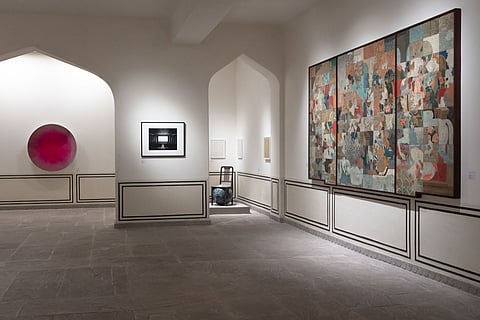
The Jaipur Centre For Art in Jaipur Lodovico Colli di Felizzano
Yuge Yugeen Bharat Museum, New Delhi
Advertisement
Set to open its first galleries by the end of 2026, the Yuge Yugeen Bharat Museum is India’s most ambitious cultural infrastructure project, and the world’s largest museum in the making. Occupying the historic North and South Blocks on Raisina Hill, it transforms former seats of power into spaces of storytelling.
Spread across nearly 1.55 lakh sq m, the museum will unfold in phases, tracing India’s civilisational journey through layered, thematic narratives. More than a museum visit, it represents a national rethink of how heritage is presented—public-facing, accessible, and designed for scale without sacrificing nuance.
Muziris Contemporary, Kochi
Housed in a former pepper warehouse in Fort Kochi’s Mattancherry area, Muziris Contemporary resists the sanitised language of the white cube. High ceilings, exposed rafters, red oxide floors, and an old Kathakali stage remain intact.
Founded by Joe Cyril, the gallery is part of a broader effort to decentralise India’s art ecosystem. Designed for slow looking and repeat visits, the space prioritises breathing room, both literal and intellectual, signalling a quiet but confident shift southward.
Advertisement
Sarmaya Fort, Mumbai
Sarmaya’s new home in Mumbai’s Fort district feels closer to a private research library than a conventional museum. Visitors can browse rare books, maps, coins, and artworks—or request tailored viewings drawn from its deep archive.
Micro-curation and individual access define the experience. Preserved teak ceilings and stone walls lend authority without intimidation, proving that intimacy can be just as powerful as scale.
Jaipur Centre For Art, Jaipur
Set within the City Palace, the Jaipur Centre for Art makes a compelling case for heritage spaces as active cultural participants. Contemporary exhibitions unfold against royal architecture, not as contrast but conversation.
With residencies, public programmes, and an openness to younger audiences, JCA demonstrates how adaptive reuse can honour history without freezing it in time.
TRI Art & Culture, Kolkata
In south Kolkata, a restored 1940s family mansion has become TRI, a non-profit cultural centre built around exchange. Exhibitions, performances, workshops, and conversations coexist across rooms, often in collaboration with other institutions.
Advertisement
By resisting a fixed curatorial identity, TRI mirrors Kolkata’s long tradition as a city of ideas—less spectacle, more sustained engagement.
As museums evolve, they are increasingly shaping travel itineraries as much as cities and landscapes do Iakov Filimonov
If 2026 has a cultural mood, it’s this: museums are no longer endpoints. They’re starting points—for travel, for dialogue, for rethinking how we encounter art and history.
And honestly? That’s a journey worth planning around.
FAQs
1. Why is 2026 such a significant year for museum openings?
Because several long-gestation projects are finally launching, reflecting a global shift towards experiential, architecture-led cultural spaces.
2. Are these museums designed mainly for art lovers?
No. Many are conceived as civic spaces—combining exhibitions with talks, dining, performance, and public areas to welcome wider audiences.
3. How are new museums changing the way people travel?
They’re becoming primary travel motivations, encouraging slower itineraries built around ideas, architecture, and repeat visits.
4. What makes India’s upcoming museums different from earlier institutions?
A strong focus on adaptive reuse, narrative storytelling, and public engagement rather than static displays.
Advertisement
5. Will these spaces remain relevant beyond their opening year?
Yes. Most are programmed for evolving exhibitions and long-term engagement, not one-time visits or blockbuster shows.
Published At: