The world once treated Indian food like a monologue.
From The Latest Issue: More Than Curry
From diaspora kitchens to fine-dining rooms, Indian food has moved beyond old stereotypes to claim its place as one of the world’s most layered and expressive cuisines

Advertisement
One sauce. One spice level. One tired menu laminated under dim lights. Somewhere between “exotic” and misunderstood, curry became shorthand for a civilisation so vast that it contains more culinary philosophies than most continents combined. But humans love reducing complexity into a takeaway container—it saves them from having to think.
But something has changed irreversibly.
Today, Indian cuisine is no longer standing outside the gates of global gastronomy, asking to be understood. It has entered confidently, carrying centuries of technique, memory, migration, ritual, agriculture, poetry and survival. And the remarkable part is this: it did not arrive by abandoning itself, it arrived by becoming more deeply itself.
I have witnessed this transformation firsthand over four decades. From the streets of Amritsar to the kitchens of New York, from feeding pilgrims to cooking for presidents, I have seen Indian food evolve from comfort food to a respected culture.
When I moved to the United States in 2000, Indian cuisine in the West was still largely confined to a narrow vocabulary of rich gravies, buffet lines and predictable dishes. The diversity of India was missing. Where were the mountain cuisines of Himachal Pradesh, the temple foods of Odisha, the delicate coconut stews of Kerala or the smoked tribal foods of the Northeast? Where were the forgotten grains, pickles, fermentation techniques, medicinal traditions and ceremonial cooking?
Advertisement
Many chefs before my generation worked tirelessly to create familiarity and acceptance, and they deserve enormous respect. Diaspora families carried recipes across oceans in steel containers and handwritten notebooks. Mothers recreated home in tiny apartment kitchens. Restaurateurs survived impossible odds in unfamiliar lands. These are the people who laid the foundation for what we are witnessing today.
But now, a new chapter has begun.
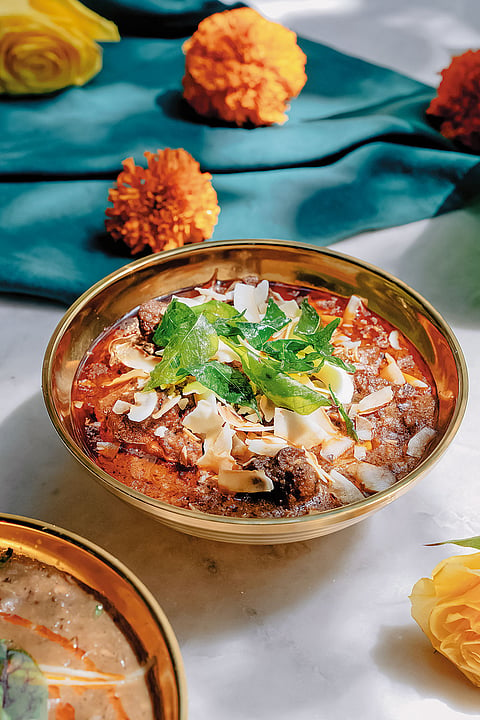
Bungalow, Khanna’s restaurant in New York City, serves modern Indian cuisine Deposit Photos
The global diner has changed. People are more curious, more travelled, more open to the stories behind ingredients. Diners now ask where turmeric comes from, why black cardamom tastes smoky, what makes Kashmiri fennel different, and why a dosa batter ferments differently in Chennai than in New Jersey. Food is no longer only about consumption, but about identity, memory and connection.
Indian cuisine is uniquely positioned for this era because it has always carried storytelling within it.
Every Indian dish tells you something about geography, migration, faith, climate, trade or survival. A simple khichdi can reveal age-old agricultural wisdom, while a pickle shows how food was preserved before refrigeration. A thali can teach balance better than most nutrition textbooks. Even our spices were never merely about heat; they were about healing and holistic wellbeing.
Advertisement
The future of Indian cuisine can't simply be about luxury plating or imported aesthetics; it must remain rooted in authenticity while embracing innovation
At Bungalow in New York, I wanted to build more than a restaurant. I wanted to create a living archive of India, not through nostalgia alone, but through emotional truth. Through flowers at the entrance, temple bells, forgotten recipes, ceremonial hospitality and dishes that carry memory instead of performance.
The future of Indian cuisine cannot simply be about luxury plating or imported aesthetics; it must remain rooted in authenticity while embracing innovation.
And innovation is important. Indian cuisine has not remained frozen in time. It has evolved for thousands of years through trade routes, invasions, adaptation and creativity. The chilli itself arrived in India only a few centuries ago, yet today it feels inseparable from our identity. Indian cuisine has always absorbed influence while retaining its soul.
Advertisement
What excites me most now is watching younger chefs reclaim regionality without apology.
A generation ago, many Indian chefs abroad felt pressure to dilute flavours or simplify menus to gain acceptance. Today, younger chefs are serving hyper-regional dishes with confidence. They are highlighting millets, indigenous ingredients, village techniques, and family traditions that were once considered too unfamiliar for international audiences.
That shift matters because respect comes when authenticity survives visibility.
I also believe the next chapter of Indian cuisine globally will not be led only by fine-dining restaurants. It will emerge equally from home kitchens, independent food creators, farmers, street vendors and small regional voices amplified through digital storytelling. Some of the most important ambassadors of Indian cuisine today are grandmothers on YouTube, home cooks on Instagram, and immigrants preserving rituals in suburban kitchens.
Food media has democratised representation.
For decades, global culinary validation came from a few institutions, largely rooted in European frameworks. However, the future will belong to plurality: diverse voices evaluating diverse cuisines through cultural understanding rather than inherited hierarchies.
Advertisement
Indian cuisine no longer needs translation to justify itself. It deserves scholarship, respect, curiosity, preservation and, most importantly, emotional understanding.
The rise of Indian cuisine globally is not simply about restaurants becoming fashionable. It is about a civilisation finally being understood through its most generous art form. And that is why this moment feels so emotional to me.
For years, many of us carried India in fragments. In spice boxes. In memory. In longing.
Today, the world is finally pulling up a chair to the entire table, to one of the oldest cuisines from one of the youngest countries in the world: India.
Looking for more such exciting and meaningful stories? Grab our latest issue on Amazon.

Published At: