India is a rewarding destination for literary travel, where books and storytelling are closely tied to place, memory, and everyday life. From historic book markets and independent bookstores to festivals and writer-led cafés, reading culture is woven into both big cities and smaller towns. Travelling through India this way means discovering how each region expresses its identity through language, literature, and the spaces where readers gather.
India’s Literary Cities: A Journey Through Books, Streets, And Stories
India’s cities reveal themselves best through their bookshops, libraries, and readers. From Kolkata’s second-hand book lanes to Kozhikode’s coastal literary spaces and Gangtok’s hill cafés, each place carries its own way of telling stories

Advertisement
Kolkata, West Bengal

The secondhand book stalls at Golpark stock out-of-print books Anuradha Sengupta
Kolkata is where you go if you want to read a city, not just visit one. Often called India’s cultural capital, it’s a place where books aren’t locked away in libraries—they follow you into streets, spill onto pavements, and turn everyday corners into literary encounters.
What to See & Do
Start at College Street (Boi Para), and you’ll understand the city immediately. This 1.5 km stretch is one of the largest second-hand book markets in the world. You can lose hours here—flipping through rare out-of-print books, academic texts, battered paperbacks, and Bengali classics you didn’t know you were looking for.
A few steps away, the Indian Coffee House invites you to sit where generations of students, writers, and thinkers have argued, debated, and written over innumerable cups of tea.
If you prefer slower wandering, head to Golpark’s second-hand bookstalls. This is where you browse without a plan and let chance decide what you take home—Soviet-era novels, old comics, forgotten magazines. You’ll often end up talking to stall owners, usually with a cup of tea in a clay “bhar” in hand.
Advertisement
To understand Kolkata’s literary roots, you can walk into Jorasanko Thakur Bari, Rabindranath Tagore’s ancestral home. As you move through its rooms, you get a quiet sense of the Bengal Renaissance and the world which influenced his writing. The National Library of India, in the Belvedere Estate, takes you in the opposite direction—into vast, silent halls filled with rare books, manuscripts, and archives that feel almost overwhelming in scale.
Kolkata’s literary life isn’t just history. At Seagull Books, you’ll find well-curated translations and contemporary fiction that show how global the city’s reading culture has become.
Earthcare Books, smaller and more niche, is where you can come across unusual, thought-provoking titles you’re unlikely to find elsewhere.
And if you time your visit right, the city’s literary pulse peaks at the International Kolkata Book Fair—one of the largest in the world. For a few weeks, the entire city seems to turn into a homage to books, with publishers, authors, and readers filling every corner.
Advertisement
Kozhikode, Kerala

The Kerala Literature Festival is a literary event held on the beaches of Kozhikode every year Nesrudheen/Shutterstock
Kozhikode (Calicut) is a city where literature isn’t something you step outside to find—it’s already part of the streets, the conversations, the everyday rhythm. As India’s first UNESCO City of Literature, it carries its writing tradition into libraries, festivals, and public life shaped by Malayalam literary culture.
What to See & Do
You can begin with the Kerala Literature Festival, held every year along Kozhikode Beach. You sit by the Arabian Sea while writers, thinkers, diplomats, and artists from across the world come together for talks, readings, and cultural performances. It appears less like a formal event and more like an open exchange of ideas by the water.
You can trace Kozhikode’s literary memory through its writers. At Vaikom Muhammad Basheer’s house, you enter the world of one of Malayalam’s most loved storytellers. Nearby, Ansari Park in Mananchira Square brings his stories and other literary works into public space through sculptures.
Advertisement
The Town Hall Library is a quiet spot where readers still gather and talk books. At Abussabah Library, the Braille section is a small but important sign of how open this reading culture is.
To feel the city in motion, you can walk through SM Street (Sweet Meat Street). It’s busy, layered, and full of life—shops, conversations, and street food all flowing into an area where ideas and everyday life naturally mix.
Kerala Tourism recently announced plans to develop a literary tourism circuit, a first for India. Museums and memorials for some of the most famous Malayalam writers like Vaikom Muhammad Basheer, Thunchath Ramanujan Ezhuthcahan, MT Vasudevan Nair, Akkitham Achuthan Namboothiri, and OV Vijayan are currently in different stages of construction in the Malabar region, which is known for its rich cultural heritage
Mussoorie And Landour, Uttarakhand
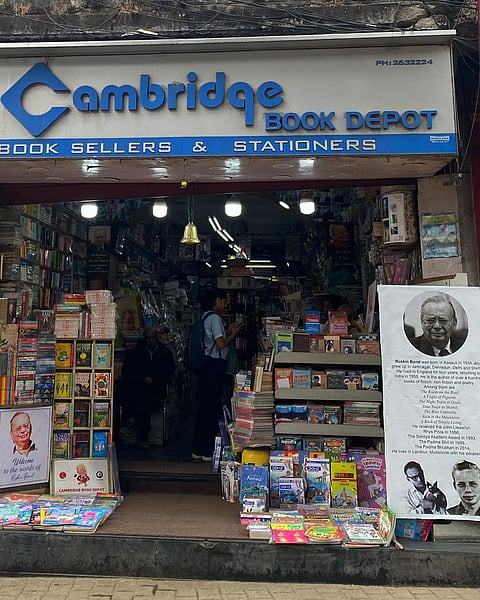
Cambridge Book Depot in Landour Bazaar wutheringgrove/instagram
Mussoorie and Landour are the kind of places where you don’t “find” literature—it just shows up as you move around. A bookstore here, a writer’s name there, a trail someone once wrote about. It’s a hill town, but also a quiet archive of people who came, stayed, and wrote about what they saw.
Advertisement
What to See & Do
Cambridge Book Depot on Mall Road, Mussoorie, is a good place to start. It’s old, a bit cluttered, shelves stacked tight enough that you have to lean in to read spines. You’ll go in just to look and probably come out later with something you didn’t plan to buy.
In nearby Landour, much of the literary pull comes from Ruskin Bond, who has lived here since 1963. His books are inseparable from these hills—deodar forests, quiet lanes, and slow mountain days. You can also explore trails and cafés around Landour that carry this same atmosphere, even if you’re just walking through.
The hills have pulled in writers for a long time. Stephen Alter, Ganesh Saili, and Bill Aitken all lived and wrote here, often using the same walking trails, forests, and weather as material for their work. You can still sense that overlap of life and writing when you’re in the area.
Advertisement
At Camel’s Back Cemetery, things feel older and quieter. It’s where figures like writer John Lang are buried, along with other names from the colonial past that still linger in Mussoorie’s history.
There are also stories tied to the wider literary world—Rudyard Kipling is believed to have drawn inspiration from walks in the region, and Mussoorie’s Savoy Hotel is frequently associated with early inspiration behind Agatha Christie’s first novel.
For a closer look at the town’s creative side, the Mussoorie Heritage Centre near Library Bazaar hosts local art, cultural archives, and literary walks, while festivals like the Landour Literature & Arts Festival bring writers and readers together in the hills.
Gangtok, Sikkim

Cafe Fiction is a quiet, tucked-away space where you can sit with a coffee and a novel rachnabooks/Instagram
Sikkim’s writing comes out of its mix of languages and people, and you notice that quickly in Gangtok. You’ll hear Nepali, Lepcha, Bhutia, English, and other languages shifting between homes, streets, and classrooms. A lot of storytelling still travels by word of mouth, alongside newer writing shaped by school, travel, and small local reading circles.
Advertisement
What to See & Do
Start at Rachna Books in Development Area, run by Raman Shrestha. It’s both bookstore and café, where people read, work, and talk across coffee. Books sit right inside daily life here, not apart from it. It also works well if you want to ask for very specific regional or hard-to-find book recommendations. Just below it is Cafe Fiction. It’s a quiet, tucked-away space where you can sit with a novel, have organic tea or coffee, and try their baked goods.
At the Namgyal Institute of Tibetology, things slow down as soon as you step in. The building itself has a quiet, traditional Tibetan feel, and inside you’ll find old Buddhist manuscripts, thangkas, and ritual objects, along with a library focused on Himalayan history and belief systems.
As you move around Gangtok, the landscape keeps finding its way into writing. Kanchenjunga shows up again and again—not just as a backdrop, but as something people talk about, remember, and return to in stories.
Advertisement
If you’re there at the right time, the Sikkim Book Fair or Sikkim Arts and Literature Festival spills into places like MG Marg or Ridge Park. Stalls line the space, people drift between them, and you’ll find local writers, readers, and small publishers just talking, browsing, and meeting each other without much formality.
Delhi
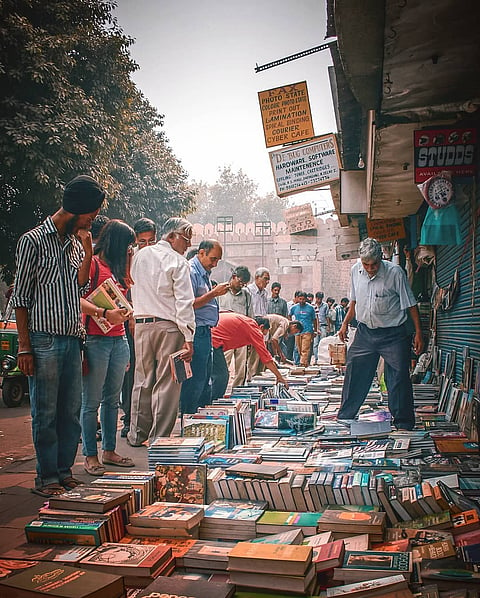
Secondhand books stalls in Daryaganj kitabikeedaofficial/instagram
Delhi is where you go when you want books in every form at once—street piles, serious bookstores, and a long literary memory running through the city. It’s loud, layered, and full of places where reading feels both casual and deeply rooted in culture.
What to See & Do
Start with Daryaganj Sunday Book Market, where the street itself turns into a long trail of books every weekend. Vendors lay out stacks on the ground—everything from worn paperbacks to older finds you didn’t expect to see again.
Around Connaught Place, book carts sit right on the pavement, squeezed between office crowds and traffic. You stop, flip through a stack, pay a couple of hundred rupees, and keep moving with the city around you.
Advertisement
In Khan Market, Bahrisons Booksellers feels more controlled and deliberate—fewer books, more carefully chosen. Just nearby, Faqir Chand & Sons has a more old-school feel, with staff who’ve clearly been around the books for years and know exactly where to point you. The city's book cafes offer space to sit, browse, and stay longer if you end up with a coffee.
Delhi’s literary scale also shows up at the Delhi Book Fair at Pragati Maidan, where publishers, writers, and readers all converge in one large indoor space.
And beyond the book culture, much of the city’s literary imagination—like William Dalrymple’s "City of Djinns"—comes directly from its monuments, ruins, and layered history that sit behind everyday life.
FAQs
What is the best city in India for literary travel?
Kolkata is often considered the most literary city, with its book markets, cafés, festivals, and long publishing history.
Which place in India has the biggest book market?
College Street in Kolkata and Daryaganj Sunday Book Market in Delhi are two of the largest and most well-known second-hand book hubs.
Advertisement
Are there literary festivals worth planning a trip around?
Yes—Kolkata International Book Fair, Kerala Literature Festival in Kozhikode, and Sikkim Book Fair are among the most notable.
Which hill destinations are linked to Indian writers?
Mussoorie and Landour are strongly associated with Ruskin Bond and a long tradition of Himalayan writing.
Is there a city in India where literature is part of daily life?
Yes—places like Kolkata, Kozhikode, and Gangtok stand out where books, cafés, and public spaces naturally blend into everyday life.
Published At: