In a new pivot that amalgamates history and economic strategy, the Union Budget 2026, presented by finance minister Nirmala Sitharaman on Sunday, has put India’s cultural and heritage tourism in the national spotlight. Apart from routine fiscal measures, the Budget also defines a bold roadmap that will reimagine archaeological sites and cultural landscapes as dynamic, “vibrant destinations.” This, in turn, is meant to bring a surge in jobs, community growth, and international appeal.
Union Budget 2026 Targets Revival Of 'Vibrant' Destinations: What Experts Are Saying
Explore how Union Budget 2026 taps into India’s past to fuel future growth by transforming 15 archaeological sites into immersive cultural hotspots, expanding tourism, jobs, digital storytelling, sustainability, and hospitality skills

Advertisement
The Budget 2026 sheds light on the Union government’s belief that India’s history and culture can be powerful drivers of economic growth. It proposes developing 15 archaeological sites into “vibrant, experiential cultural destinations,” making them accessible through curated walkways and immersive visitor experiences. These locations include Lothal, Dholavira, Rakhigarhi, Adichanallur, Sarnath, Hastinapur, and Leh Palace.
What ‘Vibrant Destinations’ Really Mean For Visitors
Rather than static preservation, the Budget emphasises modern visitor engagement with heritage. Excavated landscapes will be opened to the public, immersive storytelling technologies will be added, and interpretation centres and conservation labs will be enhanced to deepen understanding of India’s civilisational legacy.
A standout initiative is the National Destination Digital Knowledge Grid, designed to digitally document cultural, spiritual, and heritage assets across India. This national repository will support researchers, content creators and tour operators, thereby creating a new ecosystem of tourism-related jobs and digital enterprise.
Speaking to Outlook Traveller, Abhijeet Sinha, programme director, Cultural Economy (working for the Government of India), said, "To establish sustainable and culturally sensitive tourism that substantially increases local income (by 25–40 per cent), aligning with government Ease of Living principles highlighted in the recent budget for seamless community services, key pillars are proposed. Local governance and revenue sharing should be enabled by forming local groups to manage sites and ensure equitable distribution of ticket revenue. Targeted skill development must allocate a portion of revenue to train residents in guiding, crafting, and homestay operations for stable incomes."
Advertisement
Financial transparency can be ensured through simple applications to track transactions. "Performance incentives (annual bonuses/grants) should reward authentic tourism outcomes measured by visitor feedback and preservation metrics. Tax exemptions/subsidies for registered homestays can support quality community-run stays. Culture must be protected through rigorous authenticity checks and community veto power," he added.
Heritage tourism, undoubtedly, needs capable professionals. The Budget, hence, proposes upskilling 10,000 guides through a structured training programme in collaboration with top institutes. It also plans to convert the National Council for Hotel Management and Catering Technology into a National Institute of Hospitality to bridge industry and academic needs.
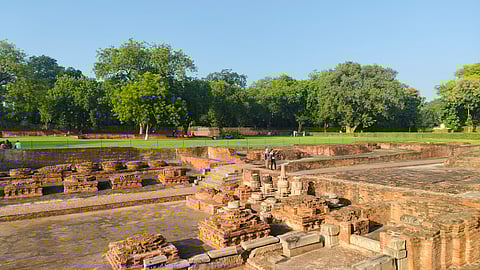
Archaeological excavation findings site, Sarnath Anwesha Santra
When communities are empowered to share their own history, cultural integrity is naturally protected and strengthened.
Elton Rodrigues, director, HostMyTrips, said, “For experiential heritage tourism to succeed, local communities need to be at the heart of it. Training residents as guides and storytellers, local hiring and partnerships with regional artisans can benefit tourism within the local economy. Safeguards should include clear guidelines on storytelling, performances and visitor conduct to prevent cultural misrepresentation.”
Advertisement
Reiterating on the same, Arun Kundu, director, Inbound Travel & Luxury Train Business - Ebix Travels, said, "Basic infrastructure is frequently inadequate. Poor last‑mile connectivity, limited parking, insufficient sanitation, and unreliable utilities affect both visitor comfort and site preservation. Upgrading infrastructure is essential, yet difficult to execute without altering the site’s character or violating conservation norms."
Many sites lack trained personnel to deliver high‑quality experiential tourism. Skilled guides, conservation‑aware staff, and experienced managers are in short supply, particularly in remote locations. Without sustained training and professional development, experiential offerings risk becoming inconsistent or unsustainable, Kundu commented, adding, "The biggest on‑ground challenge lies in aligning physical realities, regulatory systems, and human capacity with the promise of immersive heritage experiences. Success depends not on isolated interventions, but on integrated planning—where access is controlled, infrastructure is discreet, storytelling is community‑rooted, and regulation enables rather than restricts thoughtful innovation."
The Budget also provides for a Scheme for the Development of Buddhist Circuits in the northeast (including temples, monasteries, and pilgrim facilities) as well as developing connectivity between sites. Additionally, it anticipates developing five new tourism destinations in Purvodaya states (which will help to enhance the socio-economic conditions of these regions).
Advertisement
The Union Budget includes plans to develop ecologically sustainable mountain trails in regions such as Himachal Pradesh, Uttarakhand, and Jammu and Kashmir, as well as coastal turtle trails and bird-watching routes, thereby integrating nature-based tourism with cultural heritage offerings.
Economic Impacts And Future Implications
"Pilot programmes show a 30 per cent boost in satisfaction and long-term sustainability," said Abhijeet Sinha.
Economists and tourism experts are confident that these initiatives will result in increased visitor numbers (both domestically and internationally), job creation in local communities, and ultimately contribute to the goals of creating a truly global cultural tourism hub for India. The Budget 2026 sets the stage for the emergence of a tourism renaissance powered by heritage through digital archives and experiential walks.
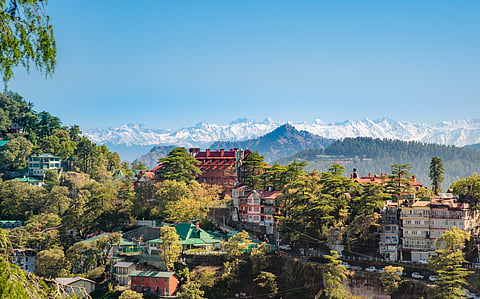
A panoramic view of Shimla, Himachal Pradesh Shutterstock
Speaking about attracting high-value, longer-stay cultural travellers, Abhijeet Sinha commented that high-value cultural travellers, who seek deeper engagement and typically stay longer and spend more, are attracted by experiential heritage tourism, which in turn boosts local economies. "This aligns with the Government’s broader direction, as highlighted in the Union Budget 2025–26, which had positioned tourism as a key engine for employment and economic growth and allocated INR 2,541.06 crore for infrastructure, skill development, and travel facilitation."
Advertisement
The Budget had outlined initiatives such as developing 50 top tourist destinations with states, expanding regional air connectivity via the UDAN scheme, and promoting spiritual, medical, and wellness tourism.
Throwing in a relevant example, Sinha noted that Uttar Pradesh’s heritage-temple tourism cluster—Ayodhya, Varanasi, and Mathura–Vrindavan—saw record-breaking tourism footfalls in 2025, indicating how cultural economy corridors can scale demand rapidly. "To ensure sustainable growth, brands are adopting a tiered offering approach: pairing exclusive, immersive experiences with more open access options. A portion of the revenues generated is specifically dedicated to conservation efforts, which helps maintain optimal visitor flows and site sanctity, while also improving comfort and reducing congestion for visitors. Authentic experiences, such as craft trails, are created through collaborations with local artisans. Furthermore, digital previews and Virtual Reality (VR) tools are used to effectively manage demand and enhance planning convenience. Pilot programs have successfully demonstrated a significant revenue uplift of 25–40 per cent, positioning sites to draw global connoisseurs and secure enduring prosperity," he said.
Advertisement
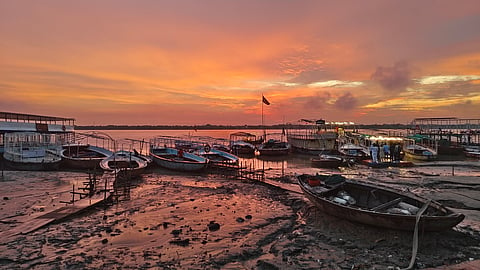
Dawnbreak in Varanasi Anwesha Santra
As heritage sites are reimagined as tourism engines, experts warn that unchecked commercialisation can dilute their historical sanctity and overwhelm fragile ecosystems. The challenge ahead lies in balancing economic gains with respectful conservation, ensuring culture is experienced rather than consumed. “Easy steps like limiting visitor numbers, spreading footfall across multiple locations, and focusing on strong interpretation rather than spectacle can help avoid over-commercialisation. For brands, the opportunity lies in creating curated experiences that respect the locations while offering an intellectual and emotional experience,” noted Rodrigues.
Tackling Key Challenges
When there are talks about promoting heritage tourism, balancing heritage preservation with creating an ‘experiential’ tourist experience is a must, and something that the modern-day traveller is looking for. Commenting on this, Elton Rodrigues said that balancing heritage preservation with experiential tourism involves “managing visitor footfall without damaging fragile sites, dealing with multiple authorities and regulations, and finding steady funding for conservation. Additionally, technology offers powerful solutions through immersive storytelling, but it lacks the touch of personalisation. The balance in all aspects is required while ensuring that experiences educate and inspire tourists.”
Advertisement
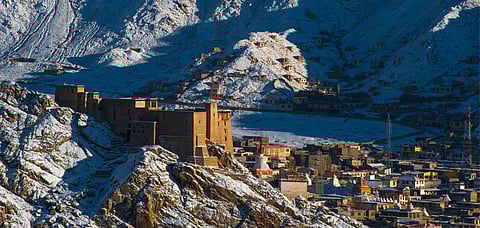
The picturesque Leh palace in Ladakh Deposit Photos
Access and infrastructure remain key hurdles, he said, especially for sites located away from the mainstream tourism circuit. The main challenges on the ground are poor access and basic facilities, which can limit visitor experiences. “While curated walkways and visitor amenities are essential, the bigger challenge is building compelling storytelling frameworks that translate cultural significance into engaging stories. The success of experiential heritage tourism depends on the balance of infrastructure, regulation and storytelling,” the HostMyTrips director said.
Stressing on the same, Alok K Singh, chairman & CEO, SNVA Traveltech, said, "From a conservation perspective, the primary challenge is ensuring that increased visitor engagement does not place physical or environmental stress on heritage assets. Technologically, the focus must remain on using interpretive tools such as guided narratives or digital aids in a manner that supports education and understanding without altering the original character of the site."
FAQs
1. What does Union Budget 2026 mean by ‘vibrant destinations’?
The term refers to transforming heritage and archaeological sites into immersive cultural spaces with curated walkways, interpretation centres and storytelling experiences.
Advertisement
2. Which heritage sites will be developed under Budget 2026?
Sites include Lothal, Dholavira, Rakhigarhi, Adichanallur, Sarnath, Hastinapur and Leh Palace, among 15 identified locations.
3. How will heritage tourism create jobs under Budget 2026?
The Budget proposes training 10,000 guides, expanding hospitality education and creating digital and community-led tourism employment.
4. What is the National Destination Digital Knowledge Grid?
It is a proposed digital repository to document India’s cultural, spiritual and heritage assets for tourism, research and storytelling.
5. What are the risks of turning heritage sites into tourism hubs?
Experts warn against over-commercialisation, ecological stress and loss of cultural integrity, stressing the need for controlled footfall and meaningful interpretation.
Published At: