


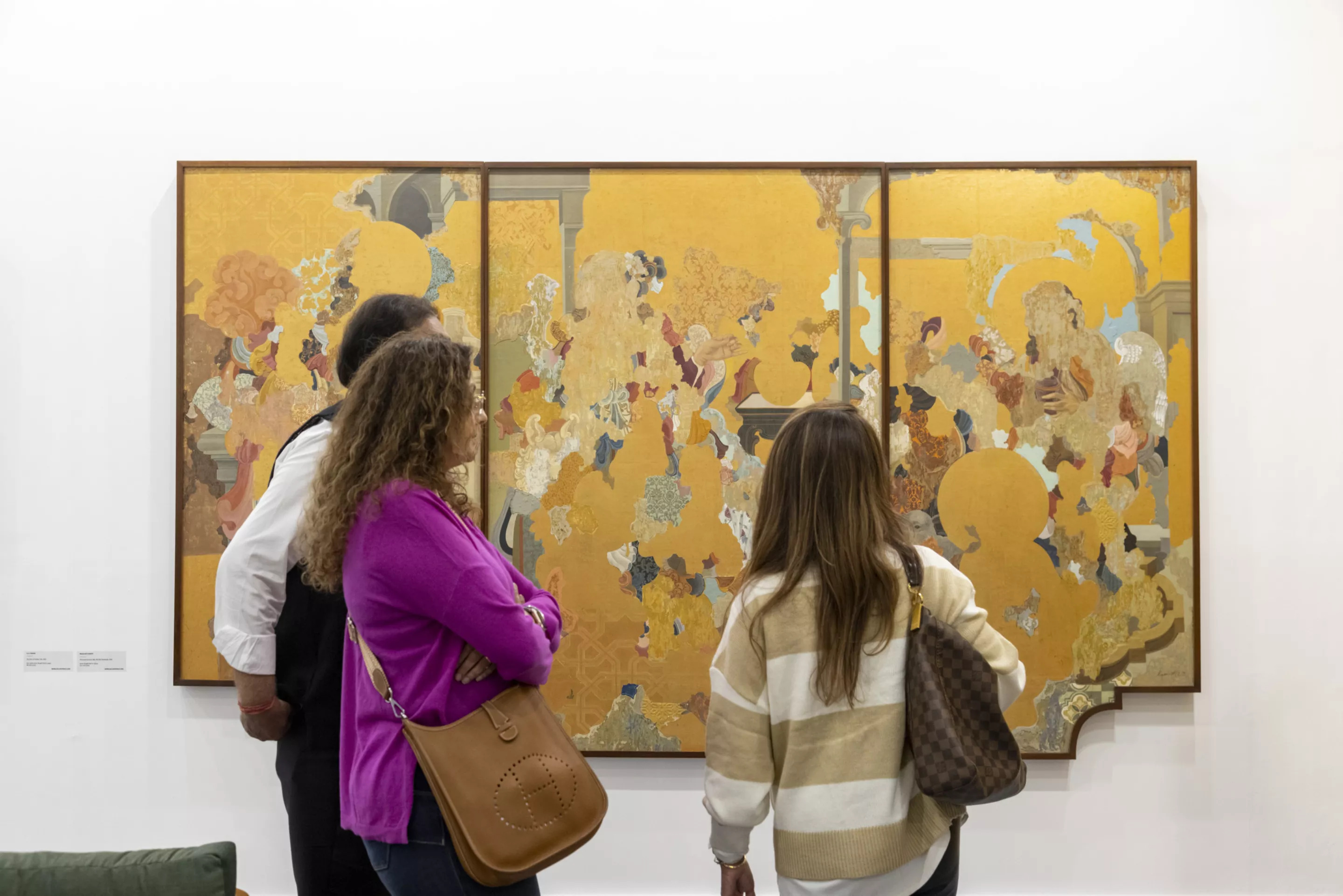
Every February, Delhi observes a space for exchange for ideas, aesthetics, politics, memory, power, and pleasure in the form of India Art Fair. Located in Okhla Phase III, for a few days, art lovers willingly submit to traffic, winter haze, and long walks across exhibition grounds, drawn by the promise of a most compelling gathering for art.
Now in its 17th edition, India Art Fair has snowballed into something much more than a mere trade show. What unfolds at the NSIC Exhibition Grounds in Okhla is a living ecosystem—commercial, performative, discursive, and deeply social. Galleries sell, collectors browse, institutions observe, but just as often, visitors pause to listen, watch, and reconsider. It is this friction between commerce and culture that gives the fair its distinctive pulse.
When The City Gathers
Running from February 5 to February 8, 2026, India Art Fair occupies the NSIC Exhibition Grounds with the confidence of a fixture rather than a pop-up. Over 120 galleries, institutions, and design studios from India and abroad converge here, transforming the venue into a dense, walkable landscape of ideas.
The fair opens with preview days before transitioning into public hours over the weekend. Evenings stretch long, allowing visitors to drift between indoor booths, outdoor installations, performance zones, and conversations that spill out into cafés and lounges. Talks, performances, and curated sections ensure that the experience never settles into a predictable rhythm.
A Fair That Refuses To Sit Still
Painting and sculpture remain central to the fair, but rarely in expected forms. Across halls and open-air spaces, material-led practices, experimental techniques, and works that prioritise process over polish demand attention. Museum-scale installations coexist with emerging galleries, while booth-hopping is frequently interrupted by performance art or a sudden outdoor encounter that shifts the mood entirely.
India Art Fair increasingly functions as a cultural gauge. It reflects what collectors are gravitating towards, what institutions are investing in, and which artists are poised to move from specialised conversations into broader public awareness. South Asian practices remain at the core, but international voices place them in a wider global dialogue.
Dates, Timings And The Flow Of Entry
India Art Fair unfolds over four carefully calibrated days, each designed for a different kind of engagement. The fair eases in with an afternoon preview, setting a deliberate pace for collectors and patrons to find their bearings. A second preview day follows, stretching from late morning into the evening, before the fair opens more fully over the weekend. Saturday lingers, inviting unhurried exploration, while Sunday winds down gently. Dedicated student hours during public days widen access, underscoring the fair’s ongoing commitment to learning and inclusion.
Inside the auditorium, a continuous programme of talks unfolds through the day, supported by Indian Sign Language interpretation and live translation in select Indian languages. Outside the halls, large-scale installations remain open across hours, shifting in tone as daylight fades and crowds move. The result is a fairground that feels less like a static venue and more like a living, responsive space.
Tickets, Access And Getting There
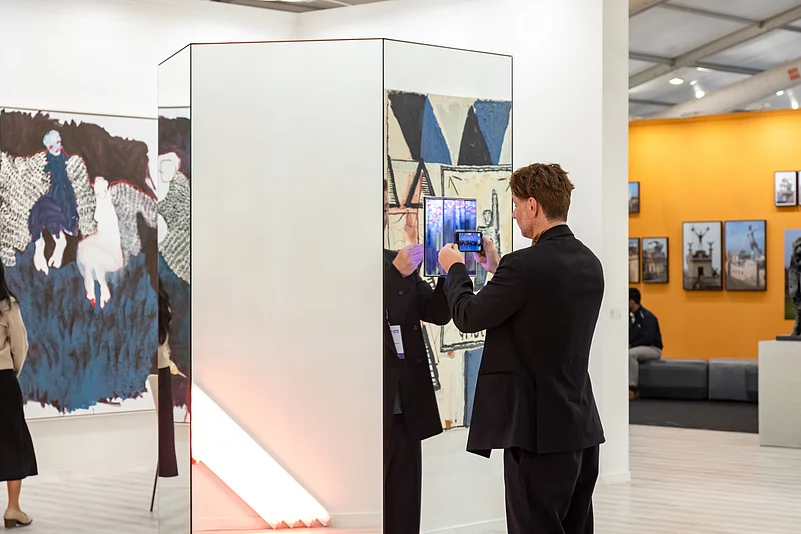

Tickets for India Art Fair 2026 are digital-only and must be booked in advance via BookMyShow. Public tickets start at INR 800, with different price points depending on the day and type of access. Preview passes are limited, student entry requires valid ID during specified hours, and discounted rates apply for group bookings.
Reaching the NSIC Exhibition Grounds is simplest by metro, with several stations close to the venue. Limited parking is available, but public transport remains the easier choice as the fair gets busier over the weekend.
What Commands Attention This Year
This edition places renewed emphasis on outdoor art projects, many of which engage directly with questions of ecology, extinction, renewal, memory, and craft. Constructed from recycled materials, living plants, textiles, and participatory elements, these large-scale commissions reshape the fairgrounds into spaces of contemplation rather than mere corridors between halls.
The BMW façade commission once again defines the fair’s visual identity, bringing together craft histories and digital experimentation through an augmented reality layer that rewards close engagement. Across the site, installations resist easy consumption, asking visitors to slow down, spend time, and reflect.
Inside the exhibition halls, galleries show many artistic styles, from well-known modern artists to new, up-and-coming ones. They give a quick, but informative, look at the artistic trends influencing the area now.
Design, Performances, & Talks
The design area is getting better, showing off furniture, fabrics, and items that are both useful and artistic. Here, craft is seen as something current and always changing, with new materials as a key aspect.
Performance art adds an element of surprise to the fair, with dance, music, and spoken word happening in public areas. There's also a full schedule of talks where artists, curators, museum officials, and thinkers discuss topics like public art, the art market, AI, and what's next for cultural places.
Tours, kids' activities, and workshops make the fair more accessible, welcoming people other than just experienced collectors. Whether you have specific things you want to see or are just interested, the fair invites you to take your time, listen, and come back again.
Beyond The Fairgrounds
India Art Fair’s energy spills well beyond its physical footprint. Across Delhi, museums, galleries, and cultural spaces align exhibitions and events with the fair, turning the week into a citywide cultural circuit. From retrospectives to experimental solo shows, these parallel programmes reward those willing to venture across the city, extending the conversation long after one leaves the fairgrounds.
The Leela Palace New Delhi, returning as the fair’s hospitality partner, reinforces this expanded geography, carrying the art conversation into its public spaces through architecture, collections, and curated cultural programming.
Why It Still Matters
India Art Fair occupies a rare position in South Asia’s cultural calendar. It is at once a marketplace, a meeting ground, and a mirror—reflecting shifting tastes, institutional priorities, and emerging artistic voices. For first-time visitors, it offers an accessible entry point into contemporary art. For seasoned observers, it provides clues to where the conversation is headed next.
For a few winter days, Delhi listens closely, looks carefully, and speaks in many languages at once. That sustained, collective attention is what keeps India Art Fair vital—and impossible to ignore.
India Art Fair 2026: At A Glance
Dates: February 5–8, 2026
Venue: NSIC Exhibition Grounds, Okhla, New Delhi
Ticket Price: Starts from INR 800 (public day tickets)
Where to Buy Tickets: BookMyShow only (digital entry; no on-site sales)
Timings:
Feb 5: 3:00 pm–7:00 pm (Preview)
Feb 6: 11:00 am–7:00 pm (Preview)
Feb 7: 10:00 am–7:00 pm (Public; students 1:00 pm onwards)
Feb 8: 10:00 am–6:00 pm (Public; students 1:00 pm onwards)
What to Expect: Modern & contemporary art, large-scale outdoor installations, performance art, talks, workshops, and a dedicated Design section
Highlights: Over 120 Indian and international galleries, ecology-led outdoor commissions, BMW façade installation, talks with global art leaders
Getting There: Best reached by metro (Okhla NSIC / nearby stations); limited parking available
FAQs
1. When is India Art Fair 2026 taking place?
India Art Fair 2026 runs from February 5 to February 8, 2026, with preview days followed by public access over the weekend.
2. Where is India Art Fair 2026 being held?
The fair is hosted at the NSIC Exhibition Grounds in Okhla, New Delhi.
3. How can I buy tickets for India Art Fair 2026?
Tickets are available exclusively online via BookMyShow. There are no on-site ticket sales.
4. What is the entry fee for India Art Fair 2026?
Public day tickets start from INR 800, with different prices based on the day, access type, and category.
5. Is India Art Fair suitable for students and first-time visitors?
Yes. The fair offers dedicated student hours with discounted entry, guided tours, talks, and workshops designed for new audiences.


