The Tamil Nadu forest department will carry out a two-day survey of birds of prey across the state on January 31 and February 1. The aim of this first-of-its-kind initiative is to record where raptors live and how many there are in different areas, including forests, wetlands, farms and towns.
Tamil Nadu Forest Department Launches Survey To Map Raptor Populations
The Tamil Nadu forest department will conduct a two-day statewide survey to map raptor distribution, estimate populations, and identify key habitats, helping monitor ecosystem health and support conservation of birds of prey across the state

Advertisement
The survey is being organised with the Advanced Institute for Wildlife Conservation (AIWC) and the Tamil Nadu Raptor Research Foundation, which was set up in July 2025. This initiative will help gather important information about raptors, their habits and habitats, and support efforts to protect these birds across Tamil Nadu.
Indicators Of Environmental Health
The survey will look at where raptors are found across Tamil Nadu, how many there are, and which areas have the most birds of prey. Officials will also identify certain raptor species that show how healthy the habitats are. Experts say that raptors play an important role in nature and for people, too.
Raptors sit at the top of the food chain, which makes them very sensitive to toxins and changes in the habitats of their prey. A drop in their numbers or visible health issues can point to bigger problems in the ecosystem.
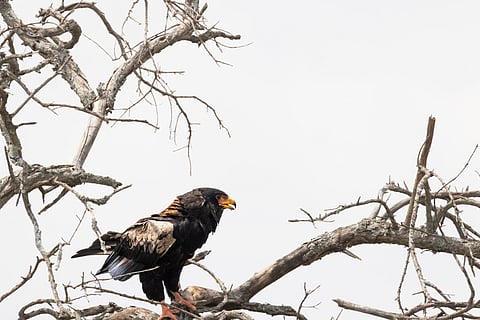
Studying raptors offers early warnings that can benefit both wildlife and people Sanghamitra Chatterjee
As they cover large areas, their presence is an indication of the health of different habitats. Studying raptors offers early warnings that can benefit both wildlife and people. A drop in their numbers could affect the animals they feed on, the spread of diseases, and the overall balance in the environment, making it important to monitor and protect these birds.
Advertisement
Numbers In Tamil Nadu
Tamil Nadu is home to nearly 70 species of raptors, including eagles, hawks, owls, and vultures, across forests, grasslands, wetlands, scrublands, and coastal areas. Despite their importance, these birds receive little scientific attention. Experts say this is due to a mix of challenges, including difficult-to-reach habitats, limited resources, and funding constraints. As a result, raptors remain understudied compared with other wildlife, even though many species face serious threats and need careful monitoring.
How It Will Work
The survey will map raptor distribution and population density across Tamil Nadu, highlighting areas with the highest concentrations. It will also focus on species that indicate the health of their habitats. For the survey, Tamil Nadu has been divided into 4,068 grid blocks, each around 32 square kilometres. The exercise will focus on 411 blocks, roughly one-tenth of the state.
Teams will record birds such as the black kite, brahminy kite, Eurasian kestrel, shikra, crested goshawk, changeable hawk-eagle, and important scavengers like the Egyptian vulture. Observers will rely on binoculars, data sheets, mobile mapping tools, and tracking apps to maintain accurate and standardised records across all surveyed areas.
Advertisement
FAQs
Why is the raptor survey being done?
The survey aims to map raptor distribution in Tamil Nadu, their numbers, and identify areas with the highest concentrations.
Which species are expected to be recorded?
Several species will be mapped, including black kites, brahminy kites, Eurasian kestrels, shikras, crested goshawks, changeable hawk-eagles, and the Egyptian vulture.
What is the goal of the survey?
Officials say they are trying to understand where raptors live, how many there are, and which areas have the most raptors.
Why are raptors important?
Raptors help maintain ecological balance. A decline in their numbers can affect prey populations, increase disease risk, and indicate wider environmental issues.
Is the survey a one-time effort?
This is a focused two-day survey, but it is part of ongoing efforts to monitor raptors and support long-term conservation planning.

Published At: