Kaziranga National Park is known for its one-horned rhinoceroses, but its survival depends on far more than what lies within its officially protected boundary. The forests, grasslands, wetlands and corridors around the park form an important part of the landscape that wildlife uses, particularly during the annual monsoon floods. A proposal by the Assam government to reduce Kaziranga’s eco-sensitive zone (ESZ) from the current default limit of 10 kilometres to 1 kilometre has therefore raised concerns among conservationists.
Kaziranga Eco-Sensitive Zone To Be Reduced To 1 Km? Why Conservationists Are Concerned
Assam will approach the Centre to reduce Kaziranga’s ESZ from 10 km to 1 km, amid debate over infrastructure, mining and wildlife protection

Advertisement
Assam Chief Minister Himanta Biswa Sarma announced during a visit to Bokakhat that the state plans to approach the Centre within the next two months with a proposal for the formal notification and demarcation of Kaziranga’s ESZ. The government says the move would ease restrictions on development in and around Bokakhat, where projects including a modern stadium and civic infrastructure have been pending.
The 10-kilometre limit currently applies by default because Kaziranga does not yet have a final ESZ notification. The proposed change would establish a scientifically defined 1-kilometre zone instead, according to the state government. For local authorities, this could mean greater regulatory clarity and fewer constraints on construction and infrastructure projects.
Why The Buffer Matters
An ESZ is intended to act as a transition area between a protected landscape and surrounding human settlements and development. It does not mean that all activity within the zone is prohibited. Depending on the applicable regulations, activities can be prohibited, regulated or permitted, with particularly polluting industries and activities such as mining facing stringent restrictions.
Advertisement
The debate around Kaziranga, however, goes beyond the question of how many kilometres appear on a map. The national park is part of a much larger ecological landscape, and animals regularly move beyond its boundaries. During the monsoon, when large parts of Kaziranga can be inundated, wildlife moves towards higher ground, including the Karbi Anglong hills. These movements make the surrounding areas important for maintaining ecological connectivity.
Conservationists fear that narrowing the ESZ could bring construction and other human activity closer to these wildlife routes. Increased development could fragment habitats, interfere with animal movement and raise the likelihood of human-wildlife encounters involving rhinos, elephants, tigers and other species.
Mining And Habitat Concerns
The proposed reduction has also revived concerns over activities such as mining and land conversion around Kaziranga. The Supreme Court has previously imposed restrictions on the digging of stone, sand and soil in areas around the park, following concerns over damage to its ecological catchments.
Advertisement
A Central Empowered Committee investigation submitted to the Supreme Court in 2025 also highlighted instances of illegal mining in catchment areas linked to Kaziranga. The committee had called for stricter implementation of the court’s earlier directions after receiving complaints and evidence of unauthorised mining activity.
A narrower ESZ would not automatically remove these judicial protections, but conservationists argue that reducing the regulatory buffer could make surrounding areas more vulnerable to development pressure. Catchments, grasslands and smaller habitats outside the park can be just as important to maintaining the wider ecosystem, particularly when they support animal movement or connect fragmented habitats.
Development Versus Conservation
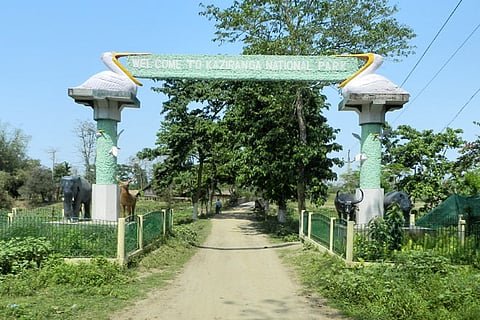
The proposed ESZ reduction could bring development closer to wildlife corridors and habitats surrounding Kaziranga Deposit Photos
The legal framework around ESZs also adds another layer to the debate. In 2022, the Supreme Court directed that national parks and wildlife sanctuaries should have an ESZ of at least 1 kilometre from their demarcated boundaries. Where an existing or proposed ESZ extended beyond 1 kilometre, the larger limit was to prevail. The 10-kilometre limit can therefore operate as a default where a protected area does not yet have a final notification.
Advertisement
For Assam, formally notifying Kaziranga’s ESZ could bring much-needed clarity to residents and local authorities. The question is whether a 1-kilometre boundary can adequately account for the ecological realities of one of India’s most important wildlife landscapes.
Kaziranga is not an isolated island of conservation. Its wider surroundings provide space for wildlife movement, support grasslands and wetlands, and form part of the ecological systems that sustain the park itself. As Assam prepares its proposal, the challenge will be to ensure that development around Kaziranga does not come at the cost of the landscape that allows the national park to function in the first place.
FAQs
1. What is Assam proposing for Kaziranga’s ESZ?
The state plans to seek a reduction of the default ESZ from 10 km to 1 km.
2. Why does Kaziranga currently have a 10-km ESZ?
The 10-km limit applies by default because Kaziranga does not yet have a final ESZ notification.
Advertisement
3. Why does the Assam government want to reduce the ESZ?
The government says the move would ease restrictions on infrastructure and civic development around Bokakhat.
4. Why are conservationists opposing the proposal?
They fear greater development pressure could fragment habitats, disrupt wildlife corridors and increase human-wildlife conflict.
5. Will reducing the ESZ remove existing mining restrictions?
Not necessarily. Existing Supreme Court directions concerning mining and other activities around Kaziranga would continue to apply.

Published At: