Delhi woke up to one of its thickest winter fog episodes of the season as a dense blanket of smog and mist engulfed the national capital, severely disrupting flight operations at Indira Gandhi International Airport. With visibility dropping to critically low levels in the early hours, air traffic slowed dramatically, leaving passengers stranded and airlines racing to manage cascading delays across their networks.
Dense Fog Brings Delhi Airport To A Standstill As Airlines Warn Of Prolonged Disruptions
Thick winter fog crippled flight operations at Delhi’s IGI Airport, triggering cancellations and delays as airlines issued advisories. With visibility remaining poor, travellers are being urged to plan cautiously as fog is expected to linger

Advertisement
Flight disruptions began in the pre-dawn hours when visibility plunged to as low as 50 metres, well below safe operating limits for routine aviation movements. As fog thickened across the runway area, airport authorities implemented CAT III low-visibility procedures, which allow limited flight operations by aircraft and pilots certified for such conditions. Even with these measures in place, operations slowed sharply, resulting in widespread delays, cancellations, and diversions.
By morning, the scale of disruption became evident. At least 128 flights were cancelled at Delhi airport, while eight others were diverted to nearby airports due to the dense fog. Nearly 200 flights experienced delays, affecting both domestic and international travellers. The impact extended beyond Delhi, with airports in Amritsar and Chandigarh also reporting delays and operational challenges as fog spread across north India.
Air traffic controllers prioritised safety while attempting to clear congestion, but officials acknowledged that the backlog would take time to ease. Authorities indicated that full normalisation of operations would depend on sustained improvement in visibility, particularly during early morning hours when fog conditions tend to be most severe.
Advertisement
Travel Advisories, Passenger Guidance, And The Fog Outlook
Airlines responded swiftly with travel advisories. IndiGo warned passengers that fog conditions can change rapidly and advised travellers to keep a close watch on their flight status before heading to the airport. Air India activated its FogCare policy, offering complimentary rescheduling or full refunds for passengers affected by fog-related cancellations or delays. Other carriers, including SpiceJet and Akasa Air, issued similar alerts urging passengers to remain flexible with travel plans and rely on official airline communication channels for updates.
Airport authorities also stepped in to manage passenger movement within terminals, deploying additional staff and helplines to assist travellers with real-time information. Passengers were advised to arrive early, factoring in possible delays not only at the airport but also on city roads, where dense fog significantly reduced driving visibility.
Weather and air quality conditions added to the challenge. Delhi’s Air Quality Index remained in the very poor to severe category, at times crossing 400, a level often associated with dense fog formation during winter. The Indian Meteorological Department issued an Orange Alert for fog, warning of hazardous visibility conditions across the region.
Advertisement
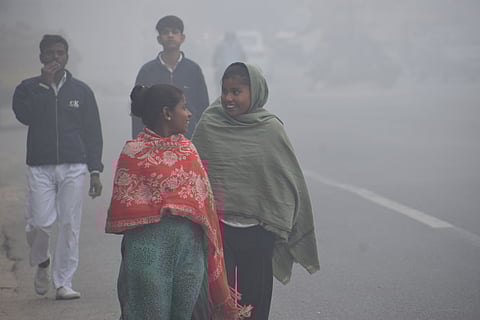
People walk through dense winter fog in Delhi Shutterstock
According to weather forecasts, dense fog is expected to persist over the next few days, particularly during late night and early morning hours. Officials noted that the aviation fog season typically runs from December 10 to February 10, a period when flight disruptions are common across north Indian airports. With cold temperatures and stagnant air continuing to dominate weather patterns, sporadic delays are likely to remain a reality for travellers.
For passengers flying in and out of Delhi over the coming days, authorities emphasised the importance of staying informed, checking flight status frequently, and keeping travel plans flexible. As winter tightens its grip on the capital, dense fog remains an unavoidable factor shaping air travel, turning even routine journeys into tests of patience and planning.
(With inputs from various sources.)
FAQs
1. Why were flights disrupted at Delhi airport?
Flights were disrupted due to extremely low visibility caused by dense winter fog, which dropped to unsafe levels for routine aircraft operations.
Advertisement
2. How many flights were affected by the fog at IGI Airport?
At least 128 flights were cancelled, nearly 200 delayed, and several diverted as dense fog severely slowed airport operations.
3. What are CAT III operations at Delhi airport?
CAT III low-visibility procedures allow certified aircraft and pilots to land in very poor visibility, though operations remain slower than normal.
4. What advisories have airlines issued for passengers?
Airlines like IndiGo and Air India advised passengers to check flight status frequently, arrive early, and use rescheduling or refund options where available.
5. How long is fog expected to impact flights in Delhi?
Fog disruptions typically persist during the winter aviation fog season from mid-December to early February, especially during early morning hours.
Published At: