It is becoming increasingly evident that tourism in wildlife areas can have unintended impacts on animal behaviour and wellbeing. A study by scientists at the CSIR–Centre for Cellular and Molecular Biology has found that tourism and human activity inside tiger reserves may be increasing stress levels in tigers and influencing where tigresses choose to breed, raising concerns about the long-term health of India’s big cat population. Published in the journal Animal Conservation, the research tracked tigers across five reserves over two years and four seasons, making it one of the largest multi-reserve physiological studies of wild tigers in India. Researchers, however, said tourism should be managed more scientifically rather than restricted completely.
Core Zones
Researchers analysed 610 genetically confirmed tiger scat samples using non-invasive methods to measure stress and reproductive hormones. Tigers closer to tourism roads and other frequently disturbed areas were found to have consistently higher stress hormone levels.
The study also found differences between habitats. Tigers in core zones showed higher stress linked to tourism than those in buffer zones. Buffer-zone tigers, which are more used to people, were less affected. In core areas, stress levels went up sharply during peak tourist months, especially in Tadoba and Bandhavgarh.
Call For Stricter Controls
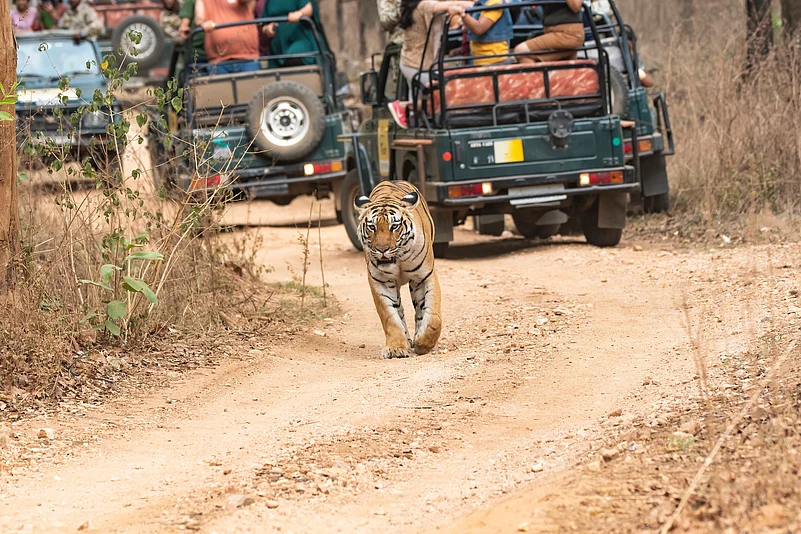

The study has raised concerns that breeding conditions for tigresses are becoming harder to maintain, with quiet, undisturbed forest patches increasingly difficult to find. Dr G. Umapathy, chief scientist at CCMB and the lead researcher, said this could have consequences beyond reproduction, affecting cub survival and early development as well.
Researchers also said the findings complicate the long-held view that core zones in tiger reserves are naturally low-stress environments. In reality, they suggested, even these areas can experience pressure during tourism peaks, depending on how visitor activity is managed.
To address this, the team called for tighter regulation of safari movement, including limiting vehicle numbers, reducing congestion at sightings, and cutting the length of safari drives. They also suggested planning infrastructure, such as water sources away from heavily used tourist routes, along with stronger management in buffer zones where disturbance is often higher.
Dr Umapathy clarified that the study was not arguing against tourism itself. “The issue is not tourism, but how it is managed in sensitive habitats,” he said.
Impacts Of Tourism On Wildlife

Tourism-induced stress acts as a severe, often invisible, threat to wildlife, causing elevated physiological stress hormones (glucocorticoids) that impair breeding, weaken immunity, and trigger risky behavioural changes. Uncontrolled human activity, such as loud, frequent, or too-close vehicle traffic, forces animals to abandon, avoid, or change their essential feeding and mating grounds.
Physiological Stress Markers: Research, including work published by Wiley and IndiaBioscience, has found a clear link between higher levels of tourism and increased stress metabolites in animal waste, suggesting ongoing stress in species such as tigers.
Reduced Reproductive Success: Frequent tourist presence can disturb normal breeding behaviour, particularly in more sensitive wildlife. A 2026 study indicates that elevated stress in tigresses may influence cub development and reduce how often breeding occurs in the quieter areas they typically prefer.
Behavioural Alterations and Disruption: Wildlife often prioritises escaping tourists over necessary activities. ScienceDirect.com explains how this disrupts feeding or social interactions. Kateddudley.com adds that close proximity (e.g. in safari vehicles) forces creatures to act with high caution.
Reduced Survival Rates: The chronic stress caused by human presence can lead to suppressed immune systems, rendering animals more susceptible to disease and reducing their ability to hunt or evade predators.
(With inputs from various sources)
FAQs
How does tourism affect tigers in reserves?
Tourism can increase stress levels in tigers due to noise, vehicle movement, and human presence, which may also influence their natural behaviour.
What did the study on tiger stress find?
The study found that tigers in areas with heavier tourist activity showed higher stress hormone levels and signs of behavioural change.
Does tourism affect tiger breeding?
Yes, the research suggests that stress linked to tourism may disrupt breeding patterns and make suitable breeding areas harder to find for tigresses.
Are all parts of tiger reserves equally affected?
No, the study indicates that core zones and heavily visited areas show stronger stress responses compared to less disturbed buffer zones.
What changes do researchers recommend?
They suggest better regulation of tourist vehicles, shorter safaris, and improved management of sensitive and breeding areas within reserves.