

Safari operations have restarted in two major wildlife reserves in southern India, but only under tightened regulations issued by the state government. The move follows directives given on Friday by Eshwar Khandre, according to news reports. At a review meeting with forest officials from Mysuru, Kodagu and Chamarajanagar held in Mysuru on Friday, Khandre directed that all conditions attached to the reopening be strictly enforced. He indicated that a formal government order outlining the safeguards is likely to be issued by Saturday evening, ahead of the resumption of safaris.
Safaris to Bandipur National Park and Nagarhole National Park had been halted due to several human-tiger conflict in the region. All tourism-related visits had been stopped since November 7, 2025, after a farmer was killed in a tiger attack in Mysuru district, heightening fears over rising human–wildlife conflict in the area.
Tighter Controls
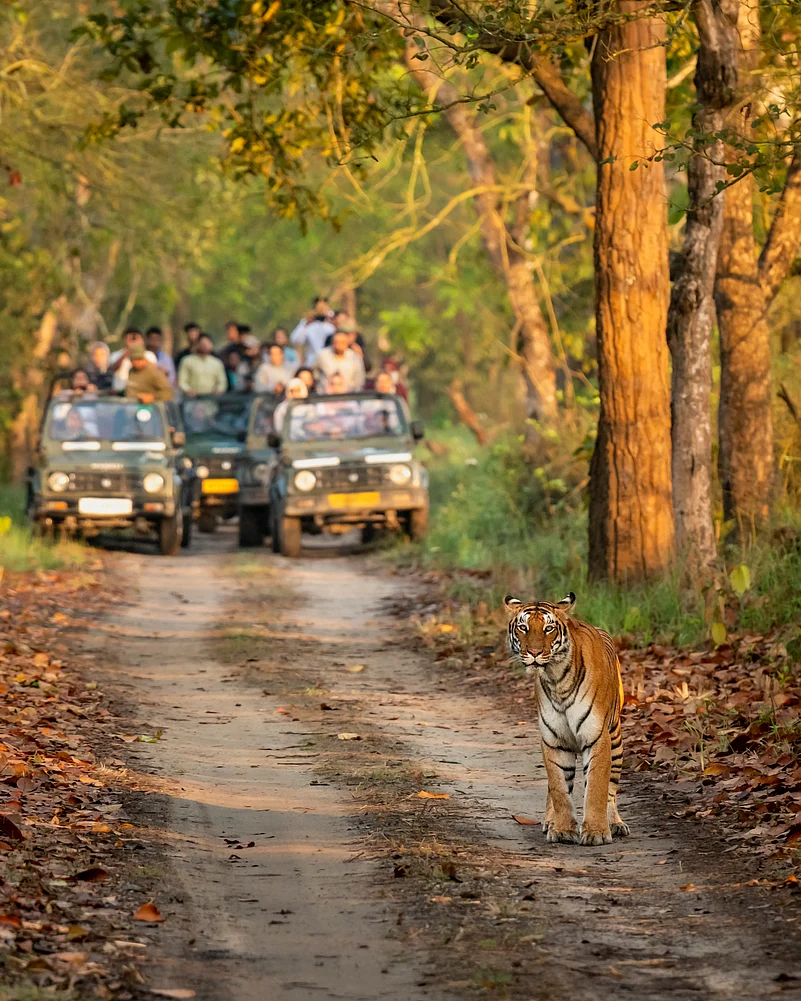
Under the revised arrangements, only half of the safari vehicles and staff that were operating before the November 2025 suspension will be permitted to resume duty in Bandipur National Park and Nagarhole National Park.
Officials will be held directly responsible for any breach of the conditions set out in the forthcoming government order. It was also announced that safaris should be conducted primarily by bus, with campers and jeeps deployed sparingly.

Emphasising the need to curb further incidents, the minister also directed authorities to map areas prone to human–wildlife conflict across the Bandipur and Nagarhole forest ranges and to step up patrolling in vulnerable stretches. The focus, officials said, would be on preventing wild animals from straying beyond forest boundaries and reducing the risk of further confrontations with nearby communities.
Khadre noted that a 100 km stretch along the Bandipur forest boundary had been identified as highly sensitive. Plans are underway to establish 25 camps at intervals of 5 km along this belt, with local residents appointed as “forest friends” to help track animal movement and alert authorities.
The Minister also asked forest officials to submit written proposals seeking additional facilities, including thermal drones and vehicles, to strengthen surveillance and response along vulnerable sections of the forest fringe.
Balancing Conservation
In a push to balance conservation with community safety, the state government has underlined the need for a broader approach to forest management. Khandre said the safety of families living along forest boundaries must rank as highly as the protection of wildlife, and made it clear that the department’s responsibilities extend beyond conservation alone. Farmers’ livelihoods, particularly the security of their crops, require the same degree of attention, he observed.
Forest personnel have been asked to maintain open communication channels with communities, build trust and actively involve them in safeguarding forests and wildlife. Khadre also directed that 35 per cent of the income earned from safari operations be channelled towards the development of villages on the forest fringe. The funds, he said, should support skill training for young people, assist with children’s education and help provide fodder for cattle.
Tourism Pressures
Across several national parks, rising visitor numbers have brought with them a range of challenges, from ecological damage to mounting pressure on wildlife habitats. In addition to environmental degradation, the increase in visitor numbers has coincided with a rise in human–wildlife conflict, as animals stray closer to settlements in search of food or territory, sometimes leading to attacks on people or livestock.
Poor waste disposal, litter and the contamination of water bodies have contributed to environmental degradation in the national parks. And the constant movement of vehicles and crowds has been shown to disturb animal behaviour, affecting hunting and breeding patterns and, in some cases, aggravating human–wildlife conflict.
Unregulated construction of hotels, roads and other facilities in and around protected zones has further fragmented habitats and weakened fragile ecosystems. During peak seasons, excessive tourist inflows—often coupled with weak visitor management—have stretched parks beyond their carrying capacity.
FAQs
What safety measures have been introduced for the resumed safaris?
Only 50% of vehicles and staff are allowed, buses are preferred over jeeps or campers, and patrolling in conflict-prone zones has been intensified.
How is the forest department addressing human–wildlife conflict?
Officials are identifying sensitive areas, setting up 25 camps along a 100 km boundary stretch, appointing local “forest friends,” and proposing thermal drones and vehicles for monitoring.
How are local communities involved in conservation?
Forest staff are instructed to engage respectfully with residents, build trust, and involve them in wildlife and forest protection initiatives.
Are there limits on visitor numbers?
Strict controls have been placed on the number of vehicles and staff, and visitor management is being strengthened to reduce ecological impact.
How are forest officials being held accountable?
Officials responsible for enforcing the government’s directives will be held accountable for any violations of the stipulated rules governing safaris and wildlife safety.