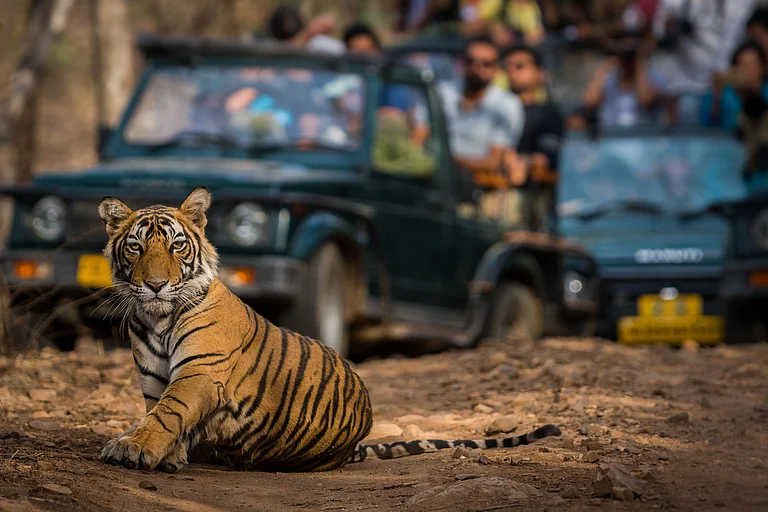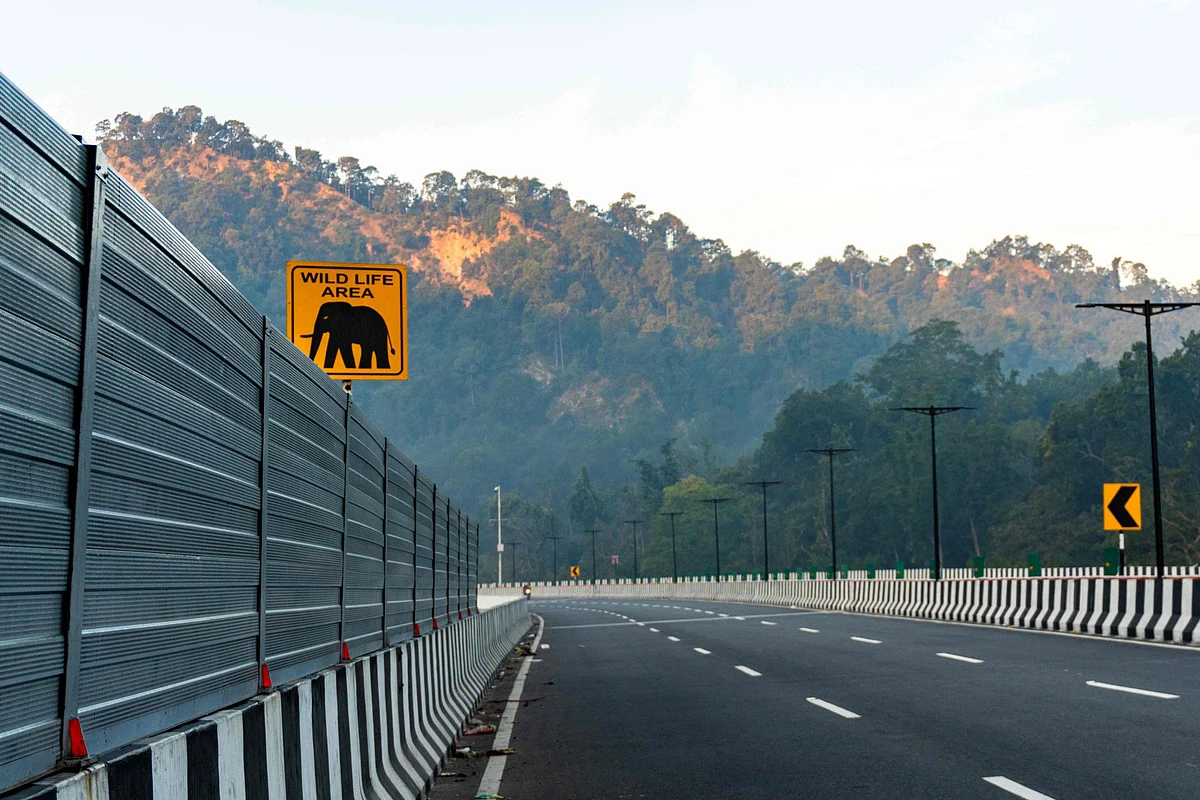
The much-awaited Delhi–Dehradun Expressway, expected to cut travel time from six hours to about 2.5, will be inaugurated by Narendra Modi on April 14, 2026. As anticipation builds, a new study by the National Highways Authority of India (NHAI) and the Wildlife Institute of India (WII) suggests wildlife is already adapting to the corridor. It documents 18 species using a key underpass near Haridwar.
The study, titled ‘Landscapes Reconnected,’ examines whether large-scale road infrastructure can coexist with ecological systems, an issue that has long raised concerns, particularly in forested regions.
About The Study

Researchers conducted the study along an 18-km stretch between Ganeshpur and Asharodi, a section that cuts through forest areas linked to Rajaji National Park and the Shivalik range. Several endangered species, including elephants, tigers, greater hornbills, and king cobras, inhabit this region.
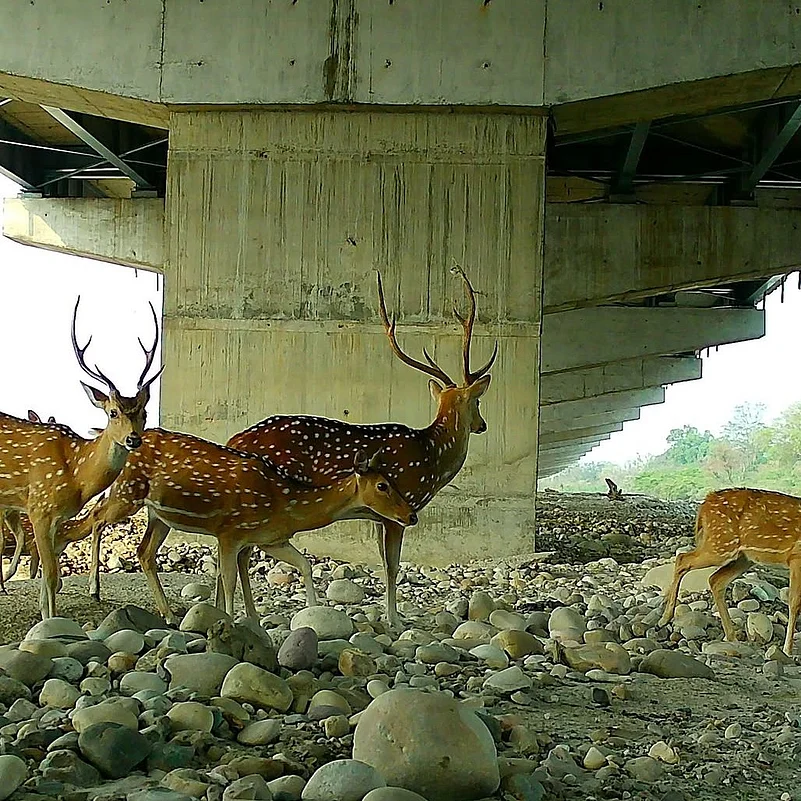
A key feature of this stretch is a nearly 12-km-long animal underpass (among the largest in Asia) that allows wildlife to move freely beneath the elevated expressway.
Researchers deployed 150 camera traps and 29 acoustic recorders over 40 days. They captured 111,234 images, identifying 40,444 that documented 18 distinct wild species using the underpasses.
Which Animals Are Using The Underpasses?
The findings reveal a wide range of species actively navigate the corridor. Golden jackals, nilgai, sambar, and spotted deer frequently use the path. Smaller mammals like the Indian hare also move consistently through the structures. Notably, the study recorded 60 instances of elephants using the underpasses, a significant indicator given their size and sensitivity to disturbance.
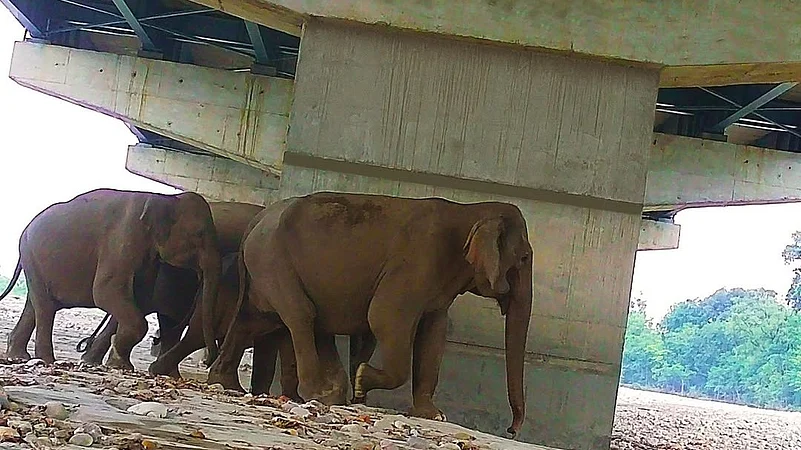
“The Golden Jackal was the most frequently captured, followed closely by Nilgai, Sambar, and Spotted Deer. Smaller mammals, including the Indian Hare, also showed consistent movement through the structures,” the official statement noted.
The presence of both large and small species suggests that the design is functioning across a range of ecological needs, from grazing animals to carnivores.
Sound Levels Key To Wildlife Behaviour
One key insight from the study concerns sound. Researchers observed that some species adapt to traffic noise, while others remain highly sensitive to it.
“The data indicate that while generalist species, such as golden jackals and wild boar, have habituated to significant traffic sound, sensitive species like elephants and spotted deer selectively utilise underpass segments with lower sound levels,” the statement observed.
Authorities plan to deploy targeted sound barriers where wildlife crossings are most frequent. This should improve access for noise-sensitive species and encourage broader use of the underpasses.
The use of acoustic monitoring alongside camera traps marks a more nuanced approach to understanding animal behaviour in altered landscapes.
Study Zones And Landscape Diversity
To better analyse movement patterns, the study area was divided into three zones:
Zone I: 5.43 km between Ganeshpur and Mohand
Zone II: 9.80 km from Mohand to Asharodi police check post
Zone III: 3.14 km extending into the Doon Valley up to Mohabewala
These zones include riverbeds, hilly terrain, and sal forests (dominated by Shorea robusta trees) within the Shivalik range. This diversity allowed researchers to assess how different habitats influence underpass usage.
A Model For Eco-Sensitive Infrastructure?
Large infrastructure projects passing through forest areas have historically fragmented habitats and increased human-wildlife conflict. The study states the Delhi–Dehradun corridor aims to address this by using elevated roads and dedicated wildlife passages.
The official statement added, “The study reaffirms that well-planned infrastructure interventions, including underpasses and elevated corridors, play a crucial role in preserving the natural habitat of wild animals and maintaining ecological connectivity.”
With the expressway expected to reduce travel time between Delhi and Dehradun, the project positions itself not just as a connectivity upgrade, but as a test case for balancing development with conservation. Early findings suggest that, at least in this stretch, wildlife manages to find its way through.
(With inputs from various sources)
FAQs
1. When will the Delhi–Dehradun Expressway be inaugurated?
The expressway is scheduled to be inaugurated on April 14, 2026, by Prime Minister Narendra Modi.
2. How much travel time will the expressway save?
The expressway is expected to reduce travel time between Delhi and Dehradun from around six hours to approximately 2.5 hours.
3. What does the wildlife study reveal?
The study found that at least 18 wildlife species are already using underpasses along the expressway, indicating early adaptation to the infrastructure.
4. Which animals were recorded using the underpasses?
Species observed include elephants, sambar, spotted deer, nilgai, golden jackals, and smaller mammals like Indian hares.
5. Where was the study conducted?
The study covered an 18-km stretch between Ganeshpur and Asharodi, near Rajaji National Park in the Shivalik range.