


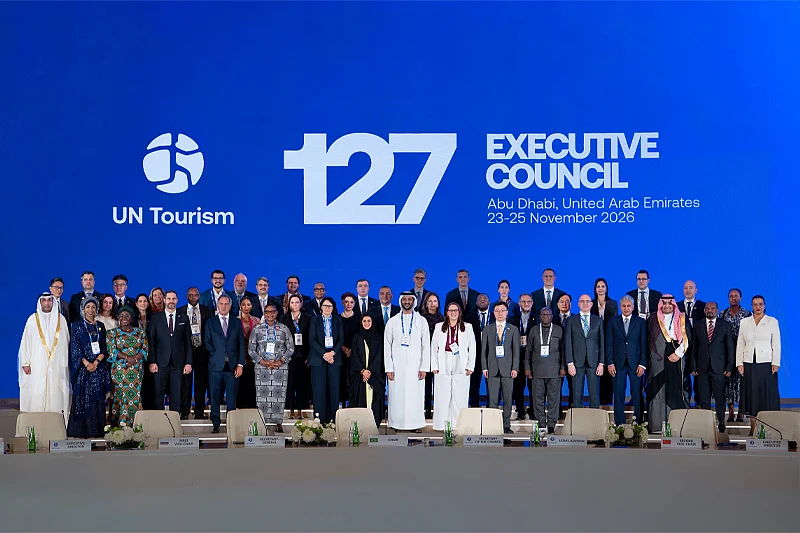
UN Tourism’s 127th Executive Council session was held in Abu Dhabi from November 23 to 25, 2026, bringing together representatives of 33 member states to discuss the organisation’s priorities and the future direction of the global tourism sector. The Executive Council is UN Tourism’s governing board, responsible for overseeing the organisation’s work and budget, and making decisions and recommendations on matters affecting tourism and its member states. The UAE hosted this session as part of its engagement with international tourism cooperation.
The three-day meeting focused on institutional reforms, tourism investment, skills development, destination management and preparations for the 2027 International Year of Sustainable and Resilient Tourism. Among its key developments was Secretary-General Shaikha Al Nuwais’s announcement of Project Unity, an initiative aimed at bringing communities in lesser-known destinations into the tourism economy. The discussions also covered a proposed USD 15 million UAE-backed fund and bilateral tourism partnerships with Egypt, Brazil, Argentina, and Nigeria. The meeting took place against a challenging backdrop, with international tourist arrivals recording just 0.4 per cent growth globally in the first half of 2026, according to UN Tourism.
What Project Unity Aims To Do
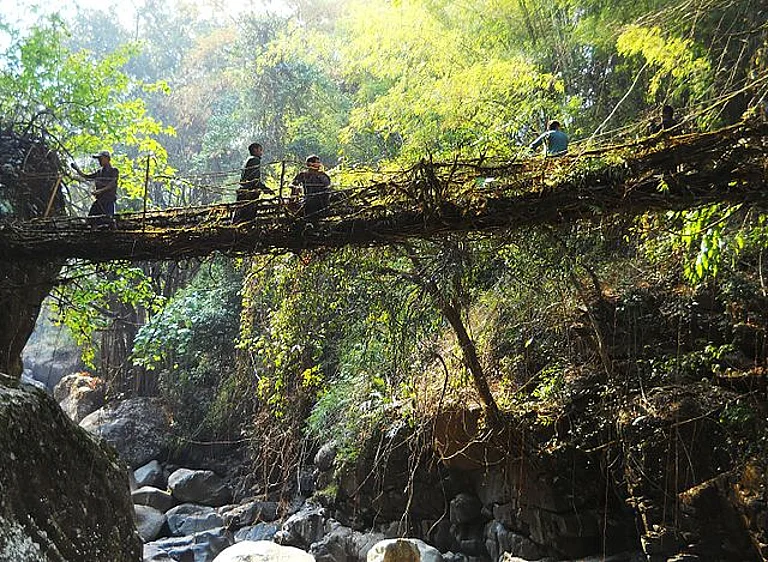
Secretary-General Shaikha Al Nuwais highlighted Project Unity during the opening of the Council session on November 24. The initiative aims to bring together people from destinations that have yet to gain international recognition, help them develop relevant skills and support them in turning their ideas into practical tourism projects. The objective is to widen participation in the tourism economy so that residents can take part in, and benefit from, visitor activity in their home regions.
For travellers, this approach could eventually translate into more opportunities to explore destinations through locally developed experiences, rather than relying solely on established tourism circuits. It also places greater emphasis on the people who live in these destinations, their knowledge and their ability to shape the tourism experiences offered to visitors.

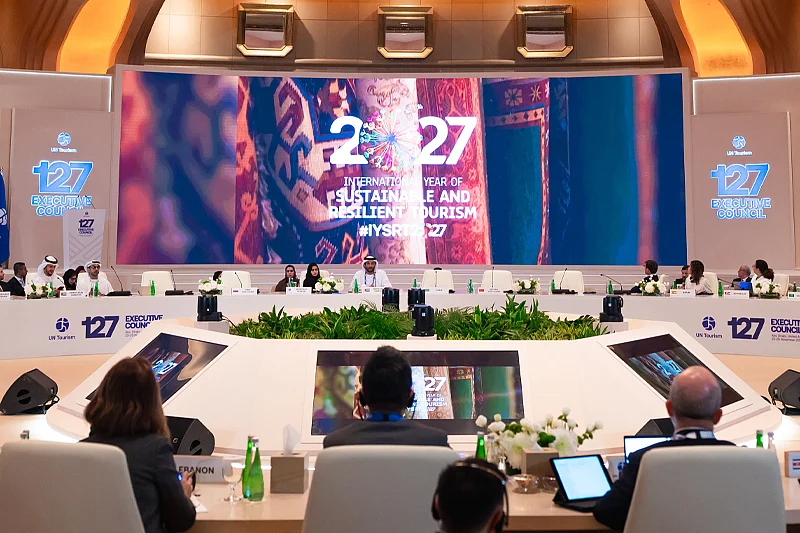
The initiative comes ahead of 2027, designated by the United Nations General Assembly as the International Year of Sustainable and Resilient Tourism. UN Tourism is facilitating its preparation and implementation, with an emphasis on strengthening tourism's contribution to local economic development, employment, biodiversity conservation, climate action, living heritage, and crisis preparedness. The year is intended to encourage countries to translate sustainability commitments into practical action.
A Proposed Tourism Fund And Wider Reforms
The Abu Dhabi meeting also considered a proposed Tourism Acceleration Fund, through which the UAE will contribute USD 15 million over 2026–2029. According to the UN Tourism's management report, the funding will be deployed through Project UNI-T, a framework designed to help member states measure tourism's economic contribution, strengthen skills, support innovation and generate demand for destinations. This is distinct from Project Unity, the community-focused initiative outlined by Al Nuwais.
Project UNI-T is structured around a measurement framework called UNT-nomics, which serves as its backbone, and three pillars: UNT-Build, UNT-Impact and UNT-Explore. The first focuses on developing professional skills and institutional capacity, while the second supports targeted innovation projects and pilot programmes. UNT-Explore aims to help travellers discover destinations and experiences through a public platform organised around travel interests. A separate Foundations window will strengthen UN Tourism's operational systems and institutional capacity. Through UNT-nomics, the programme will examine not just visitor numbers, but also tourism's economic contribution, how much value stays within local economies and how widely its benefits are distributed. The funding agreement is being finalised, with the first release expected in the first quarter of 2027.
Institutional reform was another priority. Al Nuwais outlined structural changes to the UN Tourism Secretariat and reported the launch of a whistleblowing channel on November 20, through which personnel can report misconduct with protection against retaliation. The 33 member states attending the Abu Dhabi session also heard directly from the directors of the organisation's two Regional Offices, for the Americas and the Middle East, for the first time. Reports to the Council covered preparations for the 2027 International Year of Sustainable and Resilient Tourism, gender equality and geographical diversity among UN Tourism personnel.
UAE Looks To Strengthen Tourism Ties With Four Countries
On the sidelines of the session, UAE Minister of Economy and Tourism Abdulla bin Touq Al Marri held bilateral meetings with tourism officials from Egypt, Brazil, Argentina, and Nigeria. The discussions covered joint destination promotion, investment, knowledge-sharing, hospitality and stronger air connectivity.
With Egypt, the talks focused on joint destination promotion, exchanging expertise in tourism product development and destination management, and exploring investment opportunities and collaborative events. Discussions with Brazil included increasing visitor flows, attracting investment in tourism infrastructure and improving air connectivity. The UAE's hotel establishments received approximately 165,000 Brazilian visitors in 2025, according to the Emirates News Agency.
The UAE and Argentina discussed cultural and sports tourism, joint programmes and events, and stronger air links. In talks with Nigeria, the focus included destination promotion, developing tourism products and experiences, and drawing on cultural and creative industries to shape visitor experiences. These discussions explored potential areas of cooperation; no confirmed new routes or launch dates for joint travel products were announced.
What It Could Mean For India
The announcements do not include an India-specific partnership, new visa arrangements or immediate changes to flight connectivity. However, the emphasis on community participation and lesser-known destinations has potential relevance for Indian tourism.
Should Indian destinations and community enterprises participate in similar initiatives, the approach could support locally operated accommodation, cultural experiences, nature-based activities, and small tourism businesses in places that have not traditionally attracted large visitor numbers. For travellers, this could mean more opportunities to discover destinations through local knowledge and experiences, while ensuring that a greater share of tourism spending reaches the communities hosting them.
Responsible Travel Is Gaining Ground: What The Research Shows

The growing emphasis on community-led tourism also reflects changing traveller preferences. The European Travel Commission's 2026 Assessment of Responsible Travel Behaviours of Long-haul Travellers to Europe, based on a survey of 3,000 travellers across six international source markets, recorded a modest increase in interest in locally rooted and less conventional travel. Compared with its 2024 baseline, the index for engagement with local communities rose to 105, while the index for visiting destinations beyond established tourist routes reached 106, with 100 representing the baseline. These findings indicate a gradual shift towards locally owned accommodation, regional food, and cultural experiences, and destinations beyond popular tourist circuits.
Other research points to the broader appeal of sustainable travel. Booking.com's 2026 Travel and Sustainability Report, based on 32,500 respondents across 35 markets, found that 85 per cent considered more sustainable travel important or very important. Additionally, 43 per cent planned to avoid overcrowded destinations in 2026, an 11 per cent increase year-on-year.
However, growing traveller interest does not automatically translate into community ownership or economic benefit. A United Nations progress report published in 2026 found that only 42 per cent of responding countries had formal legal requirements for involving Indigenous peoples and local communities in tourism governance, while another 38 per cent reported partial provisions. It also highlighted gaps in financing, local participation, and the monitoring of tourism's social and environmental impact.
This is where initiatives such as Project Unity become relevant. The next step for the tourism industry is not simply to encourage travellers to visit lesser-known places, but to ensure that the communities hosting them have the skills, resources, and decision-making opportunities to benefit from that activity. For travellers, this could mean more meaningful experiences; for destinations, a tourism economy that distributes opportunities more widely and is better equipped to protect its cultural and natural assets.
FAQs
1. What was discussed at UN Tourism’s 127th Executive Council session in Abu Dhabi?
The November 23–25, 2026 session focused on institutional reforms, tourism investment, skills development, destination management and preparations for the 2027 International Year of Sustainable and Resilient Tourism. It also featured the announcement of Project Unity and discussions around a proposed UAE-backed tourism fund.
2. What is Project Unity by UN Tourism?
Project Unity is an initiative announced by Secretary-General Shaikha Al Nuwais to help communities in lesser-known destinations develop tourism-related skills and turn local ideas into practical projects. Its broader aim is to make tourism more inclusive by enabling residents to participate in and benefit from the sector.
3. What is the proposed USD 15 million UAE-backed tourism fund?
The proposed Tourism Acceleration Fund involves a USD 15 million UAE contribution over 2026–2029. The funding is expected to support Project UNI-T, which focuses on tourism measurement, professional skills, innovation, and destination promotion.
4. Which countries discussed tourism partnerships with the UAE at the Abu Dhabi meeting?
The UAE held bilateral tourism discussions with Egypt, Brazil, Argentina, and Nigeria. The conversations covered destination promotion, investment, knowledge-sharing, tourism product development, and improved air connectivity.
5. What could UN Tourism’s community-led tourism initiatives mean for Indian travellers?
Although no India-specific partnership was announced, the focus on community participation could eventually create opportunities for locally operated accommodation, cultural experiences and nature-based tourism in lesser-known Indian destinations. It also highlights the importance of ensuring that tourism spending benefits the communities hosting visitors.