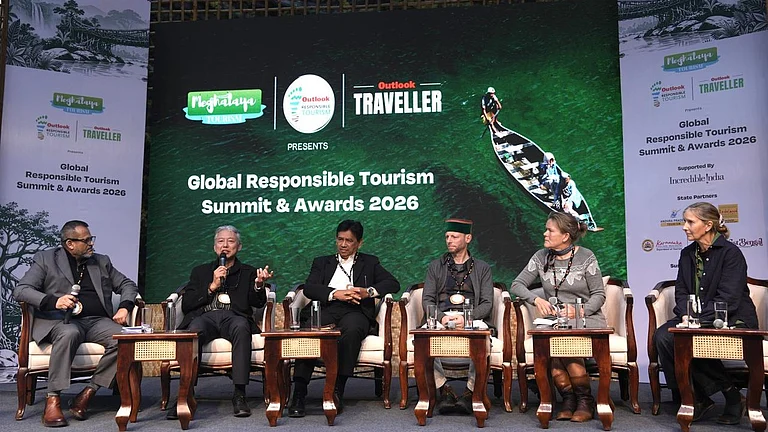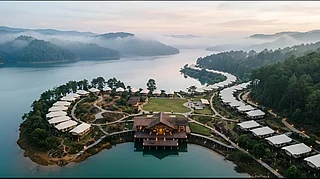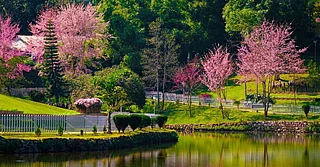


Day 2 of the Global Responsible Tourism Summit drew its curtains at Ward’s Lake, Shillong, on Friday, November 20, after a day of panels, workshops, films, and an awards ceremony.
The two-day event is the first global edition of the summit and awards that Outlook Responsible Tourism has run in India for years. It was organised by Outlook Traveller and Outlook Responsible Tourism with the Department of Tourism, Government of Meghalaya. The idea was to seat international experts next to the Indian practitioners, officials and community voices doing the work. The question running through it was how a fast-growing tourism economy can create jobs without wearing down local cultures and the natural places that travel depends on.
More than 50 speakers and 150 delegates took part. The programme was split between The Grove, the main stage for keynotes and panels, and The Nook, a smaller space for workshops, case studies, and films. A marketplace of 35-plus stalls stayed open to delegates and the public. The final day turned to crowds, money, wildlife and storytelling before it came round to the people being honoured.
Friday began with registration for guests joining that day, an instrumental fusion set by Khasi Cymru, and a short recap of Day 1 by Outlook. The first panel took up a problem most popular places meet sooner or later: how to manage growth before it starts to hurt. Ary S. Suhandi, chairperson of the Asian Ecotourism Network, Kirsi Hyvaerinen, Europe coordinator of the Good Travel Alliance, and Rajesh Chandran Nambiar, CEO and chief consultant of Provork Tourism Consultancy, spoke about carrying capacity and pressure on residents. They also covered spreading visitors beyond the usual hotspots and getting infrastructure ready in time. Mohit Aggarwal, founder of the Global Wildlife Fair and vice-chair of the Asian Ecotourism Network, moderated. Sivaram Babu M., IFS, managing director of Jungle Lodges & Resorts Ltd, then gave a special address.
Tigers, Weddings, And Who Pays
Aggarwal returned for a spotlight on wildlife tourism on the ground. He pointed to Pangot, where birdwatching has supported livelihoods for about forty years, and to Mawlynnong, which he said shows that community-led tourism can thrive without costing a place its character.
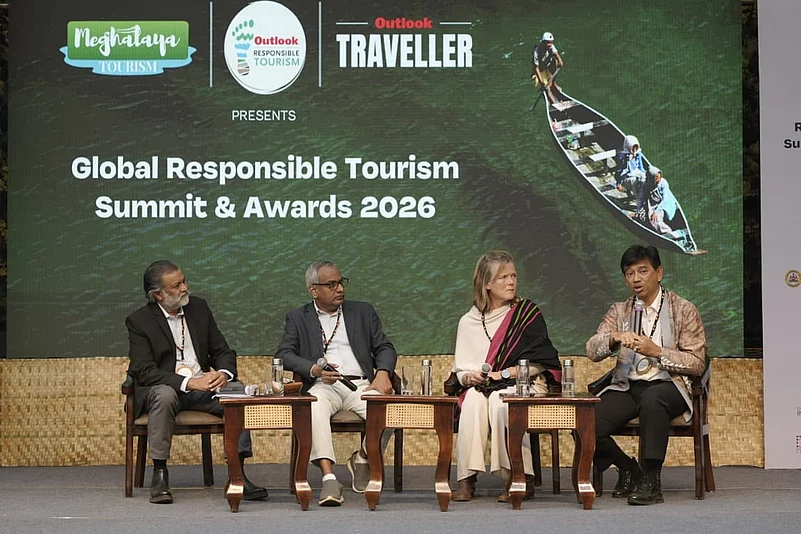

The wildlife panel pushed the point. Sanjay Sondhi, founder trustee of Titli Trust, cited Mawmluh, where a village has taken to responsible tourism through caving, nature guiding, and experiential travel, with the whole landscape managed as one unit. Deepika Chowdhry, director of TOFTigers and founder and CEO of Candid India, said tiger tourism has been done to death and that visitors should be steered towards the wider wilderness. When national parks become wedding venues, she said, the correction has to come from communities and state governments. Dr Benjamin F. Lyngdoh, associate professor in the department of tourism and hotel management at NEHU, completed the panel, which was moderated by Ananda Banerjee, environmental journalist, author and communications specialist.
In “Who Pays for Responsible Tourism?”, Jaideep Bansal, CEO of Global Himalayan Expedition (GHE), asked to swap the question for who benefits. Airlines, hotels, and travellers all do, he said, yet the cost is left with local communities, and governments need to make the right choice the easy one. Soity Banerjee, founder of Kindow, Travel & Cultural Advisory, said India’s tourism assets are public assets that private investors draw on. A large share of bookings, she added, now flows through online platforms with little stake in the destination, meaning local communities see fewer benefits. Neha Arora, founder of Planet Abled, was the third panellist, with Shoba Rudra, founder partner of RARE India and founder of BRIDGES for Conscious Travel, moderating.
Over in The Nook, the work was hands-on. Paras Loomba, founder of GHE, Bansal and Gerald Samuel Duia, founder of Duia Trailblazers, ran a workshop on responsible adventure businesses, covering safety, guide skills and carbon reduction. Michael Dominic, managing director and CEO of CGH Earth, told the story of building a business around local ethos. Raj Basu, co-founder of Help Tourism, and Prof. Streamlet Dkhar, former head of the department of Khasi at NEHU, asked how culture can be opened to visitors without being hollowed out. Five films screened in between: "Ki Dak Bym Thoh" (The Unwritten Words), "Jibnar Jaal" (The Net of Life), "I Khun Nongrep," "The Farmer’s Daughter," "Shadows of Harmony," "Living with Bears in Zanskar," and "Of Forests and Footprints."
Postcards, Reels, And Permission
After noon, the talk moved to who gets to tell a place’s story. Nicholas Kharkongor, film director and writer, spoke with Kartikeya Shankar, Associate Editor, Outlook Traveller and Outlook Responsible Tourism, in “Beyond the Postcard: Who Gets to Represent a Place?” He said stories from the Northeast have long stayed on the edges of Indian cinema. For "Axone," he chose comedy because racism is serious, but humour makes the subject easier to approach, and carries these stories to a wider audience.
Anindita Ghosh, Editor of Outlook Traveller, Outlook Responsible Tourism, and OT Eats, then sat down with Savi Munjal and Vidit Taneja, founders of Bruised Passports. She began by asking whether they feel guilty about the crowds that travel content can send to a place. The pair said creators have made discovery more democratic, but with that reach comes responsibility, and every creator should keep it at the centre of their work. They recalled a reel series on Meghalaya’s root bridges and waterfalls made six years ago. The instalment about not littering was the one that went viral. Their advice for fellow creators was to respect local customs, ask before photographing people, children or homes, and stop chasing virality through rage-bait.

On the role of governments, they said Meghalaya Tourism is doing a good job and that others could learn from Norway and Iceland. Their argument was for steady, long-term promotion over a one-off campaign built around ten invited influencers. They cited Bali and parts of Thailand, where a sudden surge in visitors left litter, high prices and a shortage of rooms. They also described what responsible content looks like to them: village schools in Bishnoi country in Rajasthan, which led to a fundraiser that put up a computer lab for children over three years. Travellers, they said, increasingly want weaving, winemaking and volunteering over pretty pictures. Their Meghalaya videos, shot around Dawki and the living root bridges, are among their most-watched in fifteen years, which they take as a good thing as long as people travel mindfully.
What Responsible Tourism Means On The Ground
The afternoon’s big question was a practical one: what does a state actually do to make tourism responsible? Shrutika Dewan, CMO of Outlook Group, opened the session, and Soity Banerjee shared her reflections on the two days.
Rosetta Mary Kurbah, Commissioner & Secretary, Tourism Department, Government of Meghalaya, spoke as the summit neared its close. “Over the past few days, we have shared valuable experiences, insights and conversations about making tourism more sustainable, inclusive and community-driven,” she said. “For Meghalaya, responsible tourism means protecting our natural heritage, preserving our culture and ensuring that our communities remain at the heart of tourism development.”
Meghalaya Chief Minister Conrad K Sangma’s answer ran along a few ideas that visitors, operators, and other state governments will want to know about.
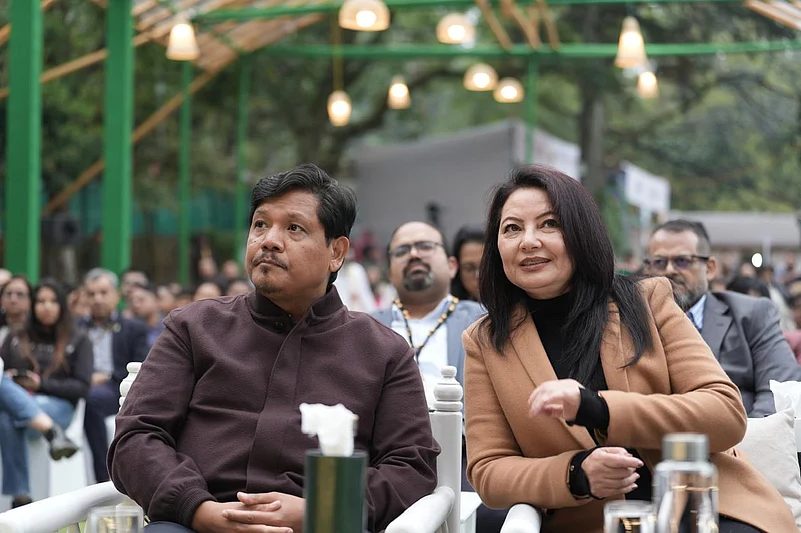
The first is patience. A destination brand comes from many small moves repeated over years, not from one conference or one five-star hotel. “Nothing happens overnight,” Sangma said. Homestay programmes, upgrade funds for roadside dhabas and better toilets at tourist stops all feed into it.
The second is that the word alone proves nothing. “Just by using the word responsible, it does not become responsible,” he said, and duties differ by role. Taxi drivers can move to electric vehicles, backed by a policy launched six months ago that offers INR 50,000 per vehicle with no registration fee. Restaurants can use biodegradable plates and cups, and travellers can carry their own bottles. “Responsibility starts with oneself,” he said. Rules also need systems behind them, so people must be told where to put their waste.
The third is that responsibility can pay. Community forests growing bamboo in Meghalaya received Forest Stewardship Council certification only days ago. “In India there is no FSC-certified product. Meghalaya is the first one to do it,” he said. The certificate vouches for how the bamboo was grown, and he expects products sold in Europe to fetch higher prices. Bamboo bottles that degrade in soil in six to nine months are also planned. Other ideas the state is exploring include a solar-powered air-to-water refill point, newly installed at Ward’s Lake, and electric-only access in a bio-reserve, with locals paid to run the vehicles.
His closing line set the bar for the whole summit: “Whatever we do in governance cannot be only for that day.”
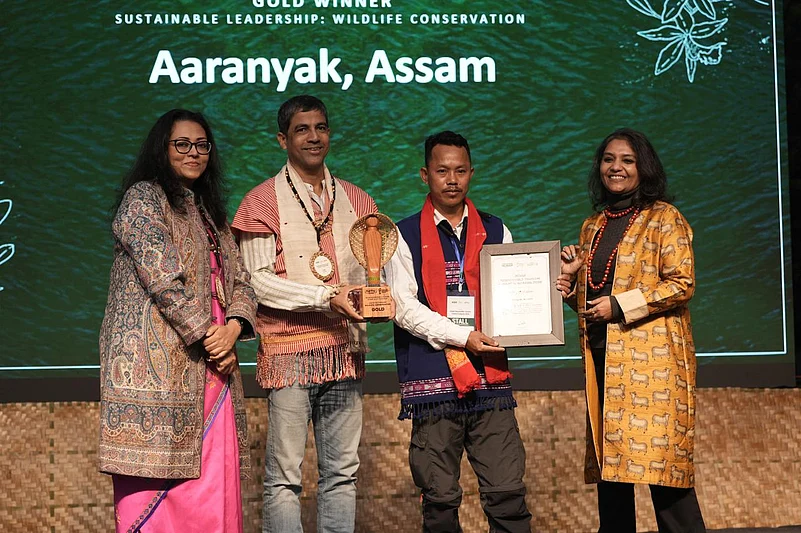
The combined awards presentation followed. It covered the Meghalaya Chapter’s fourth edition, the tenth Indian Responsible Tourism Awards and the GRT Film Competition winners. Many of the day’s speakers had also served on the juries, among them Malika Virdi for Homestays, Shoba Rudra for BnBs and Guesthouses, Michael Dominic for Hotels, Rajesh Chandran Nambiar for Travel Enterprises, Rushina Munshaw Ghildiyal for Food & Beverages, Raj Basu for Grassroots Heroes, Ananda Banerjee for Wildlife Conservation and Sanjay Sondhi for Nature Conservation. The overall winner was Aaliya Babi, honoured for three decades of work around the Raiyoli dinosaur fossil site in Gujarat.
The Winners
Indian Responsible Tourism Awards 2026
Homestays
Gold: Gauriben's Homestay
Silver: Karze: Mud House; Dhanna Ram Ki Dhani Village Homestay
One to watch: Bagayatdar Farmstay
BnBs & Guesthouses & Budget Hotels
Gold: Chandelao Garh
Silver: Raan Guhagar
One to watch: ART Village
Hotels
Gold: Marutham Village Resort
Silver: Madhubhan Resort & Spa
One to watch: The Tamara Coorg
Travel Enterprises
Gold: Five Senses Tours Pvt. Ltd.
Silver: Footloose Journeys
One to watch: Duia Trailblazers; Konkan Travel Club
Food & Beverages
Gold: The Locavore
Silver: Artisanal Alchemy
One to watch: Alchi Kitchen; The Balti Farm
Grassroots Heroes
Gold: Aaliya Babi
Silver: Didom Daimari
One to watch: Muhammed Shihad; LiyakatAli Osman Notiyar
Wildlife Conservation
Gold: Aaranyak / Journey for Learning
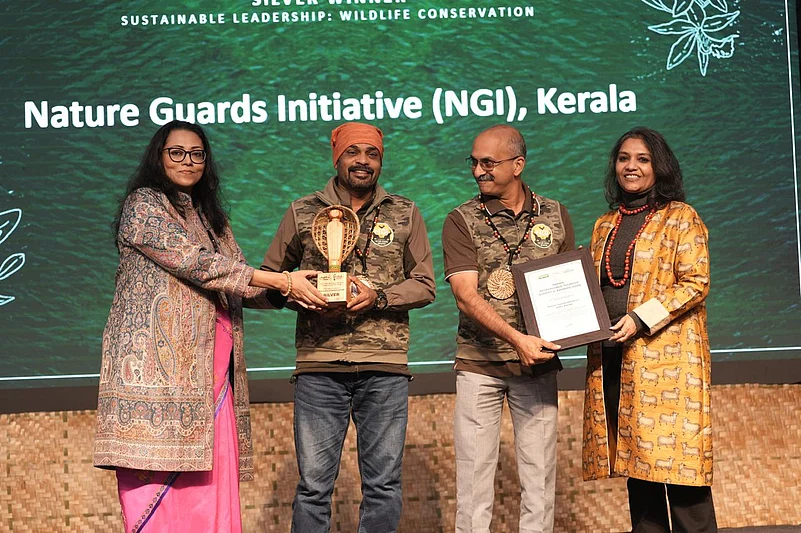
Silver: Nature Guards Initiative
One to watch: Epum Sirum
Nature Conservation
Gold: Shri Vanlaxmi Mahila SEWA Tree Growers Cooperative
Silver: Centre for Desert and Ocean (CEDO); Out of O (OOO) Farms
Future Forward Destinations
Gold: Akiile Potato Farm
Silver: Magarpath Eco Jungle Camp
Overall winner: Aaliya Babi
IRTSA Meghalaya 2026 (4th Edition)
Food & Beverages
Gold: Cooking with Mei | Kiva Homestay
Silver: M/S Asame Food & Beverages
Grassroots Heroes
Gold: Morningstar Khongthaw
Silver: Ian A Lyngdoh Nongkynrih
Travel Enterprises
Gold: Baghmara Campers (Mark Pantora M Sangma)
Silver: TRIS Travels (Rose Christine M Kharsyntiew)
Cultural Ambassadors
Gold: Arak M Sangma (A•kakki Studios)
Silver: Shlem Institute of Music (Banshailang Mukhim)
Homestays
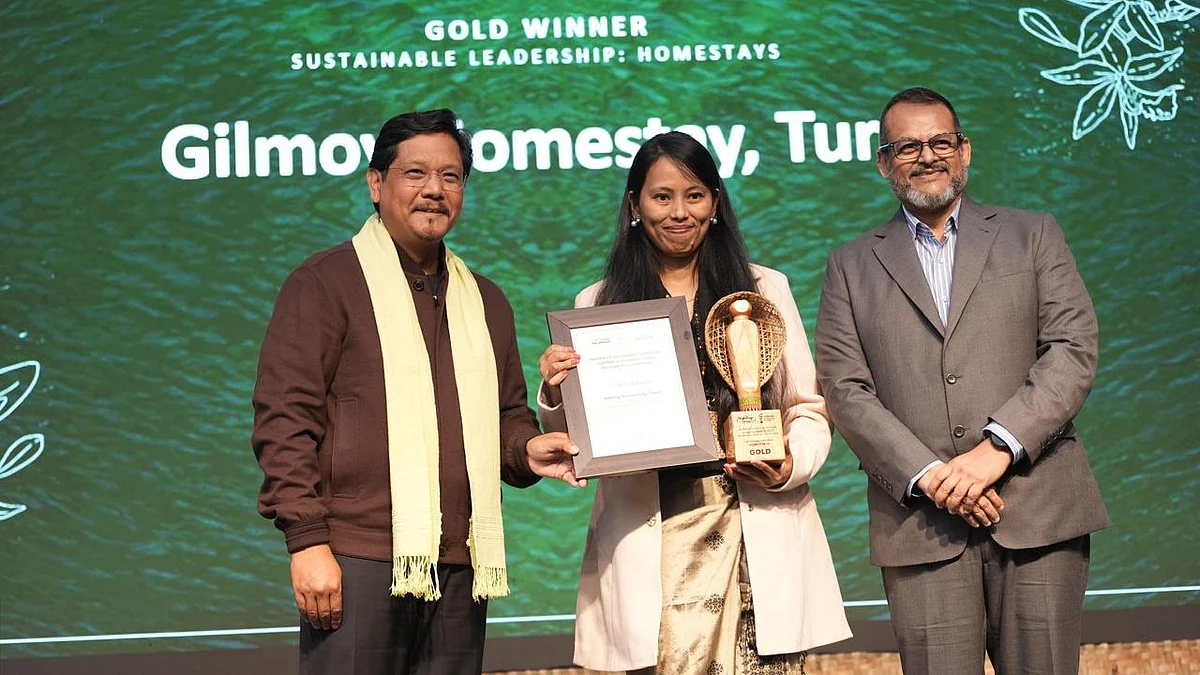
Gold: Gilmoy Homestay (Ellora Nokme K Sangma)
Silver: Lakhmie Pohtam Homestay
FAQs
1. What is the Global Responsible Tourism Summit & Awards 2026?
It is the first global edition of the summit and awards that Outlook Responsible Tourism has run in India for years. It was held on 19-20 November 2026 at Ward’s Lake, Shillong. Outlook Traveller and Outlook Responsible Tourism organised it with the Department of Tourism, Government of Meghalaya. It brought together more than 50 speakers and 150 delegates for panels, workshops, case studies and film screenings.
2. What was discussed on Day 2 of the summit?
Day 2 covered managing growth before overtourism sets in, wildlife tourism and conservation, and who should pay for responsible tourism. It also looked at how films and travel content represent places, and at how influencers can travel and create content responsibly. Workshops and film screenings ran in parallel in The Nook.
3. What did Meghalaya Chief Minister Conrad K. Sangma say about responsible tourism?
Sangma said a destination brand is built over years, not overnight, and that using the word “responsible” does not make tourism responsible. He said responsibility starts with oneself and differs for each stakeholder. He announced that Meghalaya’s community-grown bamboo has received Forest Stewardship Council certification, which he said is a first for India.
4. Who was the overall winner at the Indian Responsible Tourism Awards 2026?
Aaliya Babi of Balasinor/Raiyoli, Gujarat, was the overall winner. She also won Gold in Grassroots Heroes for about three decades of work building awareness and tourism around the Raiyoli dinosaur fossil site.
5. What are the Indian Responsible Tourism Awards and the IRTSA Meghalaya Chapter?
The Indian Responsible Tourism Awards 2026 mark ten years of recognising community empowerment, conservation, sustainable hospitality and responsible destination development across India. The IRTSA Meghalaya Chapter, now in its fourth edition, recognises individuals, communities and enterprises advancing responsible tourism within Meghalaya. Both were presented together on Day 2, along with recognition of the GRT Film Competition winners.