For two days, Travancore Palace in New Delhi became a melting pot for Indian craft, design, music, and contemporary living. The Home Soirée 2026, held on August 7 and 8, brought handloom labels, artists, designers, jewellers, musicians, and cultural practitioners under one roof, with the idea of the home at its centre. Inaugurated by Rajasthan Deputy Chief Minister Princess Diya Kumari of Jaipur, the event was a benchmark for the platform, which began as a more intimate design showcase.
Founded by co-curators, Princess of Jhabua, Nandini Singh Jhabua and Akshat Kapoor, The Home Soirée was conceived around a simple question: what does a home say about the culture, memories and traditions of the people who live in it? Rather than treating the home as just a space to decorate, the event approached it as a living repository of heritage. Across its textile pavilions, art and jewellery showcases and musical performances, the Soirée brought together the things that can shape that identity.
A Home As A Living Repository Of Culture
The curation brought together an eclectic mix of brands and makers. The House of Angadi, Roliana, and Jugni represented India's handloom traditions, while Amala Earth and Urvashi Kaur brought a focus on conscious, contemporary creations. RAH Jewels, Inca India, Line Tribe, Maadhu by Japna Tulsi and Northern Art added jewellery, fashion, objects, and art to the mix.
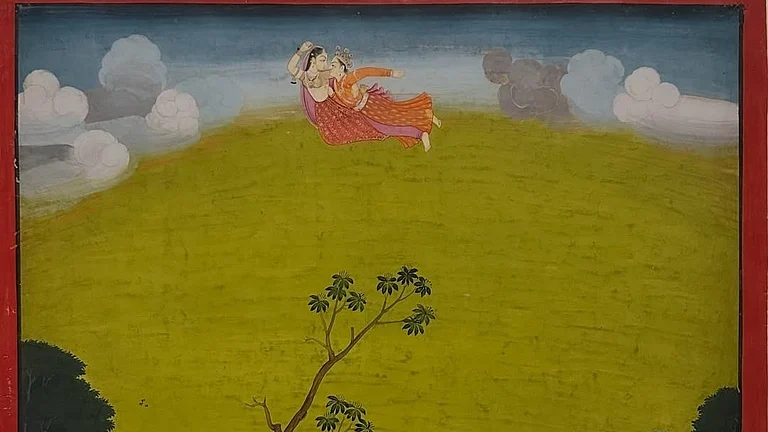
The result was less a conventional lifestyle exhibition and more a depiction of how different forms of Indian creativity can coexist within a home. There were scented candles and paintings ranging from classic Company-style works to contemporary art, along with fashion, jewellery and handcrafted objects. The venue itself added to the experience. Travancore Palace provided the perfect setting for a showcase that was designed around the idea that every object in a home can carry a story, whether through its material, maker, technique or cultural lineage.


For the founders, that connection between everyday life and heritage was central to the event. “The idea was to celebrate the culture that's birthed in our beautiful homes of India,” said Akshat Kapoor. “To promote not only cuisine, but also the arts and the crafts and the music that you are exposed [to] within the four walls of your home for the first time.”
He also sees the Soirée as a response to a moment when technology increasingly shapes how people interact with one another. “It is an attempt to sort of build and give birth to fresher thought processes and conversations in this day and age of AI and technology, where everybody is glued to their phone.” For him, the importance of an event such as The Home Soirée lies in creating a setting where people can slow down, discover the varied art and craft of India and share stories in person.
When Craft Became A Conversation
That emphasis on discovery was reflected in the overwhelming response it received. Riddhima Kapoor Sahni, who attended as Guest of Honour, described the curation as a thoughtful mix of design and individuality. For her, the Baithaki with folk singer and Padma Shri awardee Malini Awasthi added another dimension to the evening.
“I absolutely loved the experience at the Home Soirée,” Sahni said. “The curation was so thoughtfully done, with an incredible mix of brands that brought together design, craftsmanship and a beautiful sense of individuality.” She also singled out the Baithaki with Awasthi, saying it brought “warmth, soul and cultural richness” to the evening.

The musical programme was designed to complement the craft and design on display rather than stand apart from it. Awasthi's intimate recital on the opening day was followed by a closing musical featuring poetess Minu Bakshi, danseuse Shivani Verma, storyteller Anas Khan and violinist Tomek Pajak, celebrating India's oral cultural traditions.
For Awasthi, the intimate format was particularly important. Ahead of her performance, she described the Baithaki as a space where an artist can relax and establish a direct connection with the audience. “In a true Baithaki style, you can actually enjoy more, listen, and appreciate the nuances of music more.” She also welcomed the idea of a cultural event that allowed the audience and performer to engage in a dialogue rather than keeping them at a distance.
That interaction was part of what the founders hoped to create: not simply a space where visitors could shop, but one where they could understand the work behind what they were seeing. Guest Pritha Sharma noted the careful selection of brands and appreciated the way the showcase brought lesser-known crafts into greater focus.
From A Conversation To A Cultural Platform
For Jhabua and Kapoor, getting the event to Travancore Palace was itself the culmination of months of work. Nandini Singh Jhabua described the process as one involving “months of chaos, caffeine, WhatsApp messages, moving walls, last-minute changes” and plenty of uncertainty. “What makes me happiest is that it became exactly what Akshat & I had hoped it would be … a place where cultures assimilated. Beautiful craft, design, music, food and people could come together, discover each other and simply have a lovely time.”

The Home Soirée's founders come to the project from different but complementary backgrounds. Jhabua, from the royal family of Jhabua, has worked as a patron of Indian art, heritage and philanthropy, with a particular interest in traditional and tribal art forms. Kapoor brings his experience as a public relations professional, alongside a family connection to India's craft traditions, to the platform's storytelling and audience engagement.
The two-day event was therefore also a statement of intent for what The Home Soirée hopes to become. The founders want each season to improve its curation and go further in telling the stories of India's homes, crafts and cultural traditions. “We will try to make each season better, our curation even better, and also take that extra mile if we have to, to make sure that the story of every home of India is shared via Home Soirée.”
At Travancore Palace, that idea came together through objects, textiles, music and people rather than through a single definition of what an Indian home should look like. The Home Soirée offered a curated view of contemporary Indian living in which heritage was not presented as something static or distant, but as something that can still be worn, displayed, heard, collected and shared.
FAQs
1. What was The Home Soirée 2026?
The Home Soirée 2026 was a two-day cultural and design event that brought together Indian handlooms, art, jewellery, fashion, music and contemporary living.
2. Where was The Home Soirée 2026 held?
The event was held at Travancore Palace in New Delhi on August 7 and 8, 2026.
3. Who founded The Home Soirée?
The Home Soirée was founded by Princess Nandini Singh Jhabua and Akshat Kapoor.
4. What was the theme of The Home Soirée 2026?
The event explored the home as a living repository of culture, memories, traditions, craftsmanship and contemporary Indian creativity.
5. Who performed at The Home Soirée 2026?
The musical programme included a Baithaki with folk singer and Padma Shri awardee Malini Awasthi, alongside a closing programme featuring Minu Bakshi, Shivani Verma, Anas Khan and violinist Tomek Pajak.