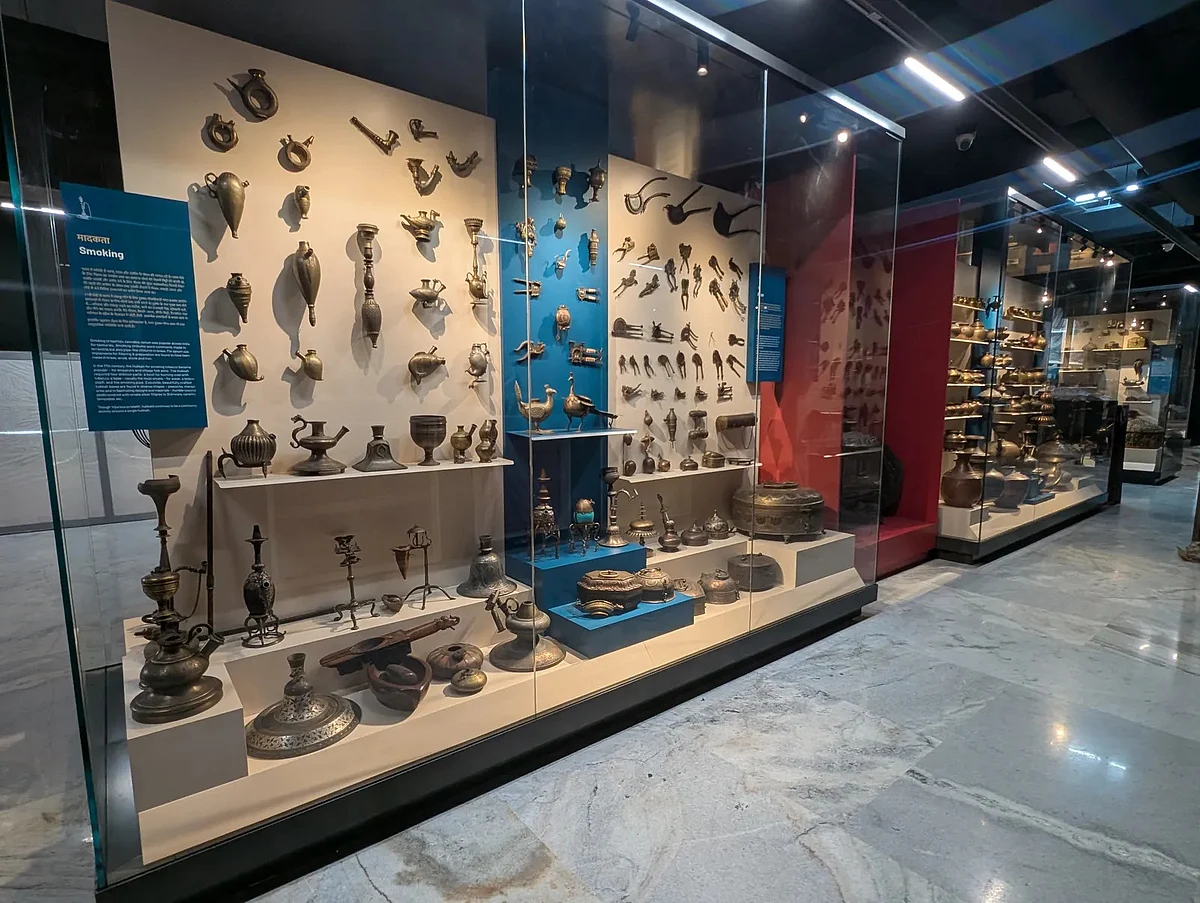
A brass lota, a carved wooden walker, a silver hookah, an ornate lock, and a centuries-old sari may seem like unrelated objects. Together, however, they tell a remarkably detailed story of how Indians lived, worked, worshipped and found beauty in everyday life. Delhi’s newest cultural space brings many of these objects together under one roof.
The Sanskriti Museum of Indian Textiles & Everyday Art opened to the public on August 1 at the Humayun’s Tomb World Heritage Site Museum in Sunder Nursery. The new gallery brings more than 2,000 objects and 500 textiles from the extensive private collection of art patron and connoisseur OP Jain to a new audience. Dating from the early 19th century onwards, the collection spans domestic objects, tools, ritual pieces, toys, accessories and textiles from across India and parts of undivided India.
A Collection Of Lives
The collection has an unusual way of introducing visitors to India’s material culture. Instead of being organised solely by region or craft, the Everyday Art section follows the stages of a traditional human life cycle, moving from childhood and education to adulthood, domestic life and spiritual pursuits.
The journey begins with objects associated with childhood, including brass animal figurines, traditional toys, and an intricately carved wooden walker from southern India. The section dedicated to student life brings together writing implements, ink wells, learners’ slates and drawing tools, offering a glimpse into older forms of education. As the narrative moves towards adulthood, farming implements, trade tools and elaborate locks reflect the practical concerns of working and household life.
Domestic objects form one of the most fascinating parts of the display. There are intricately carved kitchen implements, Burmese ivory nutcrackers and a range of hookahs, including silver examples from the Deccan and a coconut-shell version from Gujarat. Among the more unusual objects is a painted wooden tiger from Rajasthan, designed as a vanity kit for a woman travelling on a hunting expedition. Made up of around 100 components, it contains items such as combs, mirrors, hair accessories and small games.
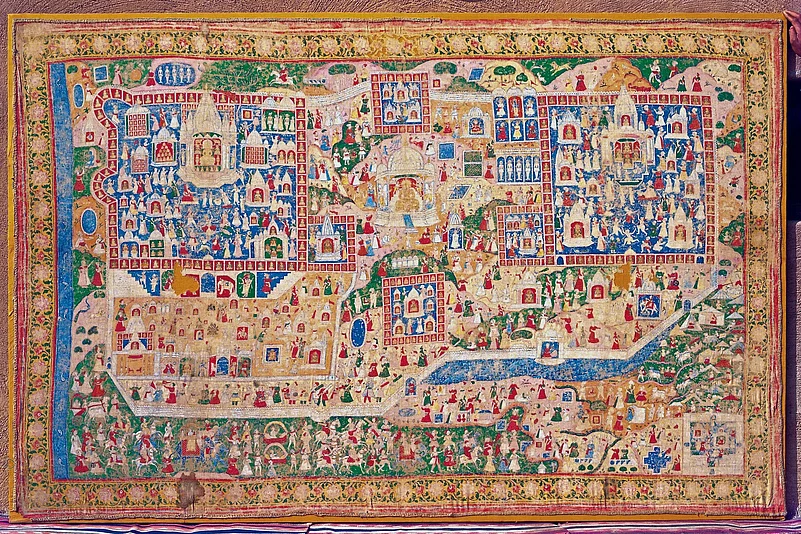
The museum also explores the relationship between utility and design. A chakla-belan, or rolling board and pin, is fitted with tiny bells that would have added a rhythmic element to cooking, while an assortment of brass lotas demonstrates how objects intended for everyday use could also possess considerable aesthetic value. Religious and ritual objects complete the life-cycle narrative, with shrines, oil lamps, Pichwai paintings and other ceremonial pieces forming part of the display.
A Textile Legacy
Running alongside the everyday objects is a collection of 500 historic textiles, many dating from the mid-19th to the mid-20th century. Together, they offer a sweeping view of regional weaving and embroidery traditions, including kantha and Jamdani from Bengal, Bandhani from Rajasthan, Phulkari from Punjab, ikat from Andhra Pradesh, Gujarat and Odisha, embroidered odhnis from Kutch and Saurashtra, and shawls from Kashmir.
The collection also includes zardozi work from Benaras, Kanchipuram textiles and religious tapestries donated by Jain patrons to temples. Some pieces originated in regions that are now outside India, including textiles from Sindh and historic Jamdani weaving associated with Dhaka.
Among the highlights is a more than century-old double-ikat silk sari from Patan, Gujarat. Its repeated motif of walking elephants and accompanying symbols required precise calculations and months of painstaking weaving. Several textiles are still undergoing conservation, so the textile display is expected to evolve over time.
A New Chapter

The museum is the latest chapter in the story of a collection that began taking shape decades ago. Jain, a paper manufacturer and founder of Sanskriti Kendra at Anandagram in Mehrauli, spent much of his life travelling across India and acquiring objects that reflected the country’s craft traditions and everyday aesthetics. The original Sanskriti complex became a major space for craft, design, artist residencies, workshops, and cultural programming.
In 2023, the Sanskriti Board of Trustees gifted the collection to the nation through the Indira Gandhi National Centre for the Arts (IGNCA). The collection is now being presented at the Humayun’s Tomb World Heritage Site Museum for an initial five-year period, with the Aga Khan Trust for Culture working with IGNCA on the displays, conservation and future research.
Located in Nizamuddin, the museum is open from Tuesday to Sunday, from 10 AM to 6 PM, with the last admission at 5:30 PM. It remains closed on Mondays and national holidays. Entry costs INR 50, with only 50 visitors permitted each hour. The nearest metro station is JLN Stadium on the Violet Line.
For Delhi, the museum offers a chance to look at familiar aspects of Indian life through the craftsmanship that once shaped them, from the kitchen and study to rituals, travel and personal adornment. In bringing Jain’s collection into the public domain, the new gallery gives everyday Indian design a setting where its history can be explored, studied and appreciated anew.
What Visitors Need To Know
Location: Sanskriti Museum Gallery, Humayun’s Tomb Site Museum, Nizamuddin, New Delhi
Hours: 10 AM to 6 PM, Tuesday to Sunday; closed on Mondays and national holidays
Entry Fee: INR 50
Visitor Limit: Only 50 visitors are permitted per hour
Metro Access: JLN Stadium on the Violet Line is the nearest metro station
FAQs
1. Where is the Sanskriti Museum of Indian Textiles & Everyday Art?
It is located at the Humayun’s Tomb World Heritage Site Museum in Nizamuddin, New Delhi.
2. What can visitors see at the museum?
The museum displays more than 2,000 everyday artefacts and 500 historic textiles from across India and parts of undivided India.
3. What are the opening hours of the Sanskriti Museum?
The museum is open from 10am to 6pm, Tuesday to Sunday, and is closed on Mondays and national holidays.
4. How much is the entry fee?
Entry to the museum costs INR 50 per person.
5. How can visitors reach the museum by metro?
JLN Stadium on the Violet Line is the nearest metro station.