

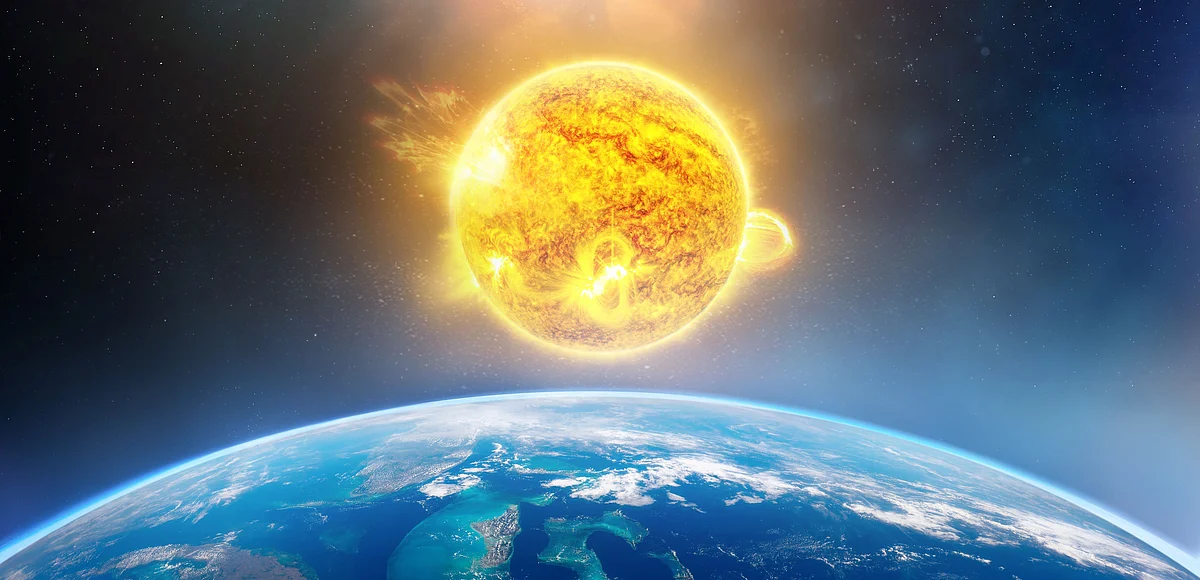
A powerful solar storm is expected to reach Earth on June 8, 2026, after a major eruption on the Sun led to a dense cloud of magnetised plasma directly toward our planet. Space weather agencies are closely monitoring the event, which could affect satellite operations, GPS signals, and power infrastructure, while also creating the possibility of rare aurora sightings in parts of northern India.
The storm originated from a highly active region on the Sun known as Active Region 4461, which has been producing multiple eruptions throughout the week.
Solar Flare Triggered Earth-Bound Eruption

The event began on June 6 when Active Region 4461 produced an M1.8-class solar flare. Solar flares are sudden bursts of energy released when magnetic fields on the Sun become unstable and snap, releasing enormous amounts of radiation.
What caught scientists' attention was not just the flare itself, but the eruption of a dense core filament that accompanied it. A filament is a large ribbon of cooler, heavier gas held above the Sun's surface by magnetic fields. When these magnetic fields become unstable, the filament can erupt into space. In this case, it was launched directly towards Earth at a speed of around 1,400 kilometres per second.
What Makes This Solar Storm Different?
According to experts, the eruption is moving unusually fast and is travelling on a direct path toward Earth. At its current speed, the solar material has crossed the distance between the Sun and Earth in less than 48 hours. Scientists are also watching for a phenomenon known as a "cannibal CME."
A Coronal Mass Ejection (CME) occurs when the Sun ejects massive clouds of charged particles and magnetic fields into space. If a faster CME catches up with slower-moving solar material released earlier, the eruptions can merge into a larger and denser storm. Experts believe this may happen with the current event, potentially increasing its strength before arrival.
Strong Geomagnetic Storm Expected
The US Space Weather Prediction Center has issued a G3, or strong, geomagnetic storm watch. There is also a chance that the storm could briefly reach G4, which is considered severe.
A geomagnetic storm occurs when charged particles from the Sun interact with Earth's magnetic field. The storm's ultimate intensity will depend on a key factor known as the Bz component, which describes the direction of the magnetic field carried within the incoming solar cloud.
The final strength of the storm depends on the direction of the magnetic field inside the incoming solar cloud. If conditions are favourable, more solar energy can enter Earth's atmosphere, making the storm stronger and increasing the chances of seeing auroras.
Scientists will only know these details shortly before the cloud reaches Earth.
Possible Effects On Satellites, GPS, And Power Grids
Although geomagnetic storms do not pose a direct threat to people on the ground, they can affect technology that modern society depends on.
Strong geomagnetic storms can interfere with satellite operations, GPS accuracy and radio communications. Power companies also keep a close watch during such events because strong magnetic activity can affect electricity networks.
The storm may also increase drag on satellites orbiting Earth, making it more difficult for operators to maintain precise positions. Navigation systems such as GPS could experience minor inaccuracies, while high-frequency radio communications used by aviation and maritime services may face temporary disruptions.
Rare Aurora Display Possible In Northern India
For skywatchers, however, the storm could prove rewarding.
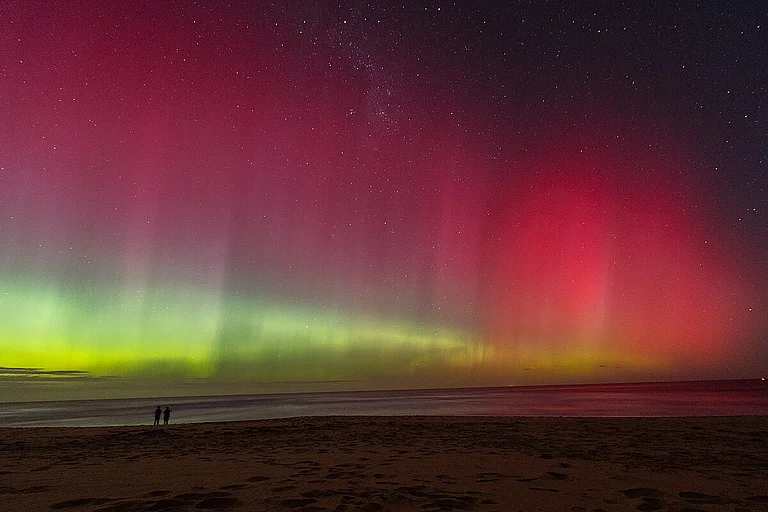
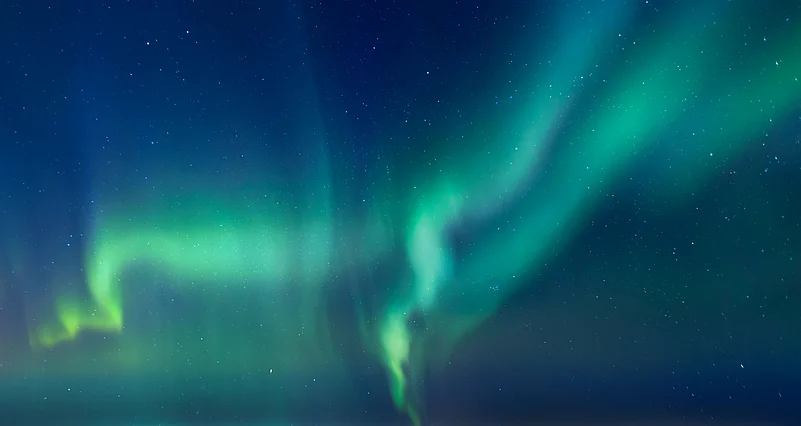
Auroras, also known as the northern lights, are created when charged particles from the Sun collide with gases in Earth's upper atmosphere. These collisions produce colourful lights in the sky.
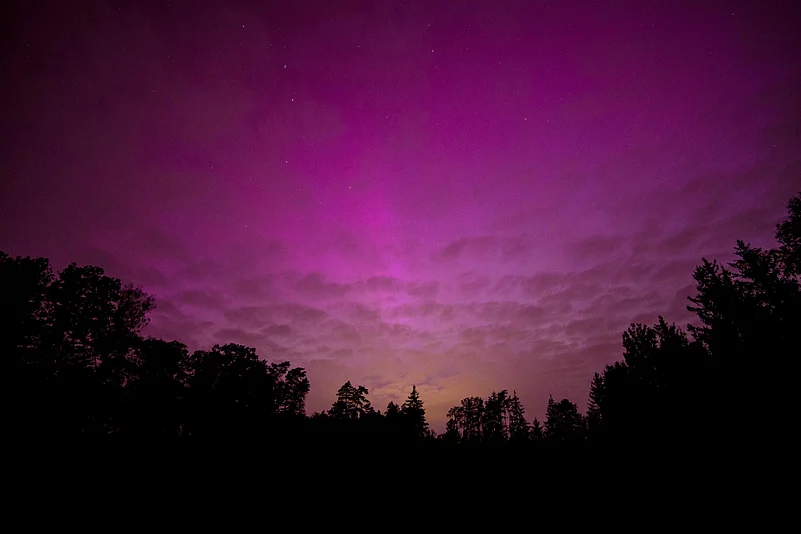
Auroras are usually seen near the North and South Poles. However, during strong solar storms, they can spread much farther from the poles.
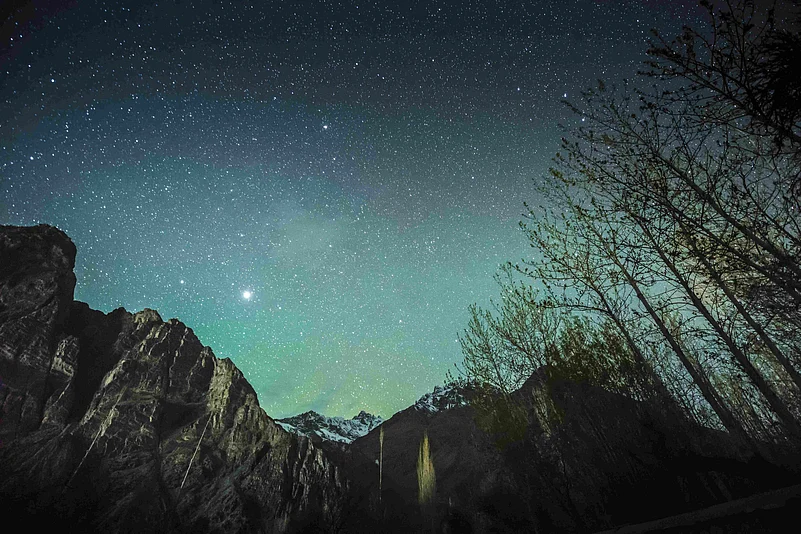
If the incoming storm reaches G3 or G4 levels and atmospheric conditions remain favourable, parts of northern India could potentially see auroral activity. The peak impact window is projected between 11:30 PM IST tonight (June 8) and 2:30 AM IST on Tuesday (June 9). High-altitude locations with dark skies, such as the Hanle Dark Sky Reserve in Ladakh, could offer the best chances to see the auroral activity. Other locations include Pangong Tso and Nubra Valley.
(With inputs from various sources)
FAQs
1. What is a solar storm?
A solar storm occurs when charged particles and magnetic fields released by the Sun interact with Earth's magnetic field.
2. What is a geomagnetic storm?
A geomagnetic storm is a disturbance in Earth's magnetosphere caused by solar activity such as coronal mass ejections.
3. Can solar storms affect people?
Solar storms generally do not pose a direct threat to people on the ground but can affect satellites, communications systems, GPS networks and power infrastructure.
4. What is a Coronal Mass Ejection (CME)?
A CME is a massive cloud of charged particles and magnetic fields ejected from the Sun into space.
5. Could auroras be visible in India?
Strong geomagnetic storms can push auroras farther from the poles. If this storm reaches G3 or G4 levels, parts of northern India, particularly Ladakh, may have a chance of seeing them.
6. What is a cannibal CME?
A cannibal CME occurs when a faster coronal mass ejection catches up with and absorbs a slower CME, potentially creating a stronger solar storm.