September 2026 is shaping up to be an exciting month for skywatchers. From a dazzling Venus and a bright Harvest Moon to the September Equinox and several interesting Moon-planet pairings, there is plenty to look forward to in the night sky.
You don’t need expensive equipment to enjoy most of these events. A clear sky, an open view of the horizon and a little patience should be enough for several of them. If possible, head away from cities and areas with heavy light pollution for a better view. Here are the major celestial events to watch out for this September.
Follow The Moon To Antares And Sagittarius
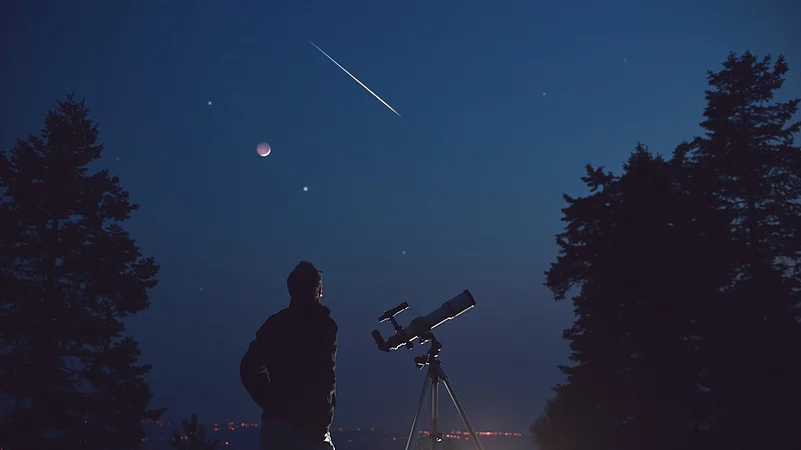

Between September 14 and 20, the Moon will help guide skywatchers towards some of the most recognisable sights in the evening sky. About an hour after sunset, look towards the southern sky and locate the Moon.
As it moves across the sky from one evening to the next, the Moon will pass close to Antares, the bright reddish star that marks the heart of the constellation Scorpius.
Nearby, you can also look for Sagittarius and its famous Teapot asterism. The group of stars forms a shape that resembles a teapot, complete with a handle, lid and spout.
If you are somewhere with dark skies, look for a faint, cloudy band appearing to rise from the Teapot's spout. This is part of the Milky Way, and tracing it towards its densest region will take you in the direction of the centre of our galaxy.
Venus Reaches Peak Brightness On September 18
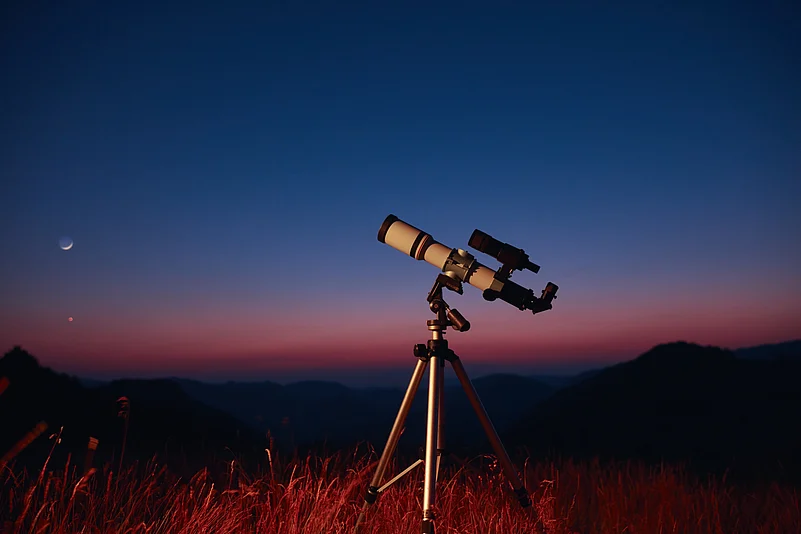
One of September's biggest highlights arrives on September 18, when Venus reaches peak brilliance during its current evening appearance.
The planet will be hard to miss. Shortly after sunset, look towards the western horizon for an intensely bright point of light. Venus will shine brighter than any nearby star, making it one of the easiest planets to spot without a telescope.
Try to find a location with an unobstructed view of the western horizon, as Venus will appear relatively low in the sky before disappearing below the horizon.
Mercury will also be in the vicinity, giving skywatchers another planet to look for.
International Observe The Moon Night On September 19
There is another reason to look up on September 19. It is International Observe the Moon Night, an annual event that encourages people around the world to spend some time observing our nearest celestial neighbour.
You can simply step outside and look at the Moon, or use binoculars or a telescope to see more of its surface. The occasion is also about learning more about lunar science, exploration and the Moon's role in cultures around the world.
Whether you join an organised event or observe from home, it is an easy way to make a little time for skywatching.
September Equinox Arrives On September 22
On September 22, the September Equinox will mark the change of seasons. In the Northern Hemisphere, it signals the beginning of astronomical autumn, while the Southern Hemisphere moves into spring. During the equinox, the Sun is positioned directly above Earth's equator, bringing nearly equal amounts of daylight and darkness to much of the world.
After the equinox, days will gradually become shorter in the Northern Hemisphere and longer in the Southern Hemisphere.
The period around the equinox can also be an interesting time for aurora watchers. Travellers in Arctic regions may have opportunities to see the Northern Lights, although auroras are difficult to predict and depend on solar activity and local weather conditions.
Mars Meets The Gemini Twins On September 25
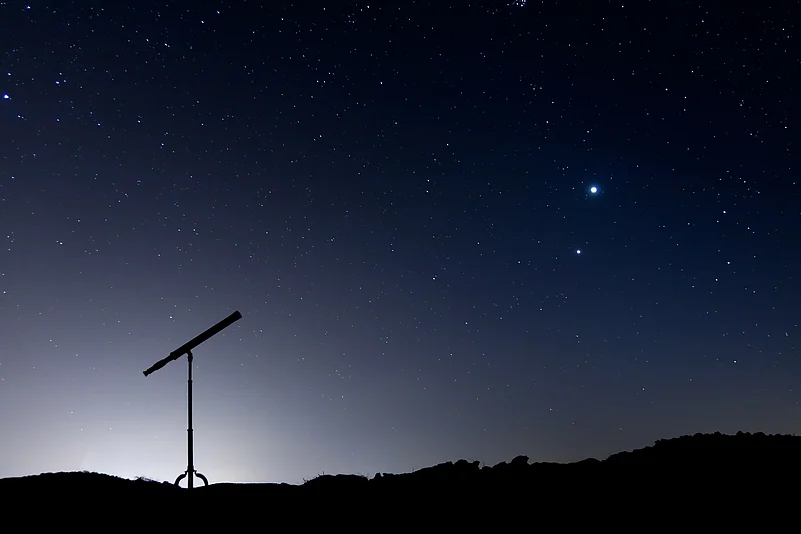
Early risers have another celestial sight to look forward to on September 25. Mars will appear close to the Gemini constellation's famous twin stars, Castor and Pollux. The three objects will form a neat arrangement in the morning sky, with Castor above, Pollux in the middle and reddish-orange Mars below.
Look towards the eastern sky in the early hours before sunrise. Bright Jupiter may also be visible closer to the horizon, adding another planet to the scene.
The Harvest Moon Rises On September 26
The Harvest Moon will be one of September's biggest attractions, reaching full illumination on September 26.
The Harvest Moon gets its name because it is the full Moon closest to the September Equinox. It will rise around sunset and can appear yellow or orange as its light passes through the Earth's atmosphere.
This year's Harvest Moon will also have planetary companions. Saturn will appear nearby, while the much fainter Neptune will form a broader triangle with the Moon and Saturn.
Saturn is bright enough to see with the naked eye. Neptune, however, is much harder to spot at around magnitude 8, so you will need binoculars or a telescope. Under dark skies, a telescope can also reveal Saturn's famous rings and some of its brighter moons.
Where To Watch The September Sky In India
Most of September's highlights can be enjoyed without specialised equipment, but getting away from bright city lights will make a big difference.
For some of India's best dark-sky experiences, consider heading to places such as Hanle Dark Sky Reserve in Ladakh, Spiti Valley and Pin Valley in Himachal Pradesh. In the Northeast, Bomdila and Tawang in Arunachal Pradesh, as well as Gurudongmar Lake in Sikkim, offer beautiful open landscapes.
In western India, the Rann of Kutch, Jaisalmer and Sariska are good options for travellers looking for wide, unobstructed skies. In the south, Coorg, Munnar and Yelagiri are worth considering.
Wherever you go, check the weather forecast, choose a spot with a clear horizon and give your eyes some time to adjust to the darkness.
FAQs
1. What are the major skywatching events in September 2026?
Major events include Venus reaching peak brilliance, International Observe the Moon Night, the September Equinox, Mars appearing near Castor and Pollux, and the Harvest Moon.
2. When will Venus be at its brightest in September 2026?
Venus will reach peak brilliance on September 18, 2026, and should be visible shortly after sunset towards the western horizon.
3. When is the Harvest Moon in September 2026?
The Harvest Moon will reach full illumination on September 26, 2026.
4. What is the September Equinox in 2026?
The September Equinox occurs on September 22, 2026, marking the beginning of astronomical autumn in the Northern Hemisphere and spring in the Southern Hemisphere.
5. When is International Observe the Moon Night 2026?
International Observe the Moon Night will take place on September 19, 2026, encouraging people to observe and learn about the Moon.