


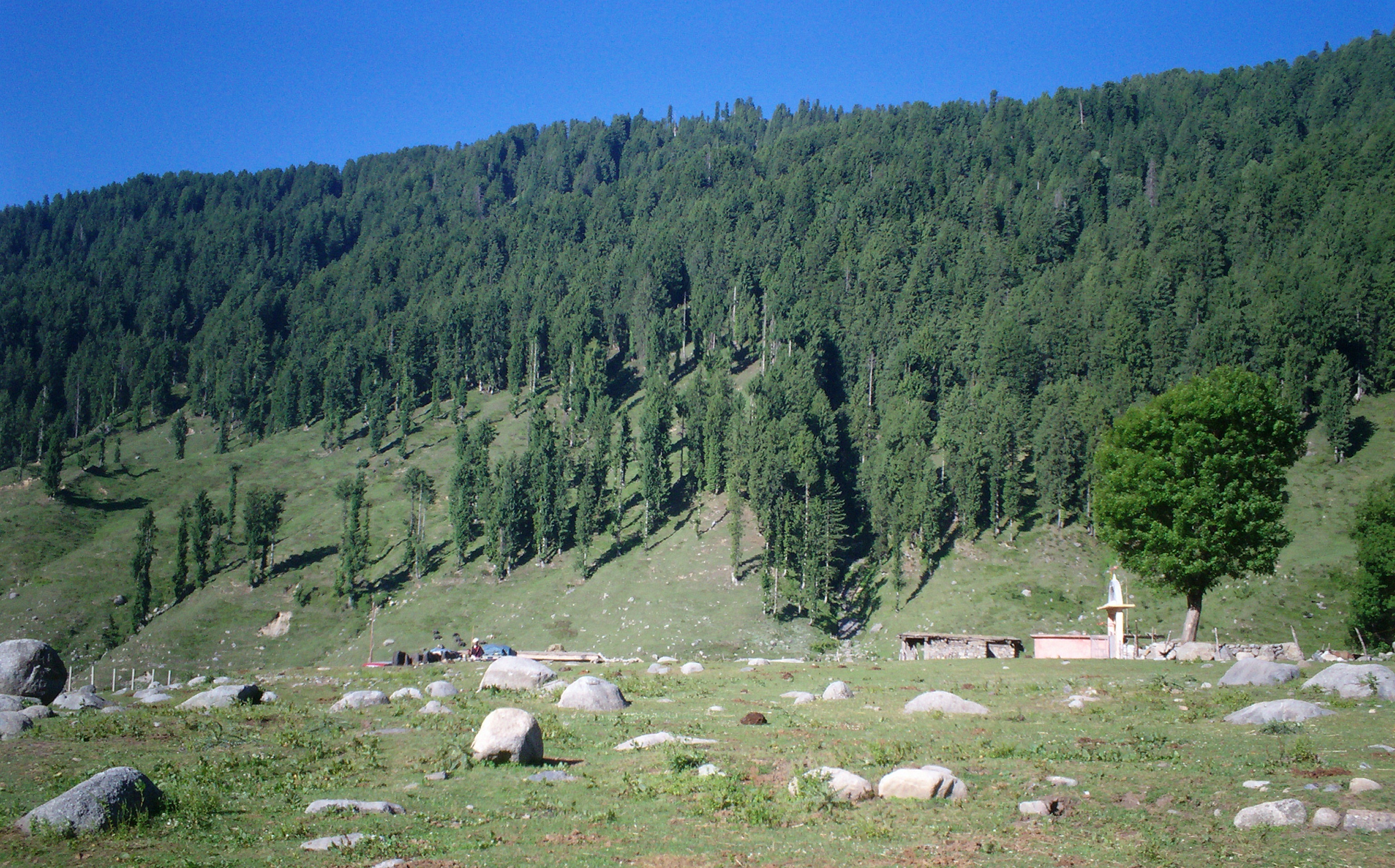
The fragile forests of the Himalayas have seen a measurable decline in tree cover over the last two years, according to the latest official data presented in Parliament.
Responding to a question in the Rajya Sabha on Friday, Union Minister of State for Environment, Forest and Climate Change Kirti Vardhan Singh said the tree cover in the Indian Himalayan region decreased by 2.27 per cent between 2021 and 2023.
According to the India State of Forest Report 2023, the region’s tree cover declined from 15,427.11 square kilometres in 2021 to 15,075.5 square kilometres in 2023.
The Indian Himalayan region spans 13 states and Union territories. These include Jammu and Kashmir, Ladakh, Uttarakhand, Himachal Pradesh, Arunachal Pradesh, Manipur, Meghalaya, Mizoram, Nagaland, Sikkim, Tripura, Assam and West Bengal.
The findings come from the biennial assessment carried out by the Forest Survey of India, which evaluates the country’s forest and tree resources.
Carbon Stock Rises Slightly Despite Tree Cover Drop
Even as tree cover in the Himalayan belt declined, the region’s forests continue to store vast amounts of carbon.
Singh told Parliament that the total carbon stock in the forests of the Indian Himalayan region was estimated at 3,273.10 million tonnes in 2023. In 2021, the figure stood at 3,272.68 million tonnes.
The minister stressed that forest health cannot be judged only by the visible greenness of landscapes. “Forest health is influenced by multiple ecological and biophysical parameters and not merely by the greenness of forest areas,” he said.
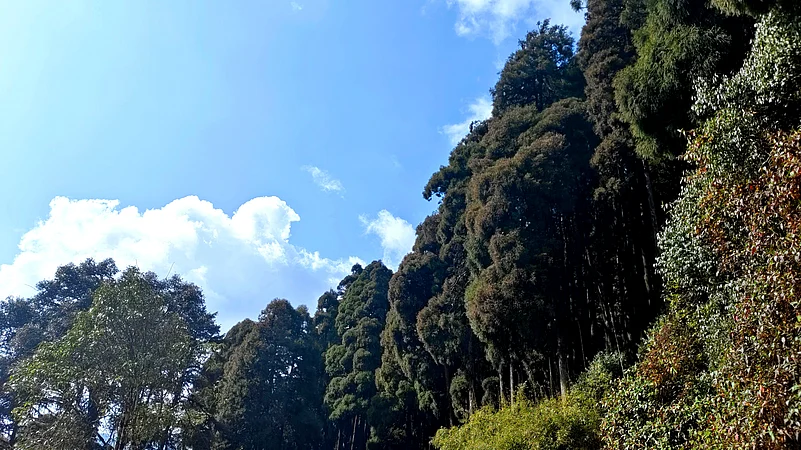

To assess this health, the Forest Survey of India collects data on several ecological indicators. These include soil depth, soil erosion, the characteristics of forest vegetation, and threats affecting forests.
“Forest health is influenced by multiple ecological and biophysical parameters and not merely by the greenness of forest areas,” Singh reiterated, explaining that these indicators together help determine the condition of forests at any given time.
He added that the interactions between these parameters ultimately shape the overall state of forest ecosystems. “These characteristics interact with each other and determine the state of forests at a given time and have been published in ISFR 2023.”
The Himalayan forests are considered among the most ecologically sensitive in India. They play a crucial role in maintaining biodiversity, regulating water systems, and stabilising fragile mountain slopes.
(With inputs from PTI.)
FAQs
1. How much tree cover has the Himalayan region lost recently?
According to the India State of Forest Report 2023, tree cover in the Indian Himalayan region declined by 2.27 per cent between 2021 and 2023.
2. Which organisation monitors forest cover in India?
The Forest Survey of India conducts regular assessments of forest and tree resources across the country.
3. Which areas are included in the Indian Himalayan region?
The Indian Himalayan Region includes states and union territories such as Jammu and Kashmir, Ladakh, Himachal Pradesh, Uttarakhand, Sikkim, Arunachal Pradesh and parts of the northeastern states.
4. Has carbon stock in Himalayan forests changed?
Despite the decline in tree cover, the region’s total forest carbon stock slightly increased to about 3,273.10 million tonnes in 2023.
5. Why are Himalayan forests important?
The Himalayan forests play a critical role in maintaining biodiversity, regulating river systems and stabilising fragile mountain slopes.


