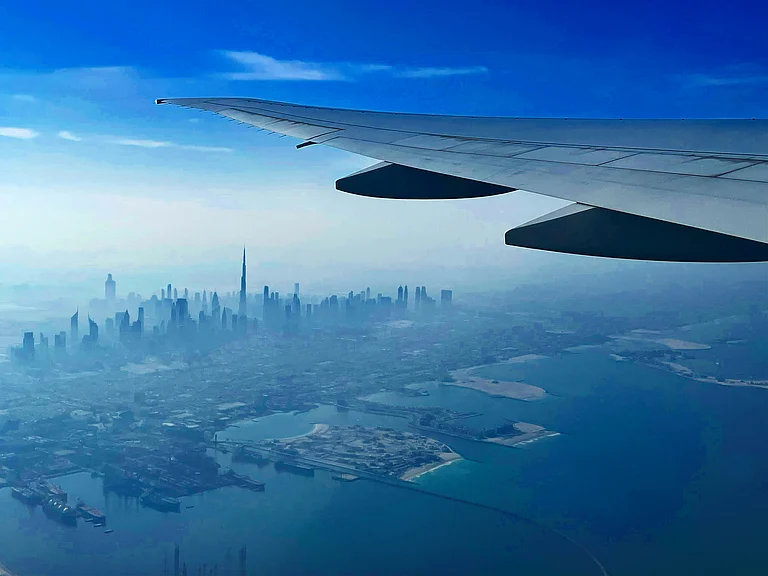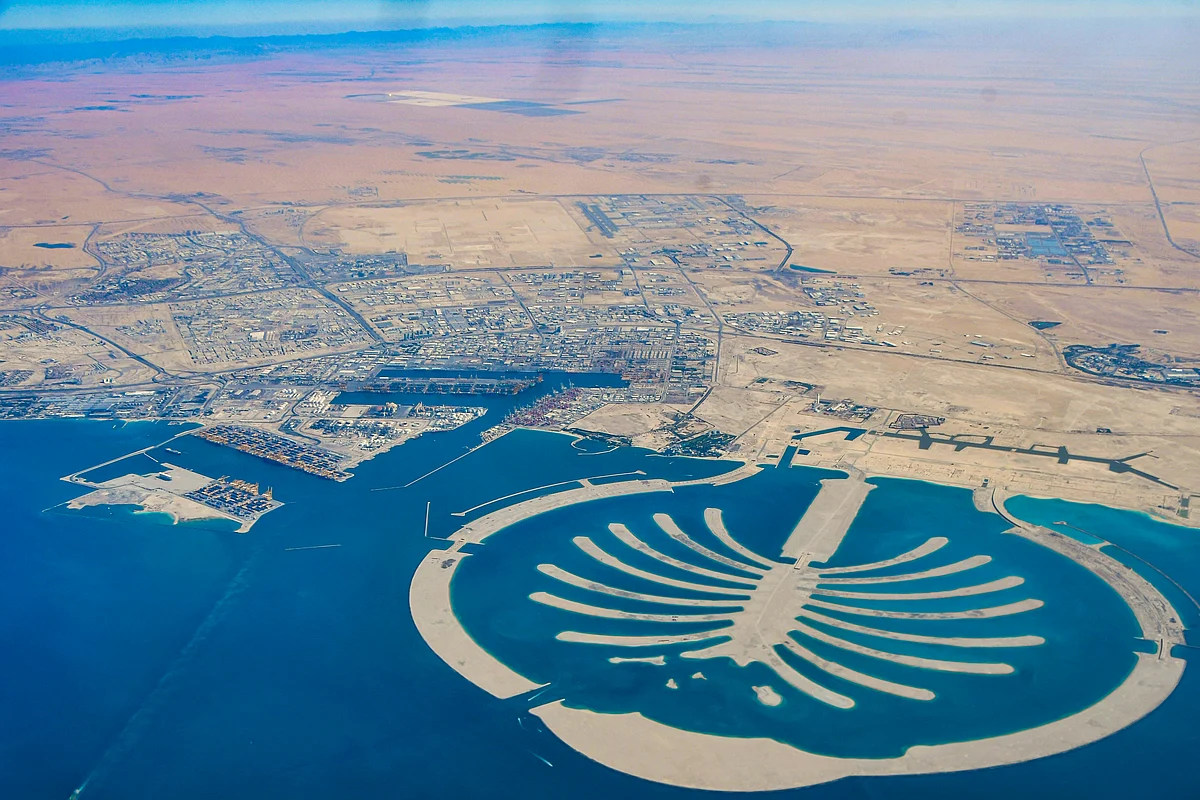
Dubai’s position as one of the world’s busiest aviation crossroads has long depended on fluid connectivity. But for the next several weeks, that rhythm is set to change. In a move linked to the ongoing Iran crisis, authorities have capped foreign airlines operating into the emirate at just one daily flight per carrier until May 31—a temporary measure that is already sending ripples across global aviation, with Indian airlines bearing the brunt.
At first glance, the restriction may seem like a routine capacity adjustment in uncertain times. In reality, it lands at a particularly sensitive moment for Indian carriers, many of which had significantly scaled up their Dubai operations for the summer schedule. With India emerging as Dubai International Airport’s largest source market last year—contributing nearly 12 million passengers—the impact is anything but marginal.
Capacity Crunch Ahead
The restriction applies to both Dubai International Airport (DXB) and Al Maktoum International Airport (DWC), limiting each foreign airline to a single daily round trip. This effectively reduces monthly operations per airline to about 30 or 31 flights—far below what many had planned.
Indian airlines, in particular, had built dense schedules to cater to strong demand across business, leisure, and VFR (visiting friends and relatives) segments. Air India and Air India Express together had scheduled over 750 flights into Dubai across April and May, while IndiGo had lined up nearly 500. SpiceJet, though smaller in scale, had also committed capacity to the route.
The sudden cap leaves a significant portion of this planned capacity grounded. Aircraft utilisation—a critical factor in airline profitability—is likely to take a hit, especially for low-cost carriers that rely on high-frequency operations. The timing compounds existing pressures, including elevated fuel costs and longer flight paths due to continued restrictions on Pakistani airspace.
Uneven Playing Field
What has added to the unease among Indian carriers is the perception of imbalance. The curbs apply only to foreign airlines, while UAE-based carriers such as Emirates and flydubai appear to continue operating at far higher frequencies. This asymmetry has raised concerns within India’s aviation ecosystem about competitive fairness on one of the world’s busiest bilateral routes.
The Federation of Indian Airlines has already stepped in, urging the Indian government to engage with Dubai authorities to reconsider the restrictions. Failing that, it has suggested the possibility of reciprocal measures on UAE carriers—an escalation that could reshape capacity dynamics on the India-UAE corridor, one of the most lucrative and strategically important in global aviation.
This development also sits against a longer history of friction over bilateral air service agreements. Gulf carriers have often argued that India’s seat caps limit their growth, while Indian authorities have defended these limits as necessary to protect domestic airlines. The current situation, however, flips that narrative, placing Indian carriers at a disadvantage in a market they heavily depend on.
Routes Reimagined Now

Beyond India, the broader aviation landscape is already adjusting. Several international carriers, including Lufthansa, Singapore Airlines, and British Airways, have opted to suspend their Dubai operations altogether until at least the end of May. Instead, they are redirecting capacity to non-stop Asia–Europe routes, where demand remains robust and yields are rising.
For travellers, the immediate effect may be fewer options and potentially higher fares on India–Dubai routes, particularly from secondary cities that depend on frequent connections. The constraint could also disrupt travel plans during a period that typically sees steady outbound movement from India to the Gulf.
Whether these restrictions remain a short-term response to geopolitical uncertainty or signal a longer recalibration of regional air traffic remains to be seen. For now, though, one thing is clear: in a network built on frequency and flexibility, even a temporary squeeze can have far-reaching consequences.
FAQs
1. Why has Dubai limited foreign airline flights?
The restrictions are linked to the ongoing Iran crisis, affecting regional airspace and operational capacity.
2. Until when are these flight caps in place?
The curbs are currently set to remain in effect until May 31.
3. How many flights are foreign airlines allowed?
Each foreign airline is restricted to one daily round trip to Dubai airports.
4. Why are Indian airlines the most affected?
Indian carriers had the highest number of scheduled flights to Dubai, making the cuts more significant for them.
5. Will this impact ticket prices and availability?
Yes, reduced flight capacity may lead to fewer options and potentially higher fares on India-Dubai routes.