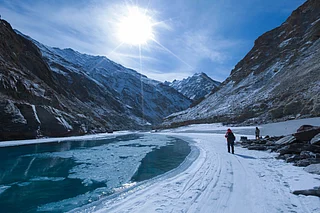
Sikkim’s dramatic landscapes have long done the heavy lifting when it comes to drawing travellers in. Now, the focus is shifting to how easily people can actually get there—and move within. At the closing ceremony of Sikkim’s 50 years of statehood celebrations, Prime Minister Narendra Modi underscored a broader push to transform the Himalayan state’s connectivity, positioning infrastructure as the backbone of its tourism economy.
The visit also marked the launch of development projects worth over INR 4,000 crore, signalling a continued emphasis on linking Sikkim more seamlessly with the rest of India. For a state where tourism supports a significant share of livelihoods, the message was clear that better roads, railways and transport networks are no longer aspirational—they are essential.
Roads First Push
Over the past few years, Sikkim has seen a steady expansion of its road network, with highways stretching deeper into regions that were once considered hard to access. Improved road connectivity is expected to reduce travel time, not just for visitors arriving from nearby gateways like Bagdogra, but also for residents navigating the state’s mountainous terrain.
One of the most talked-about proposals is the expressway connecting Bagdogra in West Bengal to Gangtok. This corridor is expected to significantly cut down travel duration, making Sikkim more accessible for both domestic and international tourists who typically enter through North Bengal. Alongside this, ongoing highway upgrades aim to ensure last-mile connectivity reaches villages, a crucial factor in dispersing tourism benefits beyond urban hubs.
Better roads also mean more reliable movement of goods and services, something that directly impacts local businesses, especially those tied to hospitality and agriculture. In a region where weather and terrain often dictate mobility, stronger infrastructure can reshape how tourism flows through the state.
Rail Link Progress
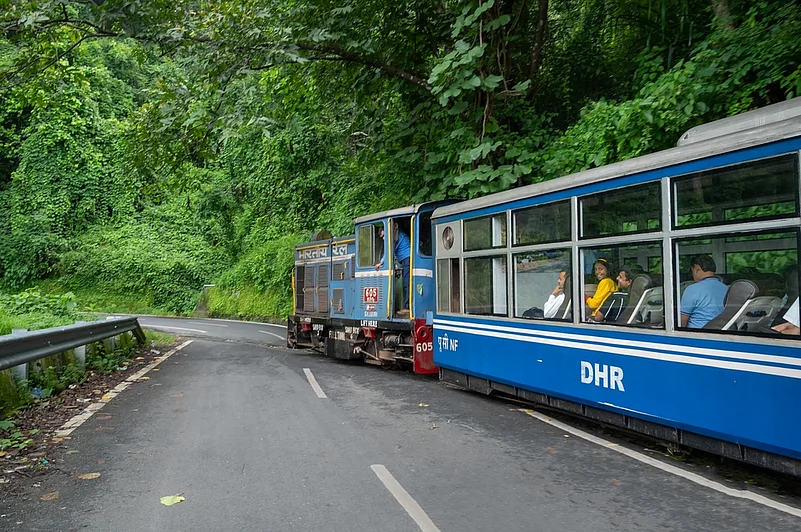

If roads have been Sikkim’s lifeline so far, the upcoming railway connection could redefine its accessibility. The Sevoke–Rangpo railway line, a 44.96-km project that stretches across West Bengal and Sikkim, is poised to give the state its first-ever rail link.
The project has been a challenging one from the outset. With over 40 kilometres of the route cutting through West Bengal and the remaining stretch entering Sikkim, engineers have had to navigate steep gradients, fragile ecosystems, and complex tunnelling requirements. A large portion of the line comprises tunnels and bridges, reflecting the scale of engineering involved.
Despite earlier delays due to environmental clearances, terrain-related challenges, and pandemic disruptions, progress has been steady. A recent milestone—the breakthrough of tunnel number 8—has brought the project closer to completion. With a target of becoming operational by 2027, the rail link is expected to ease passenger travel and reduce dependence on road transport.
Beyond tourism, the railway is also expected to play a significant role in logistics. Lower transport costs and improved movement of goods could benefit local industries and strengthen trade links with neighbouring regions.
Tourism And Growth
At the heart of these developments lies a clear objective, which is to unlock Sikkim’s tourism potential in a more sustainable and inclusive way. Known for its biodiversity, monasteries, and adventure offerings, the state has long attracted travellers seeking both culture and nature. However, accessibility has often been a limiting factor.
Improved connectivity could change that equation. Easier travel routes are likely to increase visitor numbers, while also encouraging repeat travel and longer stays. More importantly, better infrastructure can help distribute tourism across lesser-explored areas, easing pressure on popular destinations while creating new opportunities for local communities.
The broader push also aligns with ongoing efforts to integrate the Northeast more closely with the rest of the country. For Sikkim, which has historically relied heavily on road transport, the addition of rail connectivity marks a significant shift.
As infrastructure catches up with ambition, the state stands at an inflection point. The mountains may remain as majestic and as challenging as ever, but getting to them and through them is set to become far simpler. And for a place that thrives on visitors, that could make all the difference.
(With inputs from various sources)
FAQs
1.What projects were launched in Sikkim?
Development projects worth over INR 4,000 crore, including roads and connectivity upgrades.
2. What is the Sevoke–Rangpo railway line?
It is Sikkim’s first rail link, connecting the state to West Bengal.
3. When will the railway line be operational?
The project is expected to be completed by 2027.
4. How will connectivity improve tourism?
Better roads and rail access will reduce travel time and make Sikkim easier to reach.
5. Why is infrastructure important for Sikkim?
Tourism is a key economic driver, and improved connectivity supports jobs, trade, and visitor growth.