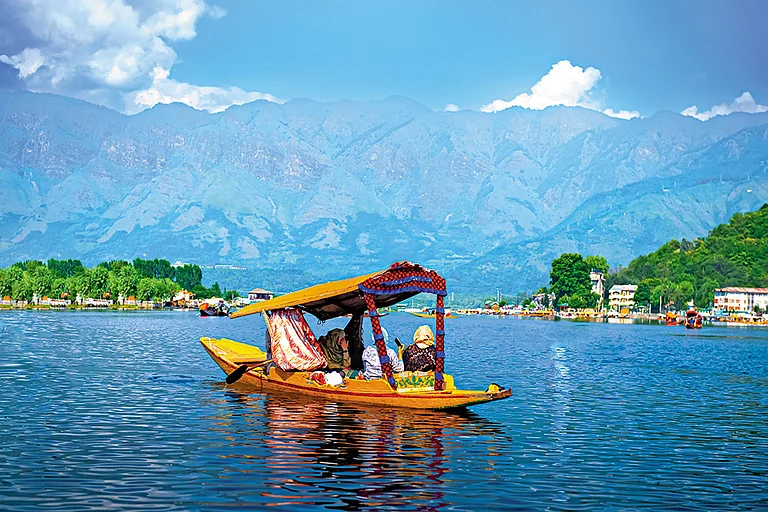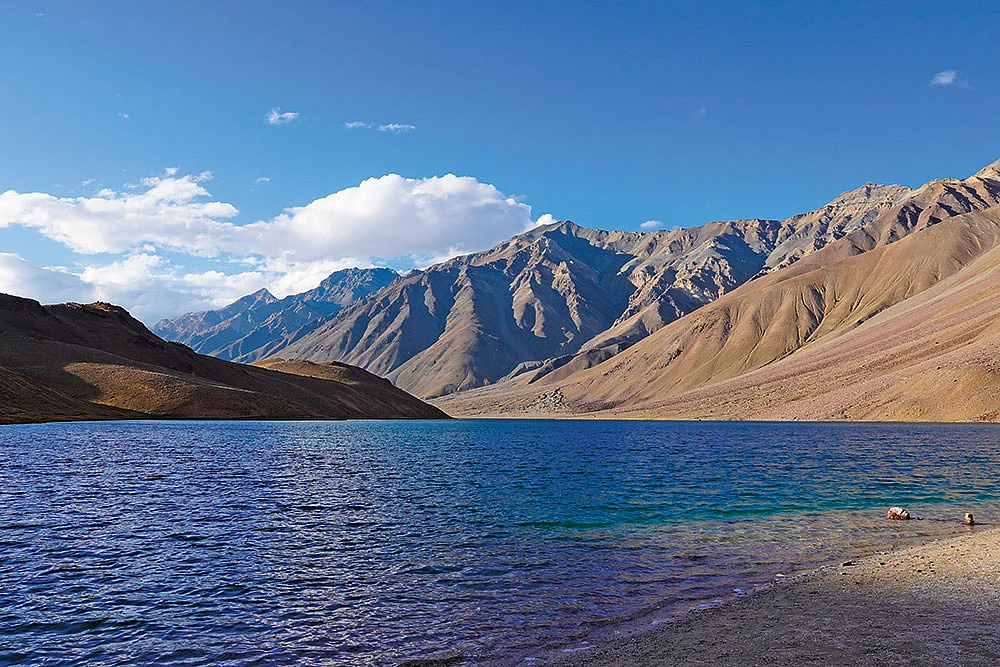
Marne se pehle ek baar Chandratal dekhna chahta hoon,”—this line from the movie "Lootera" had lingered in my mind for years. In June 2023, two of my closest friends and I finally decided to make it happen.
My friend and I had travelled from Varanasi to Gurugram to meet our third partner-in-crime, and the plan was that we would catch a bus to Manali from Delhi.
Simple enough—or so we thought.
However, one friend, in her infinite wisdom, decided to book a cab from Gurugram to the Inter-State Bus Terminal (ISBT) during Delhi's peak evening rush hour. Stuck in a sea of cars, we realised with sinking hearts that we'd miss the bus. We called the driver to wait for just ten more minutes, but Delhi's traffic had other plans.
By the time we reached ISBT, panic had set in. A helpful tour agent managed to get us seats on another bus—far from luxurious, but still good enough. We were finally on our way to Manali. My friend and I talked through the night, unable to sleep from all the excitement.
Reaching Manali and finding a cab to our stay in Koksar was another struggle; the prices were outrageous. Thankfully, the hotel staff at Devallya Inn Lahaul connected us to a local driver. After waiting for around an hour, he arrived in a humble Alto, and that’s when the trip truly began.
Before reaching the Atal Tunnel, we made a quick pitstop for cheap sunglasses and roasted corn from a roadside vendor—small pleasures that somehow signalled the start of our grand adventure.
Driving through the tunnel was stifling, but emerging on the other side felt like stepping into another world—snow-capped peaks, crisp mountain air, and cool winds.
Closer to Sissu, the cellular network faded, and so did the Wi-Fi. At Devallya Inn, the silence of disconnection felt oddly comforting. The rooms were cosy and comfortable, and the home-cooked meals were exactly what we needed.
By late afternoon, the owner of our homestay dropped us off at Sissu Lake. I video-called my mother to show her the beauty around me. The sun was slipping behind the mountains, and gusts of wind added to the surreal atmosphere. Almost every food van around the lake had packed up by then, and the place grew eerily quiet, making us cautious.
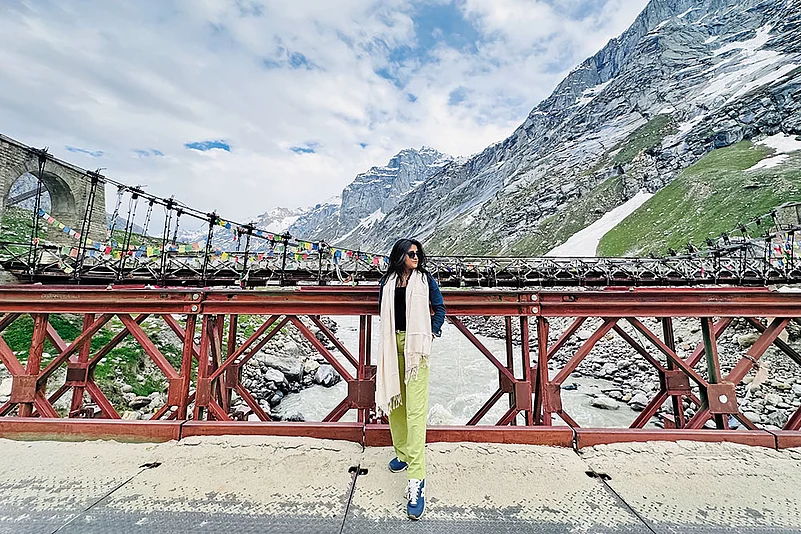

Thankfully, we discovered a lone food van that was still open. A group of travellers sat around strumming guitars and singing. We got ourselves some chai and pakoras and joined in the fun. When our host came to pick us up an hour later, we were loath to leave the laughter, music, and warmth of the impromptu jamming session on that cold Sissu evening.
Back at the hotel, we asked the owner if we could try the local liquor, lugdi. He sportingly got some for us from his neighbours. Although the tipple didn’t have the kick we expected, we still drank it for the plot!
A couple from Mumbai, on a workcation, joined us for dinner, and soon, the dining room was filled with stories, jokes, and shared curiosity. Later, we climbed up to the open terrace with no railings and observed the vastness of the night. The Milky Way stretched overhead, and for a moment, the world felt infinite.
The next morning, I woke up early and stepped outside. The sun was up, and the crisp morning light bathed the mountains. I had a quiet hour of me-time, soaking in the view while the hotel dog padded along beside me.
The journey to Chandratal is rugged, demanding a reliable 4x4 to navigate its challenging terrain
The owner informed us that Rohtang Pass was closed; we’d have to head directly to Chandratal via Batal. The journey to Chandratal is rugged and demands a reliable 4x4 to navigate its challenging terrain. However, our assigned 4x4 driver never turned up. Eventually, another one was arranged and we hit the road around 2.30 p.m., hearts full of hope but nerves on edge.
However, when we reached the army checkpoint at Chandratal, we discovered that the entry had closed at 3 p.m.; we had arrived just a few minutes late. The officers refused to let anyone through.
My heart sank. Would this be the end of our journey?
My friends suggested that we look for another destination, but I refused to give in. “We’ll make it to Chandratal,” I told them, “and we’ll stargaze outside our camp tonight.”
Somehow, with a mix of local persuasion and pure luck, the drivers managed to convince the guards to let us through.
And that was the start of the most intense part of the journey. The road narrowed into muddy ribbons, our Gypsy jumping over rocks and water crossings. Clouds skimmed the peaks; darkness crept in. Bollywood songs from my friend’s downloaded playlist became our soundtrack; laughing through fear, singing through bumps, clinging to the adventure.
We reached our campsite in freezing darkness. Samsong Camp was welcoming, the food warm, and the sky above us blazed with stars—too many to count. Wrapped in blankets, we sat by a fire, staring at the universe until sleep pulled us away. At dawn, we woke to silence broken only by the wind.
The short trek to the lake felt dreamlike, with snow-dusted trails and streams surrounding us. And then, there it was—Chandratal. Perched in Lahaul–Spiti at roughly 4,300 m (14,100 ft), it is often called the “Lake of the Moon.” We sat quietly by the edge for about an hour, with no one around, soaking in the lake as clouds drifted above us and the Chandrabhaga peak stood mirrored in its still waters.
A light breeze rustled the snow-dusted shrubs at the lake’s edge. I took off my gloves for a moment, letting my fingers touch the icy water; sharp, cold, and impossibly clear. My friends laughed softly at my grimace, and in that shared little reaction, I felt a sense of joy—the kind that makes you pause and remember why you travel.
We sipped tea from our thermos, breathing in the mountain air, taking in every ripple, every reflection, and every shadow of the peaks. The moment felt otherworldly.
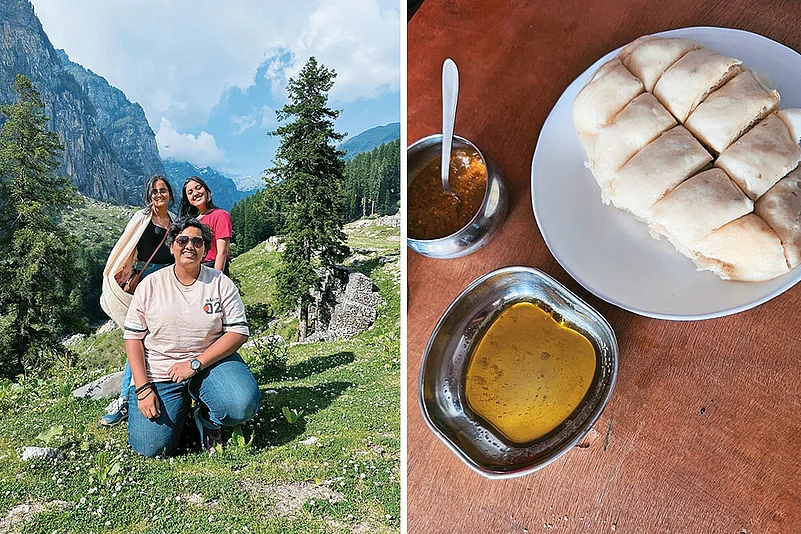
On our way back, we stopped at the famous Chacha Chachi Dhaba in Batal for lunch—a rite of passage for every traveller on this route. Dust-covered and tired, we still had energy left for one last adventure. Our drivers detoured to Sethan, then to their village near Manali, where we tasted the best siddu of the trip—soft, steaming, served with generous sides of ghee and chutney.
As we ate, a little girl peeked shyly from behind her mother. We offered her a siddu; she shook her head, glancing at her mother. She was the daughter of the woman who had made our meal, and that tiny gesture, full of innocence, somehow felt like the perfect ending to our story.
Back in Manali, we wandered along Mall Road, grabbed a quick dinner, and boarded the night bus to Delhi. What began as a series of missed buses and last-minute scrambles became one of the most beautiful journeys of our lives.
The Information
Chandratal, Lahaul–Spiti: Perched at 4,300 m (14,100 ft), Chandratal is a crescent-shaped glacial lake whose turquoise waters reflect the Chandra Bhaga peaks. It sits on a plateau overlooking the Chandra River.
Getting There: From Manali, travellers can reach Chandratal via Sissu or Batal in a 4x4 vehicle. The army checkpoint for entry usually closes by 3 p.m., so plan to arrive early.
Stay: Campsites near Chandratal operate from mid-June to September. Sissu offers cosy homestays and guesthouses with home-cooked meals for those who prefer a stopover.
Tips: Carry warm layers, trekking shoes, and a thermos of tea (trust us). There’s little to no network, so download offline maps. Respect the environment. Pack your trash, and tread lightly on this fragile terrain.
Best Time to Visit: Mid-June to September. During winter, the area remains inaccessible due to snow.
Author Bio
Shubhangi, 27, from Varanasi, went on her first trip with friends in 2022. Since then, she can’t stop exploring.
Looking for more such exciting and meaningful stories? Grab our latest issue on Amazon