


With the monsoon drawing to a close, India’s forests are getting ready for another safari season. October marks the reopening of several national parks, and with cooler days ahead and vegetation gradually thinning, the months that follow bring travellers back in search of tigers, leopards and the moments that make a safari memorable.
Across Madhya Pradesh and Rajasthan, the safari experience is as much about the region and stories around a national park as it is about spotting a tiger. Panna brings together forests, the Ken River and a remarkable conservation comeback; Bandhavgarh is steeped in royal history and known for its tiger sightings; Ranthambore places wildlife against one of India's most dramatic historical landscapes.
At the heart of these experiences are stays by Oberoi Hotels & Resorts that draw from the character of their surroundings, bringing the history, culture, and rhythms of each destination into the journey.
Panna National Park And Its Extraordinary Conservation Story


Panna is one of those places where the landscape does much of the storytelling. Spread across the Vindhya ranges, the reserve is shaped by dry deciduous forests, rocky plateaus, deep gorges, and the Ken River, which runs through its heart. Waterfalls such as Raneh and Pandav add another dimension to the landscape, while the surrounding forests support tigers, leopards, sloth bears, sambar, chital, nilgai, and chinkara. More than 300 bird species have also been recorded here, including vultures that nest along the reserve's cliffs.
But Panna's most compelling story is not simply about what can be seen on a safari. By the early 2000s, its wild tiger population had been wiped out by poaching and other pressures. The subsequent reintroduction programme, led by the forest department, brought tigers from Bandhavgarh, Kanha and Pench back into the reserve. The population has since grown substantially, making Panna one of India's most closely watched conservation success stories. The involvement of local communities, including members of the Pardhi community trained as trackers and guides, has also become an important part of that story.
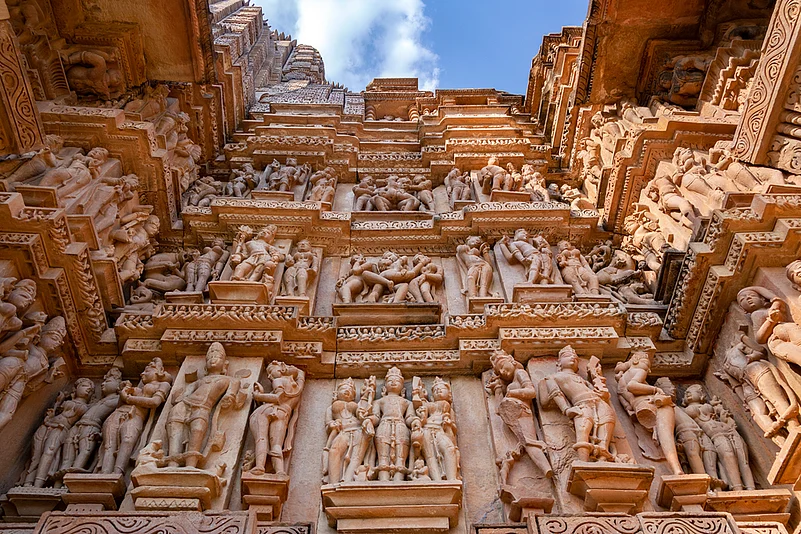
The reserve is particularly well placed for travellers combining wildlife with history. Khajuraho is around 25 kilometres away, making it possible to pair a morning in the forest with the temples, old settlements and cultural history of the region. It is this combination of wilderness and heritage that makes Panna feel different from a conventional tiger destination.
Stay At A 350-Year-Old Palace Near The Wild

A short distance from Panna, The Oberoi Rajgarh Palace brings the region's history into the stay itself. The 350-year-old Bundela palace sits above Maniyagarh and the surrounding Vindhyachal hills, with forests, lakes, and the wider landscape unfolding around it. Its restoration retains details of the original palace, including vaulted ceilings, terraces and grand architectural elements, while the rooms and suites bring the setting into a more contemporary luxury experience.
Its location makes it a natural base for exploring Panna, but the palace also gives travellers reason to linger. Experiences can move beyond the safari, from walks through nearby villages to excursions towards Raneh Gorge and explorations of Khajuraho. The property also draws on its Bundela heritage through its restaurant Maanya, where royal recipes provide a taste of the region's culinary history.
For travellers who want their wildlife holiday to include a sense of place, Rajgarh offers an interesting balance. The forest is close enough to be part of the stay, while the palace itself provides a window into the history of the land around it.

The Information
Address: The Oberoi Rajgarh Palace, Khajuraho, Tehsil Rajnagar, Rajgarh, Chandranagar, Madhya Pradesh 471101
Contact: + 91 11 6911 0606, +91 7686 353000; reservations@oberoigroup.com
Website: www.oberoihotels.com/hotels-in-khajuraho-rajgarh-palace-resort
Bandhavgarh And Its Ancient Fort

Further east, Bandhavgarh has long been associated with some of India’s most memorable tiger sightings. Set along the eastern flank of the Vindhyas, its forests are dotted with rocky hills, sandstone cliffs, and open meadows. The Bandhavgarh Fort rises above the reserve, adding an unmistakable historical presence to the park. Believed to be around 2,000 years old, the fort and surrounding hills have links to the Chandela and Baghel dynasties, as well as the region’s royal hunting history.
The reserve is also closely tied to India’s tiger conservation story. Bandhavgarh was among the original Project Tiger reserves and is now known for its high tiger density. Beyond the big cats, the park is home to leopards, sloth bears, dholes, sambar, chital and wild boar. The safari zones of Tala, Magadhi and Khitauli each offer a different way to experience the park, with Tala also being home to Shesh Shaiya, a 10th-century reclining statue of Lord Vishnu.

There is plenty to explore beyond the safari as well. Badi Gufa, one of the park’s largest man-made caves, dates back to the 10th century, while Three Cave Point is known for its ancient carvings. Tala village, the centre of Bandhavgarh’s tourism activity, is also a starting point for exploring the surrounding area and its local communities.
A Luxury Retreat On The Edge Of Bandhavgarh

The Oberoi Vindhyavilas Wildlife Resort sits on the fringes of Bandhavgarh, roughly 15 minutes from the central safari gates. Rather than competing with the landscape, the resort borrows from it. Local Katni stone forms much of its architectural language, while Gond and Baiga-inspired artworks bring a sense of the region indoors.
The 19 luxury tents are designed around private gardens and floating island decks, with two larger pool villas offering more space. Inside, details such as hand-embroidered ceilings take cues from the forest, with motifs of stars, mahua flowers, and deer. The approach continues at the restaurant, where Baghelkhand flavours and ingredients such as kachnar, mahua, and kodo millet introduce travellers to the region's food culture.
That connection to the region extends beyond the game drive. Experiences such as Tiger Tales and village walks offer a closer look at Bandhavgarh, while the property’s bush kitchen brings regional food into a more informal setting.
Wellness is also woven into the stay through ASMI by Oberoi, which draws on the ancient philosophy of Pancha Kosha alongside contemporary wellness practices. Translating from Sanskrit to mean "I am," the program focuses on personal alignment and vitality across five essential pillars: movement, nutrition, bodywork, breathwork, and mindfulness. Guided yoga sessions offer a quieter way to unwind between safaris, with a focus on mindfulness, flexibility, and inner calm.

The Information
Address: The Oberoi Vindhyavilas Wildlife Resort, Bandhavgarh, Bandhavgarh 484665, Madhya Pradesh
Contact: + 91 11 6911 0606, +91 07627 351000; reservations@oberoigroup.com
Website: www.oberoihotels.com/hotels-in-bandhavgarh-vindhyavilas-resort
Ranthambore Is Where The Wild Meets Rajasthan’s History

In Rajasthan, Ranthambore offers a very different safari experience. The park lies where the Aravallis meet the Vindhyas, with dry forests, rocky outcrops and, open grasslands broken up by lakes and old ruins. At its centre is the 10th-century Ranthambore Fort, built by the Chauhan Rajputs and later shaped by successive rulers. Today, it is part of the Hill Forts of Rajasthan UNESCO World Heritage Site, recognised for its historical and architectural significance.
The reserve’s history as a former royal hunting ground adds another layer to the safari. Tigers move through dry forests and grasslands, while Padam Talao and Raj Bagh attract wildlife to the water. The park has also undergone a significant transformation since becoming one of the original Project Tiger reserves, with decades of conservation helping establish it as one of India’s most recognised tiger destinations.
There is plenty to look out for beyond the big cat. Leopards, sloth bears, striped hyenas, sambar and chital inhabit the park, while mugger crocodiles can be seen around its lakes. More than 270 bird species have also been recorded here. It is this mix of wildlife, history and changing terrain that gives Ranthambore its distinct character.
A Royal Tented Stay In The Heart Of The Wild

The Oberoi Vanyavilas Wildlife Resort takes its cues from the old-world romance of the safari. Spread across 20 acres, its accommodation is housed in royal caravan-inspired tents set within private gardens, creating a sense of seclusion without losing the connection to the surrounding landscape.
The experience here is closely tied to the rhythm of the park. October brings back the green after the monsoon, while the lakes and grasslands become increasingly active as the season progresses. November brings migratory birds into the landscape, and by December, cooler mornings and softer light create a different atmosphere for wildlife viewing and photography. Safaris with experienced naturalists remain at the centre of the stay, but experiences such as the Ranthambore Fort visit, birding around Surwal Lake and the Dhonk craft experience offer ways to explore the region beyond the reserve.
The resort's tented setting also makes the evenings part of the experience. Rajasthani influences appear at the table, while outdoor dining and the property's observation spaces bring the landscape back into focus after a day in the forest. It is a fitting base for a destination where wildlife and history have always coexisted.

The Information
Address: The Oberoi Vanyavilas, Ranthambhore, Sawai Madhopur, Ranthambhore 322001
Contact: + 91 11 6911 0606, +91 7462 353999; reservations@oberoigroup.com
Website: www.oberoihotels.com/hotels-in-ranthambhore-vanyavilas-resort
How To Plan A Luxury Safari Across Panna, Bandhavgarh And Ranthambore

Panna National Park
Fly into Khajuraho Airport and continue to Panna by private transfer, a journey of around 30 to 45 minutes. Allow at least two to three nights for a safari, plus time for Khajuraho, Raneh Gorge, or the Ken River. The Oberoi Rajgarh Palace provides a base for exploring both the region's wildlife and heritage.
Bandhavgarh National Park
Plan for around three nights in Bandhavgarh to allow for multiple game drives and time to explore beyond the park. Tala, Magadhi and Khitauli are among the zones to consider, subject to availability. The Oberoi Vindhyavilas, Bandhavgarh, also offers nature walks and other activities in the afternoons between safaris.
Ranthambore National Park
Two to three nights gives you enough time for multiple safaris while leaving room for Ranthambore Fort, birding at Surwal Lake or a Chambal River safari. The Oberoi Vanyavilas, Ranthambore, adds wildlife presentations, local craft and art experiences to the stay.

Book Safaris In Advance
Safari permits should be arranged well ahead of your trip, particularly during the peak season. An exclusive vehicle gives you a private driver, a naturalist and more flexibility during the safari. Zone availability varies, so discuss preferences with your lodge while making the booking.
Pack For The Safari
Winter mornings can be cold in an open vehicle, particularly in December and January. Carry a warm, windproof jacket, gloves and a scarf, along with lighter layers for warmer afternoons.
Make Time Beyond The Game Drive
Don't pack for every day of the safari. Leave afternoons open for local experiences, nature walks, wellness or simply time at the property. The wildlife may be the reason to visit, but the surrounding landscapes, heritage and culture add another layer to the trip.
FAQs
Q1. When does safari season begin in India?
October marks the reopening of several national parks after the monsoon, making it the beginning of the safari season in many wildlife destinations.
Q2. Which are the three wildlife destinations featured in this story?
The story focuses on Panna National Park, Bandhavgarh National Park and Ranthambore National Park.
Q3. What makes Panna different from other tiger reserves?
Beyond its wildlife, Panna is known for its remarkable tiger reintroduction and conservation story. Its landscape also includes the Ken River, rocky terrain, waterfalls and proximity to Khajuraho.
Q4. Which luxury stay is near Panna National Park?
The Oberoi Rajgarh Palace is a 350-year-old Bundela palace near Panna, combining heritage architecture with luxury accommodation and access to wildlife and cultural experiences.
Q5. What is Bandhavgarh known for?
Bandhavgarh is known for its tiger population and a landscape of sal forests, rocky hills, open meadows and the historic Bandhavgarh Fort.


