India’s winter festival calendar seems like a stroll through homes glowing with rows of lamps, villages celebrating harvests, and communities preserving age-old rituals. The changing season carries stories of religion and culture, faith and folklore, and harvest and agriculture.
Each celebration has its own rhythm, shaped by the landscape and the people who call it home. For travellers, these festivals open a window into local food, music, craft, history, and tradition.
Wangala: When Garo Hills Beat To The Sound Of Drums


With the onset of winter, the Garo Hills of Meghalaya come alive to the beats of drums. The Hundred Drums Wangala Festival, the Garo community’s post-harvest festival, is essentially a thanksgiving celebration held in honour of Misi Saljong, the deity of fertility and harvest. It gets its name from its most recognisable aspect – people in coloured costumes and feathered headgear dancing to the tune of hundreds of drums. The festival signifies the end of toil and the onset of winter. The Tura village can be a base for exploring the surrounding hills and is accessible by road from Guwahati.
Guruparab: A Celebration Of Faith And Community

The celebrations for Guruparab begin before the day itself. Prabhat Pheris – early-morning processions accompanied by devotional singing – lead into the birth anniversary of Guru Nanak Dev, the first Sikh Guru and founder of Sikhism. Gurudwaras are known to hold a 48-hour non-stop recitation of the Guru Granth Sahib (Akhand Path). Nagar Kirtans, often led by Panj Pyare (five men), bring devotional music and processions onto the streets. Shared meals and a strong sense of community truly come alive during this celebration. The Golden Temple in Amritsar serves the biggest langar in the world on this occasion, as people from across the country indulge in a shared and soulful meal.
Karthigai Deepam: Towns Lit By Rows Of Lamps

For three evenings, the sight of clay lamps cast their warm glow across the streets, homes, and temples of Tamil Nadu. Karthigai Deepam, a celebration of light, is among the state’s oldest festivals, with references dating back to the Sangam Age. To witness the festival in all its glory, you can make your way to Tiruvannamalai, where the Shiva temples become the centre of the celebrations. A colossal flame is lit atop the hills of Tiruvannamalai, visible from miles around. For visitors, this festival is a unique opportunity to witness the state’s history, faith, and culture all at the same time.
Losar In Leh: A New Year In The Deep Winter

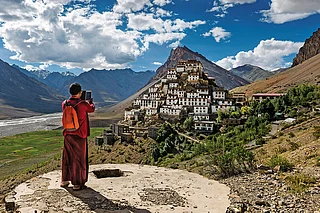
As winter wraps Ladakh in snow, the Losar festival, also known as the Tibetan New Year, brings the region to life with prayers, light, and celebrations. Rooted in Tibetan Buddhist traditions, the 15-day-long festive period witnesses decked-up monasteries and household shrines. Metho, an evening procession where villagers carry burning juniper torches through homes and alleys, is a cleansing rite that is an intrinsic part of the festival. After making it to Leh’s Kushok Bakula Rimpochee Airport, you can board a local cab to reach monasteries and settlements that host the Losar celebration.
Uttaryani Mela: A Celebration Of Tradition, Pilgrimage, And Trade

Every January, the Kumaon hills swap their winter quiet for a vibrant celebration of folk culture, pilgrimage, and age-old trade. The Uttaryani Mela, held around Makar Sakranti, takes place across the Kumaon region, with the week-long fair at Bageshwar being the most historically significant. The festival marks the sun’s northward movement and is considered an auspicious time to dip in the Sarayu River. Beyond the rituals, the fair offers a closer glimpse into the Kumaoni culture: folk artists singing Jhoras, Chancharis, and Bairas and stalls brimming with a variety of local produce. Bamboo goods, traditional metalware, carpets, herbs, and spices are key attractions for purchase at the fair.
Magh Bihu: Assam’s Festival Of Food And Harvest

Magh Bihu, also called Bhogali Bihu, is quintessentially celebrated across Assam as the festival of food. The celebration marks the end of the winter harvest and begins on the eve of Magh Bihu (Uruka). This is when families and communities gather around a bonfire for a lavish community feast. You can explore Assamese delicacies at their most celebratory state during this time. Rice-based dishes take centre stage in the feast, with different varieties of Pithas being prepared from locally grown rice and seasonal ingredients. The festival and Assamese culture can be best experienced through local markets, homesteads, and community meals.
Winter unfolds differently across India. These festive celebrations are shaped by harvests, faith, folklore, and the landscapes that they are home to. To travel during the festive season is not merely to witness the celebrations but also to briefly step into the rhythms of a particular place. And when you leave, you carry with you a deeper understanding of the people and traditions that make it home.
FAQs
1. Which are some of the best winter festivals in India?
Some notable winter festivals include Wangala in Meghalaya, Guruparab, Karthigai Deepam in Tamil Nadu, Losar in Ladakh, Uttaryani Mela in Uttarakhand and Magh Bihu in Assam.
2. Which winter festival in India is associated with the harvest?
Wangala, Uttaryani Mela and Magh Bihu are closely associated with harvest traditions. Wangala is a post-harvest thanksgiving festival, while Magh Bihu marks the end of the winter harvest.
3. Where can I experience the Wangala Festival?
The Hundred Drums Wangala Festival is celebrated by the Garo community in Meghalaya's Garo Hills. Tura can serve as a base for exploring the surrounding region.
4. Where is Losar celebrated in India?
Losar, the Ladakhi New Year, is celebrated across Ladakh, particularly in monasteries, villages and settlements around Leh.
5. What food can travellers experience during Magh Bihu?
Magh Bihu is known for its festive Assamese food, particularly rice-based dishes and varieties of Pitha prepared with locally grown rice and seasonal ingredients.