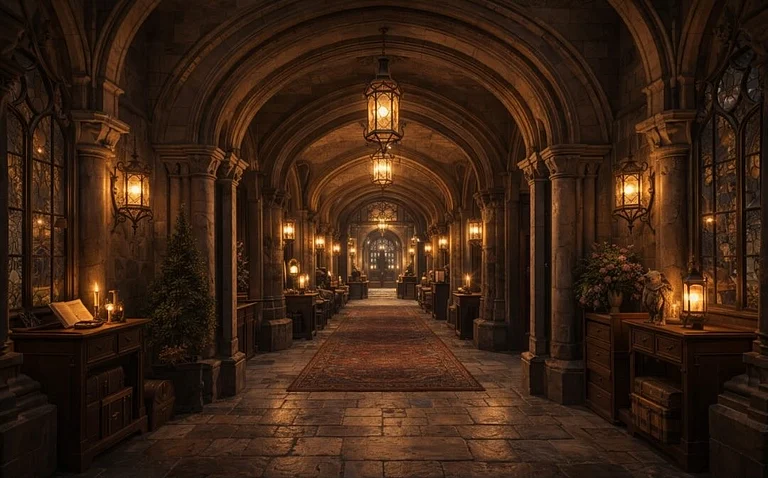


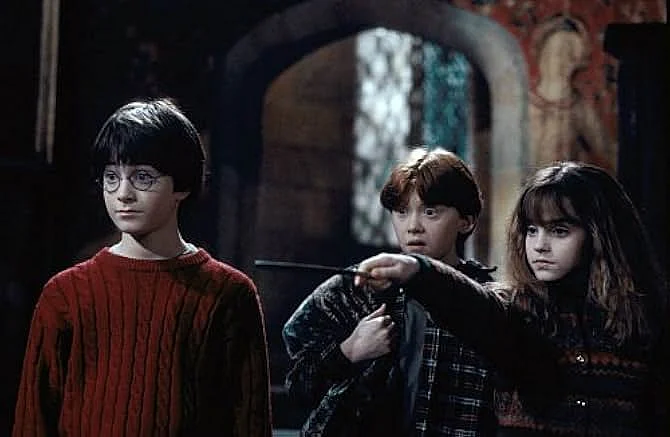
It’s been 25 years since we first fantasised about Platform 9¾. A visit to the United Kingdom remains incomplete if you do not pay a visit to some of the locations which either featured in the films or were inspirations for J.K. Rowling during the writing of the Harry Potter series. Some places have also been made popular by enduring fan theories. Together they blur the line between fiction and reality, making both Scotland and England popular destinations for a literary pilgrimage. To mark the 25th anniversary of Harry Potter, we bring you a list of places you must visit if you identify as a true Potterhead.
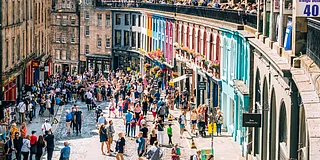
Victoria Street, Edinburgh: The Street Behind Diagon Alley?
This is one of Edinburgh's most photographed streets and is widely believed to have inspired Diagon Alley, though J.K. Rowling has never confirmed the connection. Built between 1829 and 1834, the street stands out for its curved medieval layout, colourful shopfronts, and narrow closes that closely resemble the bustling shopping street many readers imagine from the books. Today you will find a number of independent cafes, bookshops, and Harry Potter-themed stores lining the street, making it a favourite among fans. Visit this street early to avoid the crowds and do not forget to explore the stairways leading into Edinburgh’s Old Town.

Greyfriars Kirkyard: Searching For Tom Riddle
This is one of the oldest cemeteries in Edinburgh and is a short walk from Victoria Street. The cemetery's literary connection comes from the grave of Thomas Riddell, whose surname closely resembles Tom Riddle, as well as the grave of the nineteenth-century poet William McGonagall. The similarities between the names in the books and those in the cemetery have made it a regular stop on Harry Potter walking tours. Beyond the books, Greyfriars offers centuries of Scottish history, heritage monuments and the nearby statue of Greyfriars Bobby.
The Elephant House And The Balmoral Hotel: Where Harry Potter Began (And Ended)
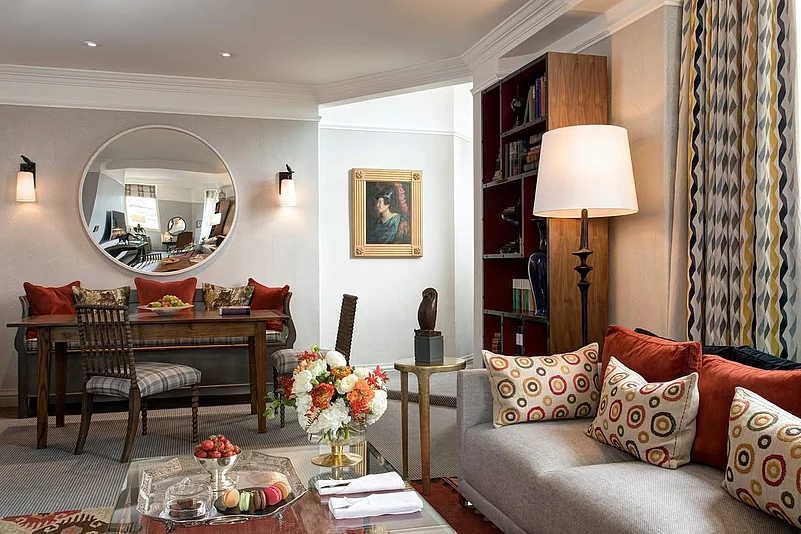
Together, these two landmarks bookend Harry Potter’s journey—from the early writing of the novels to the completion of the final book. The Elephant House became associated with Rowling while she worked on the early novels during the 1990s, although she also wrote in other cafes, including Nicolson’s. This remains one of the city’s best-known literary sites and overlooks Edinburgh Castle. Across the city stands The Balmoral Hotel, which marks the series’ conclusion. Rowling famously completed "Harry Potter and the Deathly Hallows" in Suite 552 in January 2007, later renamed the J.K. Rowling Suite. After finishing the manuscript, she even signed a marble bust in the room. While overnight stays come at a premium, visitors often stop by for afternoon tea.
Rowling’s Edinburgh: Handprints And Potterrow
Beyond the places where Rowling wrote the series, Edinburgh loves to celebrate her. Her bronze handprints, installed at City Chambers after receiving the Edinburgh Award in 2008, recognise her contribution to the city. Nearby is Potterrow, which frequently appears on Harry Potter tours due to its name. However, the street existed centuries before the novels, and there is no evidence that it inspired Harry Potter’s surname. History and literary folklore linger across Edinburgh, making it easy for Potterheads to feel transported into Rowling's magical world.
Glenfinnan Viaduct: The Hogwarts Express Route
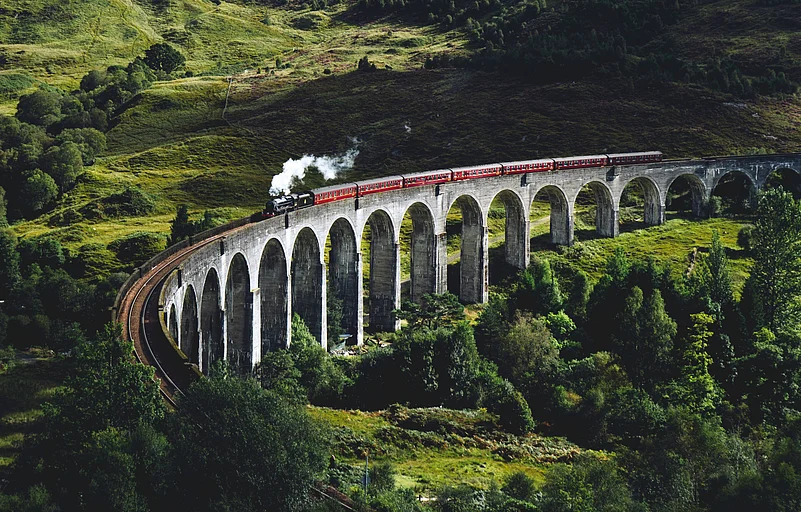
Although you can never have enough of Edinburgh, leave the city and enter the Scottish Highlands to continue your Potter trail. Completed in 1901, the 21-arch Glenfinnan Viaduct carries the West Highland Line and became famous as the Hogwarts Express route. The bridge first appeared in "Harry Potter and the Chamber of Secrets," with the flying Ford Anglia racing alongside the steam train. Visitors today can watch the seasonal Jacobite Steam Train cross the viaduct or travel the route aboard it themselves between Fort William and Mallaig.
Loch Shiel And Loch Eilt: The Waters Of Hogwarts
Just beyond Glenfinnan, there are two lochs that became part of Hogwarts on screen. Loch Shiel doubled as the Black Lake, appearing in several films including the Triwizard Tournament scenes in "Harry Potter and the Goblet of Fire." Although the underwater sequences were filmed elsewhere, the surrounding landscape is unmistakably Scottish. The nearby Loch Eilt is home to Eilean na Moine. Sounds familiar? Yes, this is the small island that served as Dumbledore’s White Tomb in "Harry Potter and the Deathly Hallows: Part 1." Although the island itself is not accessible, it is visible from the Road to the Isles and is one of the most recognisable Harry Potter locations.
Glencoe: Hogwarts’ Highland Landscape
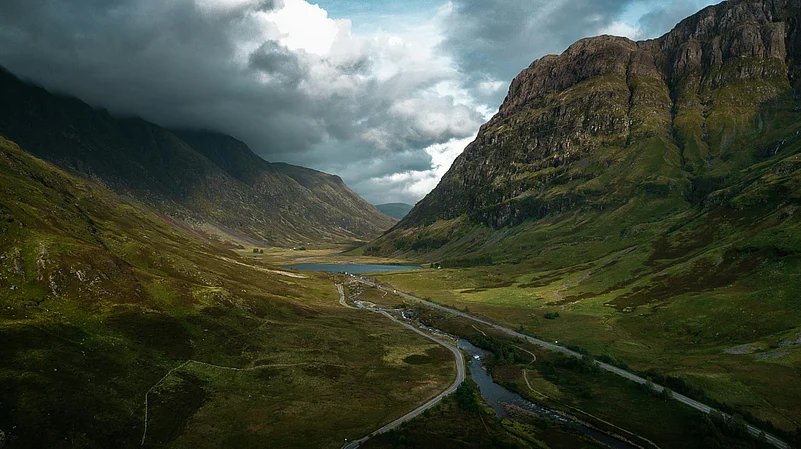
Glencoe’s dramatic valley has always been a favourite among filmmakers. Harry Potter was no exception. Wide shots of the Hogwarts grounds were filmed here, while Clachaig Gully hosted the temporary set for Hagrid’s Hut in "Harry Potter and the Prisoner of Azkaban." The set was dismantled after filming, leaving only the landscape behind. Today, visitors come here not only for its cinematic connection but also for its hiking trails and scenery. The valley is proof of why the Highlands became such an integral part of Hogwarts’ visual identity.
Steall Falls, Glen Nevis: The Triwizard Challenge
Steall Falls, Scotland’s second-highest waterfall, appeared in "Harry Potter and the Goblet of Fire" during the Triwizard Tournament's first task. While the action combined studio work and digital effects, the waterfall and surrounding gorge feature prominently in the film. To reach the waterfall, you need to hike for around 45 minutes through Glen Nevis, via woodland paths and a wire bridge across the River Nevis. If you are a Potterhead and an outdoor enthusiast, do not miss this one.
King’s Cross Station: Platform 9¾
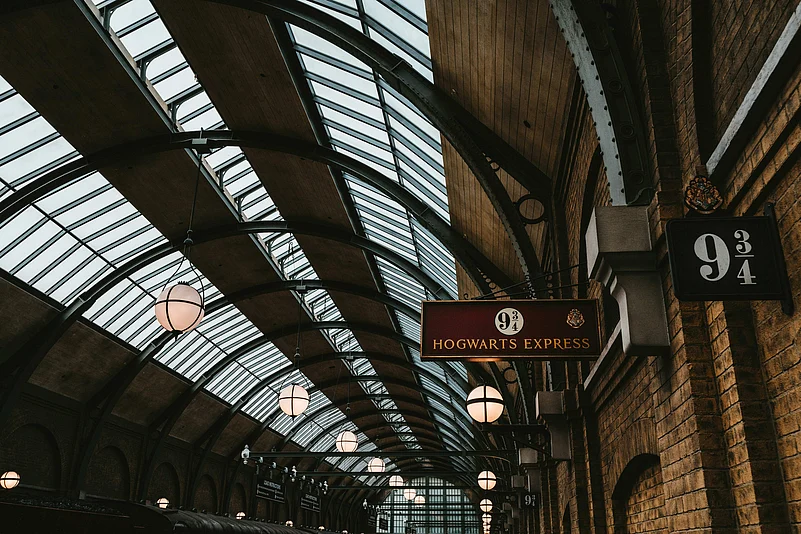
Although Hogwarts is in Scotland, every magical journey begins in London, at King’s Cross Station, which now features a permanent Platform 9¾ installation, complete with a disappearing luggage trolley and the official Harry Potter Shop beside it. This is one of the most quintessential and accessible attractions, although queues can become quite long during peak hours. This is not just another location, but one of the mandatory rituals on the Harry Potter pilgrimage itinerary.
The Jacobite Steam Train: Ride The Hogwarts Express
The closest you can get to boarding the Hogwarts Express is the Jacobite Steam Train, which runs seasonally between Fort William and Mallaig. The journey crosses the Glenfinnan Viaduct and passes Loch Eilt, Ben Nevis and some of the Highlands' most recognisable filming locations. Book this train in advance, especially if you are travelling during the summer rush. Even if you are not a die-hard fan, take this train journey, which is one of Britain’s most scenic railway journeys. You will fall in love with the landscape—and who knows—you may also pick up a Harry Potter book on your way back.
FAQs
1. Where was Harry Potter filmed in the UK?
Many scenes were filmed across Scotland and England, including Glenfinnan Viaduct, Glencoe, Loch Shiel, Steall Falls and King's Cross Station in London.
2. Did Victoria Street in Edinburgh inspire Diagon Alley?
It is widely believed to have inspired Diagon Alley because of its curved layout and colourful shopfronts, although J.K. Rowling has never confirmed this.
3. Can you ride the real Hogwarts Express?
Yes. The Jacobite Steam Train between Fort William and Mallaig is the train used as the Hogwarts Express in the films and operates seasonally.
4. Where did J.K. Rowling write Harry Potter?
Rowling wrote parts of the early novels in Edinburgh cafés, including The Elephant House and Nicolson's, and completed Harry Potter and the Deathly Hallows at The Balmoral Hotel.
5. Which Harry Potter locations are free to visit?
Victoria Street, Greyfriars Kirkyard, Potterrow, the Glenfinnan Viaduct viewpoint, Glencoe, Steall Falls and the Platform 9¾ installation at King's Cross Station can all be visited without an admission fee, though some experiences, such as the Platform 9¾ photo, may have associated costs.