

Tucked away in Bihar’s Jehanabad district, the ancient Barabar Hills are set for a major transformation. The state’s environment and forest department has launched an INR 50 crore project to develop the site into a sustainable eco-tourism destination that balances preservation with better visitor access and amenities.
Announced earlier by chief minister Nitish Kumar during his Pragati Yatra, the initiative is now underway. Environment and forest minister Pramod Kumar recently visited the site to review progress, marking a new phase of momentum. Steps include organising cultural events, installing interpretive signage, and collaborating with local stakeholders to celebrate Barabar Hills' heritage. The vision is clear: to bring Barabar Hills into the tourism spotlight while safeguarding its archaeological and ecological significance.
Ancient Barabar Caves: India’s Oldest Rock-Cut Heritage


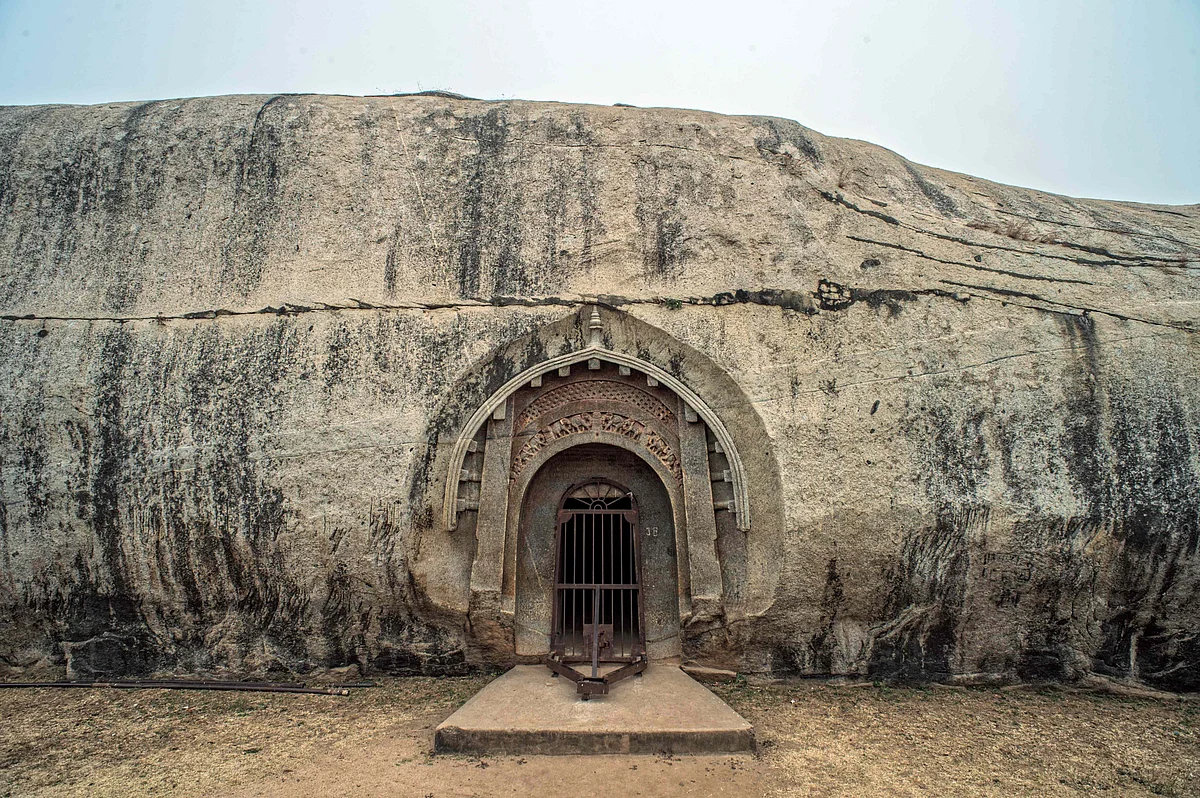
Barabar Caves, located in the hills, are a historical treasure from the 3rd-century BCE Mauryan Empire. Widely regarded as India’s oldest surviving rock-cut caves, they offer a rare glimpse into early architectural innovation.
The four principal caves, Karan Chaupar, Lomas Rishi, Sudama, and Vishwakarma, stand out for their mirror-like polished granite interiors, a technique so refined that it still amazes visitors today. These caves also bear some of the earliest known Brahmi inscriptions, many of which are linked to Emperor Ashoka and the Ajivika sect.
Scholars often describe Barabar as the architectural precursor to later Buddhist and Jain cave complexes in India. Despite its significance, the site has seen limited visitors because of infrastructure and accessibility challenges. This project aims to change that narrative.
Eco-Friendly Infrastructure To Improve Access And Experience
A key focus of the redevelopment is improving the visitor experience without compromising the site’s natural and historical integrity. The plan introduces eco-conscious infrastructure and practical amenities designed for comfort and accessibility.
Two new RCC gateways clad in local sandstone will welcome visitors, while three existing gates are being modernised. Along the ascent, 1.4 kilometres of steep rock-cut steps have been carved and finished in red sandstone, with stainless-steel railings for safety.
Parallel to the vehicular road, a 6-kilometre cobblestone pedestrian pathway is under construction. It will be 1.8 metres wide and feature sandstone shelters every 100 metres, offering shade and rest points for visitors. Decorative lamp posts, benches, gazebos, and landscaping elements will be added regularly to create a more inviting and navigable environment.
Additional facilities include themed rain shelters, clean toilet blocks, souvenir shops, and a mini cafeteria.
Interpretation Centre And Local Livelihood Opportunities
The project also aims to deepen engagement with the site’s history. An Interpretation Centre will present the story of the caves, their Mauryan origins, and their cultural significance in an accessible and engaging format.
A designated vendor zone and eco-cottages are part of upcoming phases, offering local communities opportunities to participate in tourism-driven economic activity. The government has emphasised that residents should benefit directly through roles in guiding, hospitality, and site maintenance.
Large-scale plantation drives featuring indigenous trees such as peepal, banyan, pakad, and fruit-bearing species will enhance the landscape and reinforce ecological balance. Adventure activities are also being considered, though details are yet to be finalised.
As minister Pramod Kumar noted during his inspection, the project is being developed with a dual focus: conservation and community benefit.
Barabar Hills On Bihar’s Expanding Tourism Map
Once completed, the Barabar Hills redevelopment is expected to boost Bihar’s tourism profile. Celebrations will include guided tours, cultural performances, and local exhibitions to introduce the improved site. Improved infrastructure and better storytelling could attract domestic and international travellers seeking heritage experiences beyond the usual circuits.
Officials envision Barabar Hills becoming a regular stop on the state’s tourism map, alongside key destinations like Bodh Gaya and Rajgir.
To ensure a seamless visitor experience, the project is executed in phases, keeping access to the caves largely uninterrupted. Authorities have pushed for faster tendering and weekly progress reviews to keep timelines on track.
For travellers, the promise is simple: a chance to experience one of India’s oldest architectural wonders in a safer, more accessible, and thoughtfully developed setting. Celebratory steps include events, interpretive materials, and enhanced visitor amenities. If delivered as planned, Barabar Hills may finally step out of obscurity and into the spotlight it has long deserved.
FAQs
1. Where are Barabar Hills located?
Barabar Hills are located in the Jehanabad district of Bihar, India.
2. Why are Barabar Caves important?
Barabar Caves are considered India’s oldest surviving rock-cut caves, dating back to the Mauryan period in the 3rd century BCE.
3. What is the Barabar Hills eco-tourism project?
It is a ₹50 crore initiative by the Bihar government to develop the area with eco-friendly infrastructure and improved visitor facilities.
4. What new facilities will be added?
Plans include pathways, signage, shelters, an interpretation centre, cafes, and improved access routes.
5. Who built the Barabar Caves?
Barabar caves are associated with Emperor Ashoka and were used by the Ajivika sect.