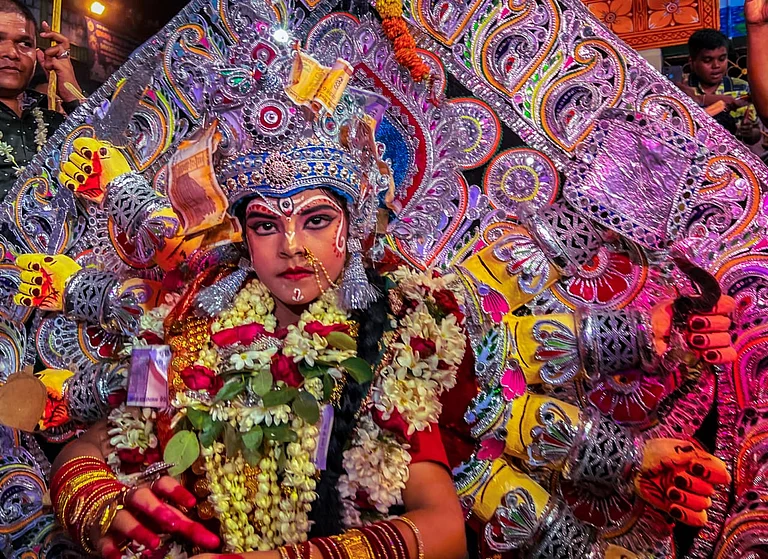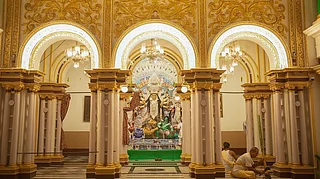


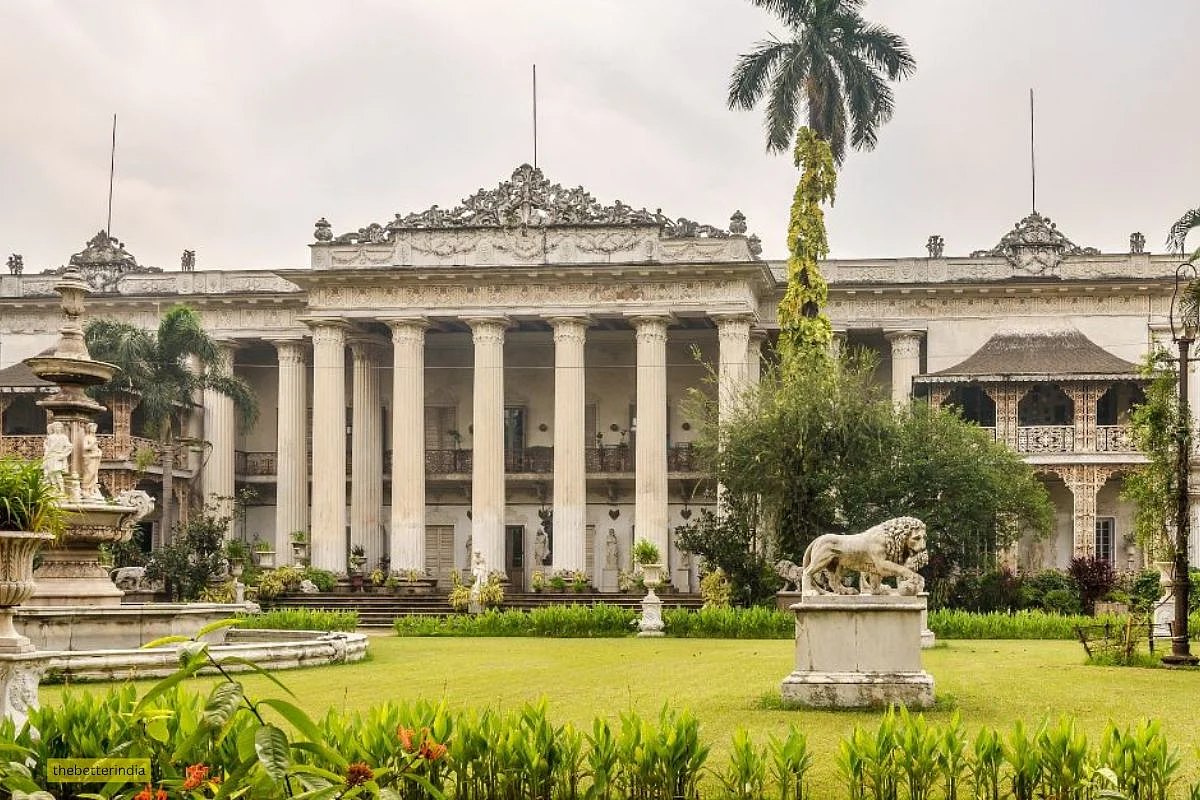
Every July, the grand Marble Palace in Kolkata, home to the illustrious Mullick family, opens its doors to the public for a celebration steeped in tradition, devotion and cultural memory. Although the festivities have been scaled down in the years since the pandemic, the occasion remains deeply significant, drawing neighbours, friends and curious visitors into its fold. At the heart of the gathering is the worship of Lord Jagannath, the family deity who, over generations, has become inseparable from the heritage of the Mullick household.
A Sacred Legacy

Legend has it that the original deity came to the family through a divine apparition, acquired under celestial guidance and installed with instructions that continue to shape the rituals to this day. More than a religious observance, this is a multicultural celebration of Lord Jagannath, bringing together people across communities, faiths and social backgrounds in a shared spirit of reverence.
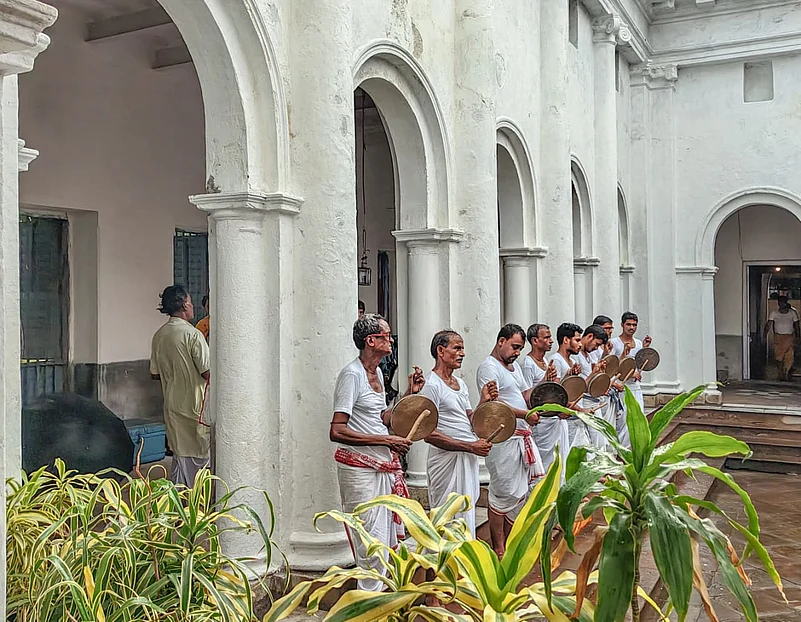
On this day, the palace transforms into a vibrant centre of spirituality and festivity. Outside, a lively fair comes alive with neighbours, local residents and visitors eager to catch a glimpse of the deity. Inside, the mood is one of quiet devotion. In the family temple, Lord Jagannath is worshipped in an intimate setting as candlelit prayers cast a warm glow across the marble interiors. The sound of kirtans fills the air, welcoming priests, family members and guests alike.
Timeless Rituals
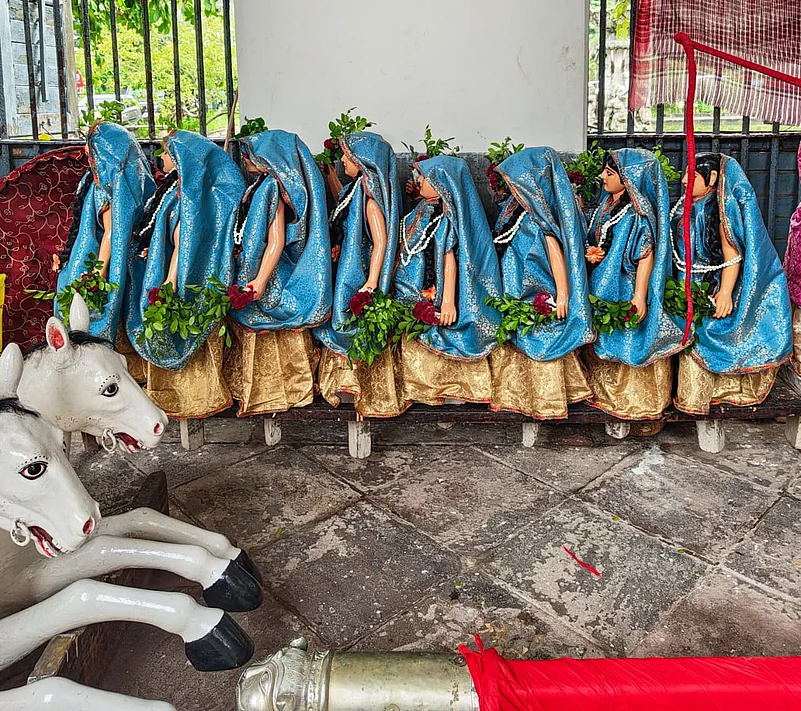
The atmosphere is steeped in reverence, offering a glimpse into the old-world traditions that continue to flourish in the heart of Kolkata. Unlike the grand public Rath Yatras of Puri, the Marble Palace celebration feels deeply personal. Here, it is as though the family deity steps out from his private chambers to offer darshan to the Mullick family and their guests, honouring the wishes of Raja Rajendra Mullick Bahadur, whose legacy continues to guide these rituals.
Adding to the uniqueness of the occasion, the grand chariot is adorned by the gopikas and carries only the family's revered Jagannath deity, reflecting the intimate nature of this long-standing tradition.
A Feast Shared
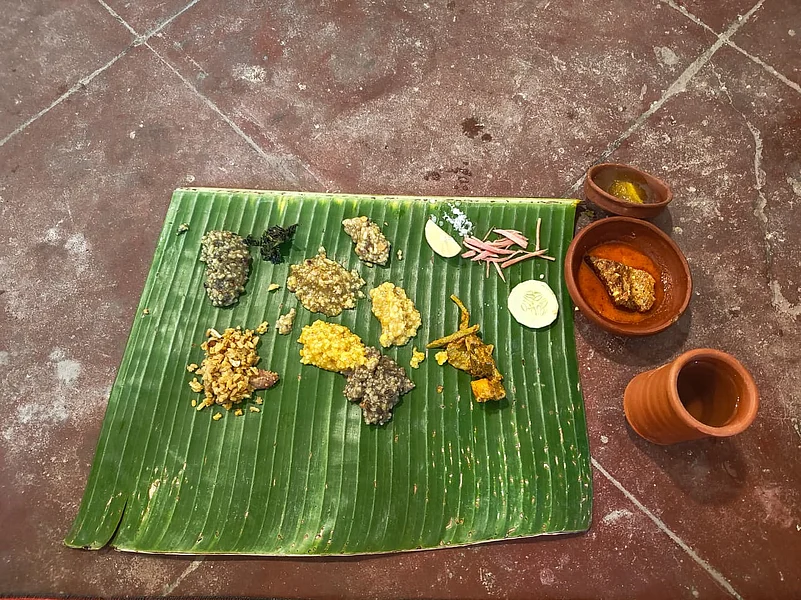
The afternoon brings another cherished ritual: the elaborate bhog. Guests are served nine varieties of khichudi alongside an assortment of vegetarian delicacies, all presented on banana leaves in keeping with tradition. Yet the meal is about far more than culinary heritage.
On this auspicious day, prasad is offered to everyone in attendance, regardless of religion, caste or social background. It is a gesture of inclusivity that has remained central to the celebration for generations, reinforcing the idea that devotion has the power to unite people across boundaries.
The Rath Procession
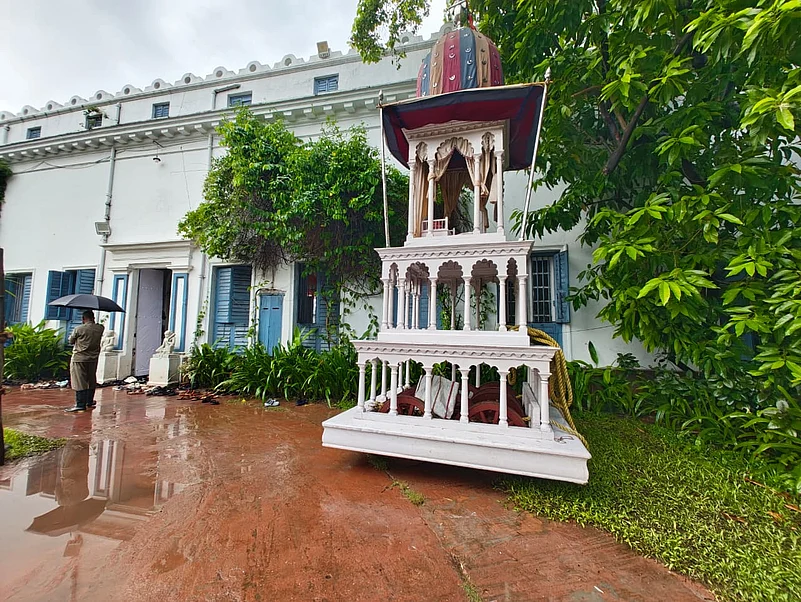
As the warm July evening settles over the city, the celebrations reach their crescendo. Lord Jagannath is ceremonially brought out on his Rath and greeted with great enthusiasm as the chariot moves through the palace grounds. The sight of people from different communities, cultures and walks of life coming together to pull the ropes is both moving and symbolic, representing a shared act of faith and fellowship.
At the end of the procession, the Rath remains stationed while Lord Jagannath is carried back to the temple on a palanquin. The deity's return marks the close of a celebration that seamlessly blends heritage, devotion and community spirit. For the Mullick family, it is the continuation of a treasured legacy; for visitors, it offers a rare insight into Kolkata's layered cultural traditions.
Living Heritage
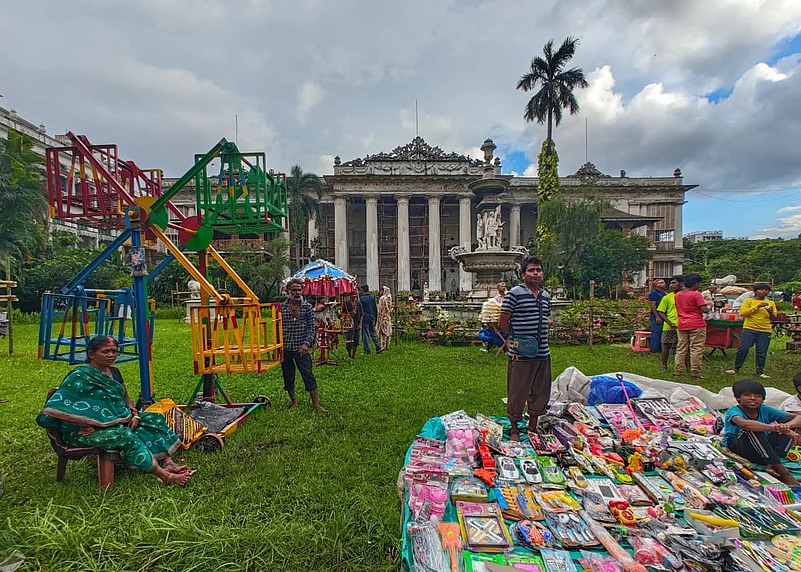
The Marble Palace Rath Yatra is far more than a religious festival. It is a living chronicle of Kolkata's cosmopolitan heritage, where tradition and community continue to thrive side by side. Within the marble halls, rituals become expressions of shared identity, while Lord Jagannath's annual journey serves as a powerful metaphor for unity and collective joy.
In a city celebrated for its cultural richness, this gathering stands as a reminder that faith extends beyond ritual. It is equally about bringing people together, fostering inclusivity and preserving traditions that strengthen communities across generations.
A Traveller's Experience
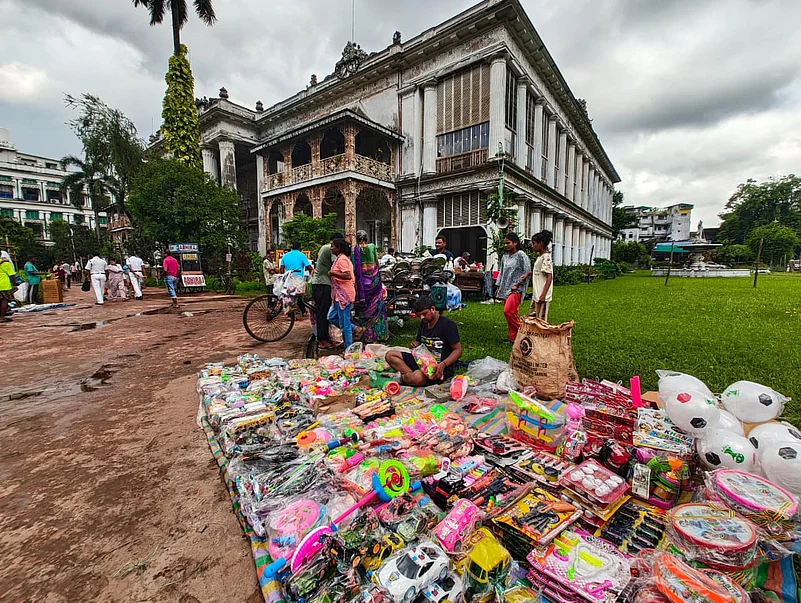
For travellers, the Marble Palace Rath Yatra offers an experience unlike any other. It is an opportunity not only to witness a centuries-old family tradition but also to immerse oneself in the spirit of Kolkata, where heritage and modern life exist in harmony, and where rituals are as much about community as they are about faith. To stand within the Marble Palace on this day is to experience the pulse of a city shaped by layered histories, remarkable openness and enduring cultural continuity.
Ultimately, Lord Jagannath's Rath Yatra at Marble Palace is a story of continuity and renewal. It is about a deity stepping out to meet his devotees, a family honouring generations of tradition and a community coming together in celebration and reverence. It is a reminder that travel is not merely about destinations, but about experiences that connect us with heritage, people and the timeless rhythms of faith and festivity.
FAQs
1. What is the Marble Palace Rath Yatra?
It is the annual Lord Jagannath festival celebrated at Kolkata's historic Marble Palace by the Mullick family.
2. When is the Marble Palace Rath Yatra held?
The festival takes place every July during the annual Rath Yatra celebrations.
3. How is this Rath Yatra different from Puri's?
It is a more intimate, family-led celebration centred on the Mullick family's deity and heritage.
4. Can visitors attend the Marble Palace Rath Yatra?
Yes. The palace welcomes visitors during the festival, allowing them to witness the rituals and celebrations.
5. What are the highlights of the celebration?
The Jagannath procession, devotional kirtans, traditional bhog, community prasad and the heritage setting of Marble Palace.
Sreyashi Ghosh is an independent writer and researcher, an international documentary film maker. Ghosh has decades of writing experiences from travel to food to socio cultural issues and art across major international publications. Having worked at the United Nations HQ she is a social development professional launching her own company on sustainability.
Debmalya Das is a travel and documentary photographer whose work has been featured in renowned international publications. Alongside his creative pursuits, he serves in the Panchayat Administration of the West Bengal Government, travelling to remote corners of India to document stories, cultures, and the human spirit through his lens.