

In Czechia, a wooden puppet has long been more than a character suspended by strings. It has been a travelling storyteller, a vehicle for satire and, at a crucial moment in the country’s history, a keeper of its language. From itinerant performers crossing Bohemian villages to elaborate marionette productions in Prague, Czech puppet theatre has evolved through centuries of cultural change without losing its hold on the national imagination.
The tradition was inscribed on UNESCO’s Representative List of the Intangible Cultural Heritage of Humanity in 2016, jointly recognising puppetry in Czechia and Slovakia. Its significance lies not merely in the artistry of carved figures but in the communities, family histories and theatrical practices that have kept them moving.
When The Stage Came To Town
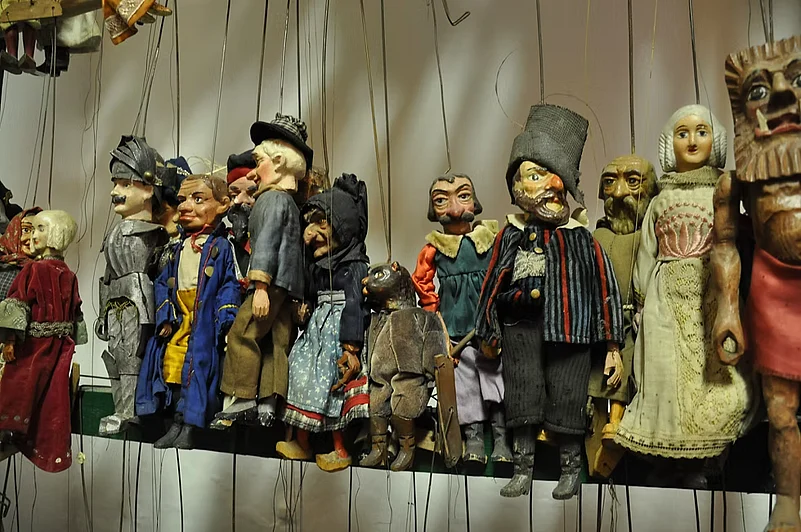

The story stretches back to the 17th century, when travelling theatre companies from England, Italy, the Netherlands and other parts of Europe were bringing marionette performances to the Czech lands. Initially, puppets appeared alongside live actors before gradually developing into a distinct theatrical form. The latter half of the 18th century witnessed a significant shift, when Czech puppeteers began travelling through towns and villages with performances in their own language. Their repertoire included European classics such as Faust and Don Juan, alongside tales of knights, historical figures and comic characters. Entire families often ran these itinerant companies, passing the craft from one generation to the next.
This was especially important given the historical context. Under Habsburg rule, German dominated much of official and urban theatrical life. Puppet performances in Czech offered audiences an alternative, bringing familiar language and stories to village squares, fairs and taverns. During the Czech national revival, these performers came to represent a culture determined to preserve its linguistic identity. Their stages were small, but their cultural influence happened to extend far beyond those stages.
Carved Faces, Living Hands
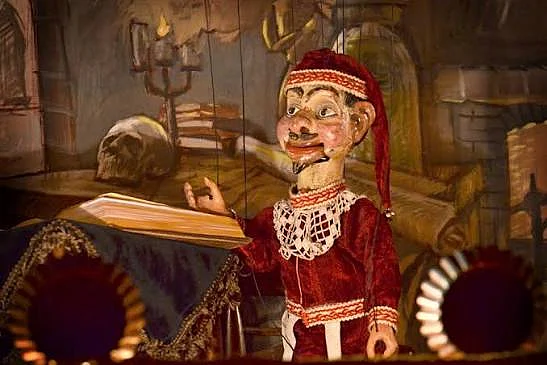
Traditional Czech marionettes are carefully constructed figures whose movements depend on a puppeteer's command of strings, balance and timing. Their expressive faces and often exaggerated features help communicate emotions from a distance, while costumes and stage settings establish the worlds they inhabit.
Historically, one performer might manipulate several puppets and provide every character's voice, switching between personalities while coordinating their movements. The result was a distinctive theatrical language in which stylised gestures and expressive speech compensated for the marionettes' physical limitations. The craft also drew on the visual traditions of Baroque art, particularly religious woodcarving. Over time, puppetry became a meeting point for sculptors, illustrators, designers, writers and performers, each expanding its artistic possibilities.
The Little Theatre That Became A Cultural Force
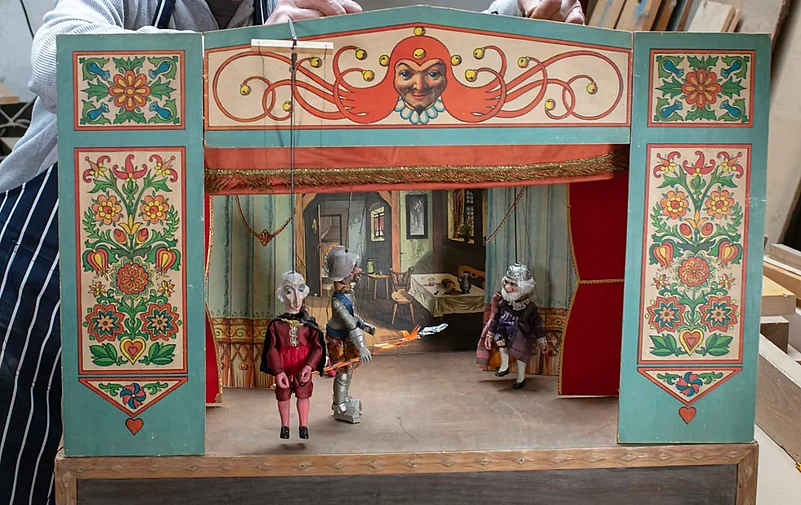
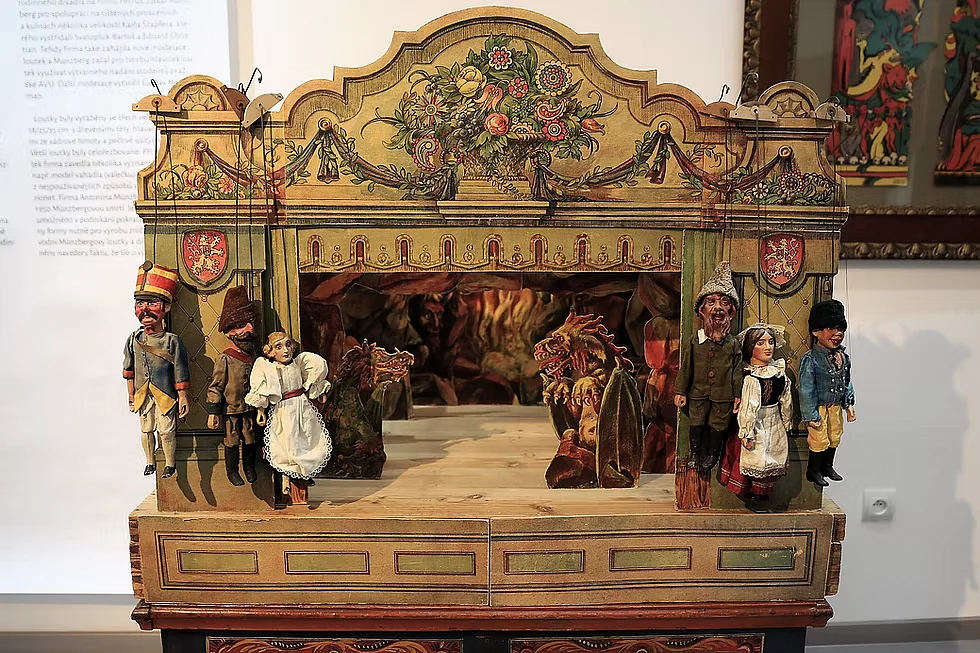
By the 19th century, puppetry was finding another home, which also happened to be the family living room. Small domestic theatres, complete with miniature stages, printed backdrops and sets of characters, became popular. Amateur groups subsequently emerged in schools, community associations and cultural organisations. The movement flourished after Czechoslovakia was established in 1918. By the 1920s, more than 2,000 puppet theatre ensembles were operating across the country, with artists and intellectuals helping transform the medium into an ambitious theatrical art form.
Among its most recognisable creations are Spejbl and Hurvínek, the comic father-and-son duo developed by puppeteer Josef Skupa in Plzeň. First introduced in the 1920s, the characters became enduring favourites, using humour to explore human behaviour and social absurdities. Their popularity helped demonstrate that puppetry could speak to adults as readily as children. The tradition continued to evolve through the 20th century, embracing new approaches to stage design, symbolism and storytelling. Today, professional puppet theatres coexist with amateur companies, keeping the form rooted in both artistic experimentation and community participation.
The Strings Are Still Moving
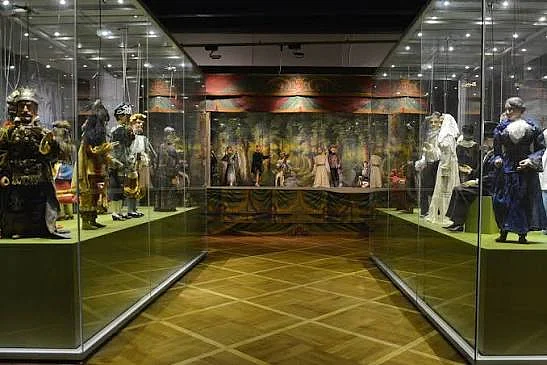
Czechia's puppet heritage can also be encountered beyond the theatre stage. In Chrudim, the Museum of Puppet Cultures houses collections spanning historical travelling performers, family theatres and designs by prominent artists. Plzeň, meanwhile, celebrates its puppetry legacy through a museum dedicated to the craft and its influential creators. In Prague, theatres such as Říše loutek continue the performance tradition, bringing marionettes to contemporary audiences.
In Czechia, puppetry survives not as a preserved curiosity but as a living exchange between maker, performer and spectator. Every carved face carries the mark of a craftsperson, every movement depends on a practiced hand, and every performance renews a relationship between a community and its stories. The strings may be visible, but the cultural inheritance they set in motion is far harder to see, and far more enduring.
FAQs
1. What is the history of puppet theatre in Czechia?
Czech puppet theatre developed through travelling performers, particularly from the 18th century onwards, before becoming an important part of family and community theatre.
2. Why is puppet theatre important to Czech culture?
Puppetry helped preserve Czech language, storytelling and cultural identity, particularly during the Czech National Revival.
3. What are Czech marionettes made of?
Traditional Czech marionettes are generally carved from wood, then painted, dressed and manipulated using strings.
4. Is Czech puppet theatre recognised by UNESCO?
Yes. Puppetry in Czechia and Slovakia was inscribed on UNESCO’s Representative List of the Intangible Cultural Heritage of Humanity in 2016.
5. Where can you experience Czech puppet theatre today?
Czech puppetry continues in theatres, museums and cultural institutions across the country, particularly in Prague, Chrudim and Plzeň.