

Portugal is one of those countries where history is hard to miss. Its old streets, hilltop castles, grand monasteries and medieval towns tell stories of Roman rule, Moorish influence, royal families, religious orders and the Age of Discovery.
For history lovers, the best way to explore Portugal is to go beyond the famous landmarks and understand the stories behind them. From Lisbon’s historic neighbourhoods to the medieval streets of Guimarães, here are five places that deserve a spot on your itinerary.
Lisbon: Where Portugal’s History Comes Alive
Lisbon is a good place to begin a historical journey through Portugal. The capital has seen Roman and Moorish rule, the rise of the Portuguese empire and the devastating earthquake of 1755, all of which have left their mark on the city.
Start in Alfama, Lisbon’s oldest neighbourhood. Its narrow, winding lanes and steep streets still reflect its medieval past. Much of the neighbourhood survived the 1755 earthquake, so walking here offers a glimpse of the city before the disaster. Keep an eye out for remnants of the old Moorish walls as you explore.

On the hill above Alfama is São Jorge Castle, a fortified stronghold with roots going back to the Moorish period. It was captured by King Afonso Henriques during the Siege of Lisbon in 1147 and later served as a royal residence.
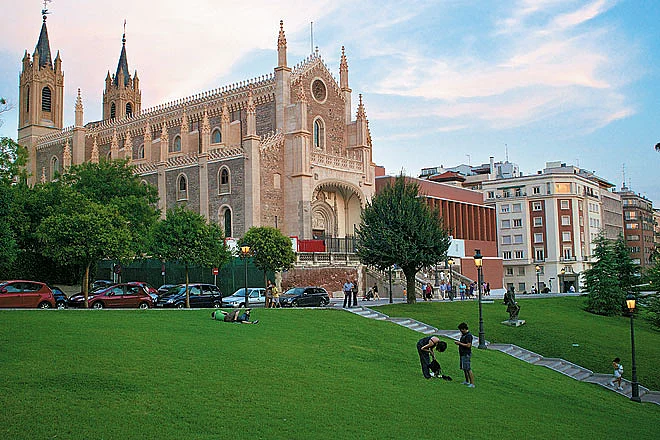
Then head to Belém to see the Jerónimos Monastery and the Belém Tower. Both are striking examples of Manueline architecture, a distinctly Portuguese style associated with the country’s Age of Discovery. Jerónimos Monastery is also the resting place of Vasco da Gama.
Finally, explore Baixa Pombalina, the area rebuilt after the 1755 earthquake. Its orderly grid of streets was a radical departure from Lisbon’s older urban layout. The buildings were also designed with earthquake resistance in mind, making this neighbourhood an important chapter in the history of urban planning.
Sintra: Palaces, Castles And Portuguese Royalty

Just outside Lisbon, Sintra feels completely different. Surrounded by lush hills and a cooler microclimate, it became a favourite retreat for Portuguese royalty and is now a UNESCO World Heritage site.
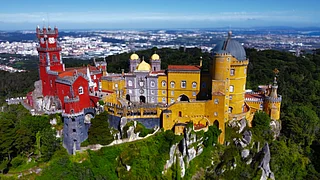
The most famous attraction is the Pena National Palace, built in the 19th century for King Ferdinand II. Its bright colours and mix of Neo-Gothic, Neo-Manueline, Neo-Islamic and Neo-Renaissance elements make it one of Portugal’s most recognisable landmarks.
For something much older, visit Castelo dos Mouros. Built in the 8th and 9th centuries, the hilltop fortress served as an important military outpost during the Reconquista, a series of military campaigns by Christian Kingdoms. Walking along its stone ramparts is as much about the views as it is about the history.
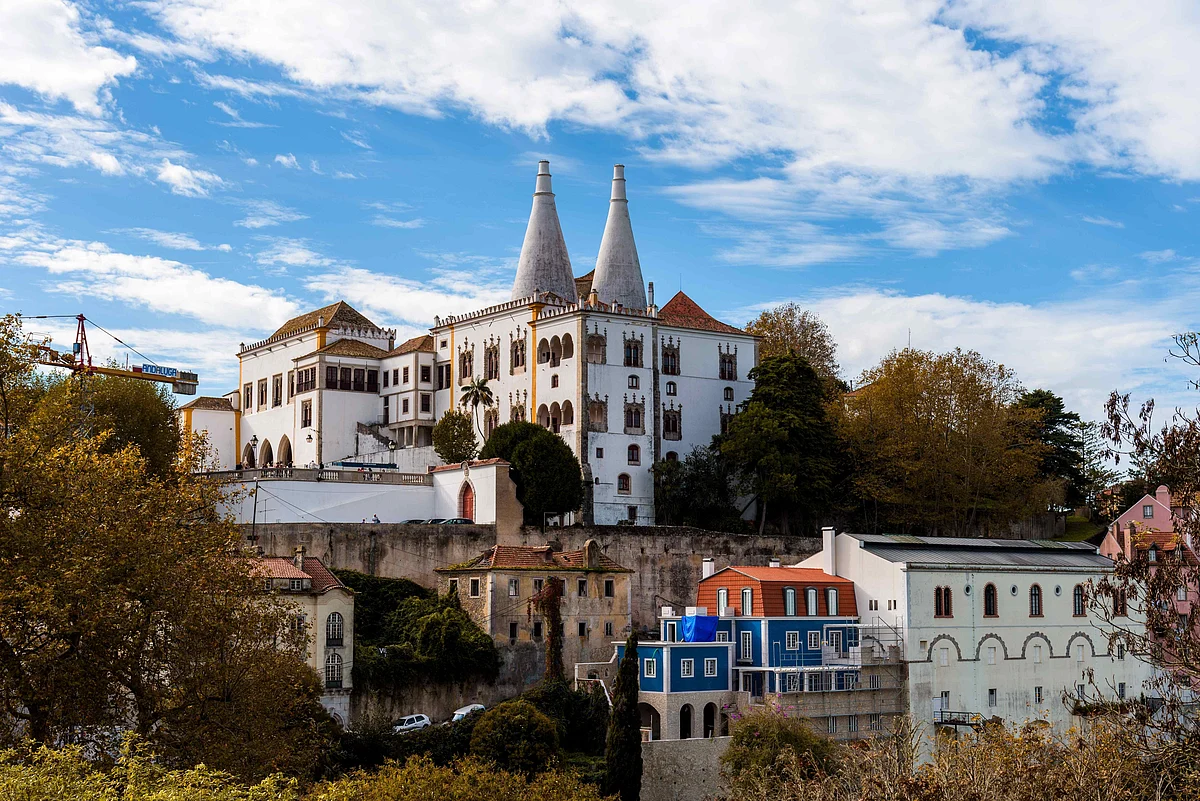
The Sintra National Palace offers another perspective. It was a royal residence for centuries and is particularly known for its enormous twin chimneys and collection of Mudéjar azulejos, or glazed tiles influenced by Moorish design.
Évora: A Walk Through Roman And Medieval Portugal
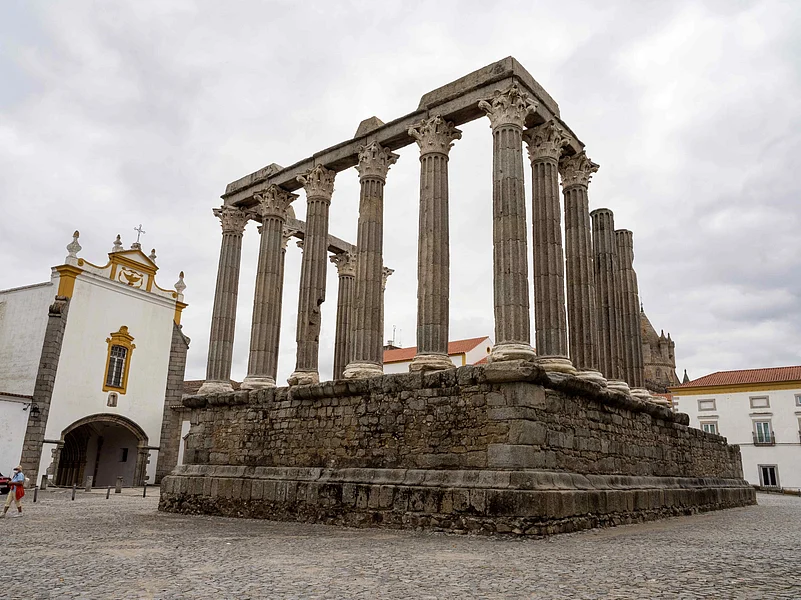
If you want to see how different periods of Portuguese history sit alongside one another, head to Évora in the Alentejo region. Surrounded by historic walls, the city is almost like an open-air museum.
The Roman Temple of Évora is one of the city’s most recognisable sights. Dating to the 1st century CE, it has remarkably well-preserved Corinthian columns. It is often called the Temple of Diana, although that name is not historically certain.
Nearby is Évora Cathedral, a massive medieval building that combines Romanesque and Gothic elements. Its fortress-like appearance reflects the defensive character of medieval architecture.
The most unusual stop is the Chapel of Bones, inside the Church of St Francis. Built by Franciscan monks in the 17th century, the church has walls and pillars decorated with the bones of thousands of people. It is a sombre but fascinating reminder of how earlier societies viewed death and mortality.
Tomar: Follow The Story Of The Templars
For anyone fascinated by knights, secretive religious orders and medieval fortresses, Tomar is a must-visit. The town was founded in 1160 by Gualdim Pais, Grand Master of the Knights Templar, a powerful Catholic military order in Portugal.
The main attraction is the Convent of Christ, a huge complex that began as a Templar stronghold. After the Knights Templar were dissolved in Europe in 1312, Portugal transformed the order into the Order of Christ, allowing its religious and political legacy to continue.
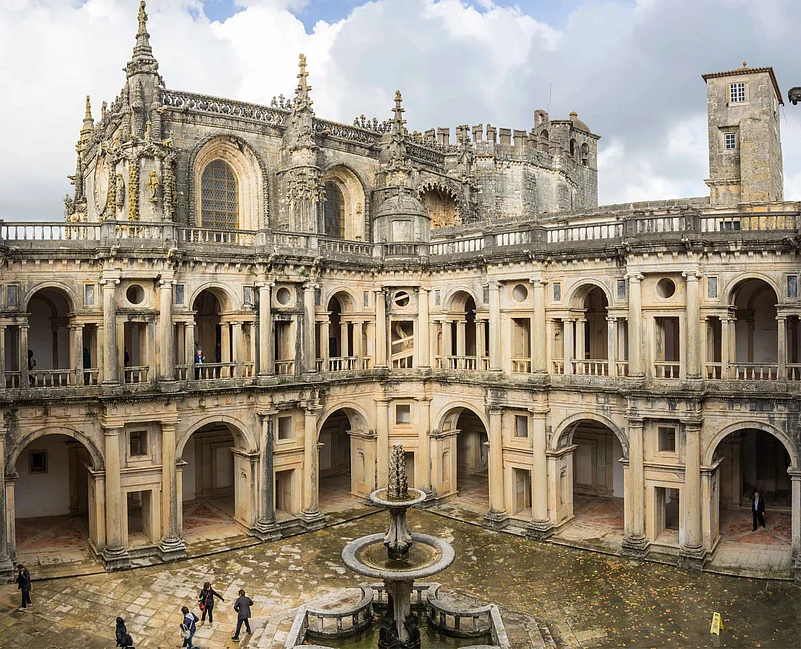
At the heart of the complex is the Charola, a remarkable 12th-century round church inspired by the Church of the Holy Sepulchre in Jerusalem. The complex also contains one of Portugal’s most famous Manueline features: the intricately carved Manueline Window, filled with maritime symbols. Give yourself plenty of time to explore the convent’s cloisters, corridors and rooms.
Guimarães: Where Portugal’s Story Begins
Often called the Cradle of the Nation, Guimarães is one of Portugal’s most important historic cities. It is closely associated with Afonso Henriques, who became Portugal’s first king.
Begin at Guimarães Castle, whose origins date to the 10th century. It was built to defend the area and later became closely connected with Portugal’s founding story.
A short walk away is the Palace of the Dukes of Braganza, a 15th-century residence influenced by Burgundian architecture. Its tall brick chimneys are particularly striking.
Do not rush through the historic centre either. The narrow lanes, granite buildings, traditional houses and atmospheric squares make Guimarães one of the best places to simply walk around and soak up Portugal’s medieval character.
Planning A History-Focused Trip

These five destinations offer very different sides of Portugal’s past. Lisbon is about empire and rebuilding, Sintra about royalty and Romanticism, Évora about ancient and medieval history, Tomar about the Templars, and Guimarães about the origins of the Portuguese nation.
If you have limited time, Lisbon and Sintra make an easy combination. With a longer itinerary, add Évora, Tomar, and Guimarães to see how Portugal’s story stretches from Roman times through the medieval period to the Age of Discovery.
And wherever you go, leave some time simply to walk. In Portugal, some of the most interesting pieces of history are not behind museum doors but tucked into old streets, stone walls, tiled façades and quiet squares.
FAQs
1. What are the best places in Portugal for history buffs?
Lisbon, Sintra, Évora, Tomar and Guimarães are five excellent destinations for exploring Portugal’s history.
2. Which city in Portugal is best for history lovers?
Lisbon is a good starting point, with historic neighbourhoods, castles, monasteries and landmarks connected to Portugal’s royal and maritime history.
3. Where can you see Roman history in Portugal?
Évora is one of the best places to explore Roman history, particularly at the Roman Temple, which dates to the 1st century CE.
4. Where can you learn about the Knights Templar in Portugal?
Tomar is closely associated with the Knights Templar and is home to the Convent of Christ, which began as a Templar stronghold.
5. Which place in Portugal is known as the Cradle of the Nation?
Guimarães is often called the Cradle of the Nation and is closely associated with Afonso Henriques, Portugal’s first king.