A tiger sighting can fill a safari jeep, bring guests to a jungle lodge, and generate business for an entire tourism network. But how much of that money reaches the villages around the forest? India's wildlife tourism industry has long struggled with this question. A 2021 study published in "Annals of Tourism Research Empirical Insights," based on 224 households around Ranthambhore National Park, found that tourism development had failed to provide tangible livelihood benefits to the local population. The researchers noted that larger private operators, often from outside the region, captured much of the economic benefit, leaving residents feeling alienated.
How Pugdundee Safaris Is Bringing Local Communities Into India's Wildlife Tourism Economy
Can safari tourism benefit the people who live alongside India's forests? Pugdundee Safaris is building its model around local employment, skills training, and responsible wilderness experiences

Advertisement
It is a problem that responsible wildlife tourism cannot afford to overlook. Employment, access to training and a greater share of tourism-related income for people living around protected forests are essential to making conservation economically relevant to them.
Pugdundee Safaris, which operates seven jungle lodges across Central India, has built much of its business around this idea. The company says more than 70 per cent of its workforce comprises local residents, several of whom have progressed into senior positions. It also runs naturalist training programmes, employs women as wildlife interpreters and is working towards a carbon-neutral target by 2028.
In a conversation with Outlook Traveller, Manav Khanduja, director of Pugdundee Safaris, discussed the company's beginnings, its approach to community participation, the changing nature of safari experiences and the challenges of making its operations more sustainable.
A Safari Business Built Around The Forest
Pugdundee Safaris did not begin as a large hospitality operation. Its origins go back to 1986, when a small tented camp was established in Panna. A lodge in Bandhavgarh followed, and the company subsequently expanded to Kanha. While working on its third lodge, the founders began considering a common identity for the properties.
Advertisement
That was how Pugdundee Safaris took shape as an umbrella brand in 2011. The ambition was to extend the business beyond accommodation and conventional jeep safaris, bringing together walking expeditions, cycling through forest buffer zones, mobile camps, naturalist training, and conservation activities.
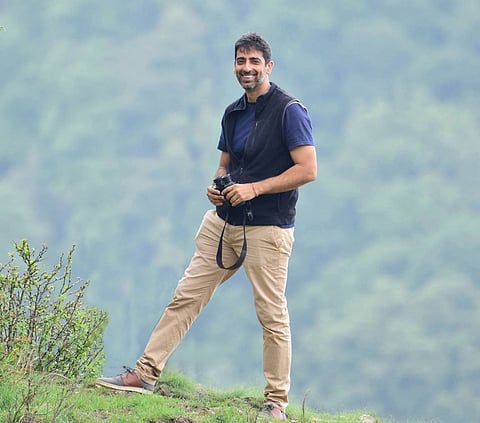
Manav Khanduja, director, Pugdundee Safaris Supplied
"We started with a small tented camp and later went on to open a lodge in Bandhavgarh. It was while we were working on our third lodge, in Kanha, that we conceived the idea of an umbrella brand," Khanduja said.
The distinction is significant. A jungle lodge depends on its surrounding landscape for its appeal, but the business also operates within a larger social and ecological setting. Its relationship with nearby villages can influence employment, sourcing, local attitudes towards wildlife and, ultimately, the prospects for conservation.
For Pugdundee, local employment is one of the principal ways to build that relationship.
Can Local Employment Translate Into A Fairer Share Of Tourism?
Advertisement
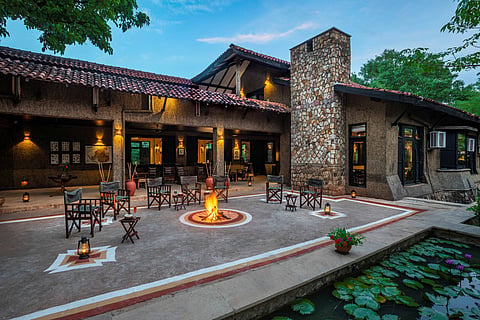
Kings Lodge in Bandhavgarh Supplied
Pugdundee Safaris operates seven jungle lodges across Central India: Kanha Earth Lodge in Kanha, Denwa Backwater Escape in Satpura, Pench Tree Lodge in Pench, Kings Lodge and Tree House Hideaway in Bandhavgarh, Ken River Lodge in Panna, and Waghoba Eco Lodge in Tadoba. Its portfolio also includes Red Panda Outpost, a six-room eco-tourism homestay in Jaubari, Nepal, near Singalila National Park.
More than 70 per cent of Pugdundee's employees are local residents, according to Khanduja. The company conducts training programmes to develop their skills, with several employees now managing departments and occupying senior positions.
"Many are also now part of the senior team and lead independent departments," he said.
Pugdundee also sources more than 70 per cent of the services and supplies required across its lodges locally. Its farm-to-table initiatives bring together produce from organic kitchen gardens and purchases from nearby farmers. The company has also extended its community engagement to local schools, supporting education and infrastructure development in villages around its properties.
Advertisement

Farm dinner at Pench Tree Lodge Supplied
These are important interventions in a sector that can generate substantial business without necessarily distributing its benefits evenly. Research on wildlife tourism in India has repeatedly pointed to the gap between the economic activity generated by protected areas and the share reaching neighbouring communities.
The company's emphasis on training is also visible in its Professional Naturalist Training Programme, PRONAT, conducted with Wildlife Forestry Services since 2018. Pugdundee's website reports that more than 140 participants have graduated from the programme. The 21-night course combines classroom instruction with practical learning in the wilderness, preparing participants for possible careers as professional naturalists and nature guides.
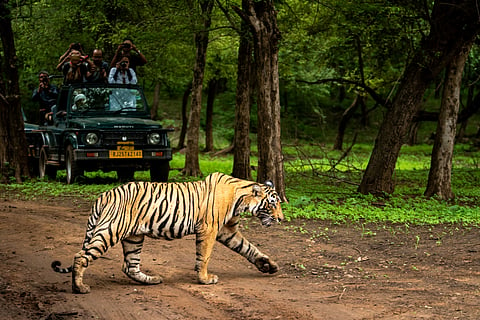
A safari spots a tiger at Ranthambore National Park Shutterstock
For the industry, this is a particularly important skill set. Naturalists do more than locate wildlife for visitors. They interpret animal behaviour, explain the relationships between species, and help travellers understand habitats that might otherwise be reduced to a checklist of tiger sightings.
Women Are Finding A Place In The Naturalist Profession
Advertisement
One of the more interesting aspects of Pugdundee's employment model is its effort to bring more women into wildlife interpretation and guiding.
The company currently employs seven women naturalists, Khanduja said. Several entered the profession through PRONAT, while others came with different academic and professional backgrounds.
Deepa Rakshana, a naturalist at Kanha Earth Lodge, trained as an architect before joining the programme four years ago. Moksha at Pench Tree Lodge followed a similar route. Shaheen at Waghoba Eco Lodge, meanwhile, came with an academic background in wildlife.
Shaheen, also known as Shaik Shaheen, received the Lodge Naturalist of the Year award at the TOFTigers Awards 2025. The recognition placed her among the year's recognised wildlife interpreters in India's lodge sector.
Taking The Safari Beyond The Jeep
The conventional jeep safari remains a major draw at India's tiger reserves, but wildlife travellers are increasingly showing interest in experiences that allow them to spend more time understanding the forest. Pugdundee has been responding with walking safaris, cycling expeditions, and mobile camps.
Advertisement
Khanduja said the shift reflected a change in what guests expected from wildlife holidays. "As wildlife tourism matures, guests are increasingly looking for experiences beyond jeep safaris. They want to connect more deeply with the forest and the people of the land."
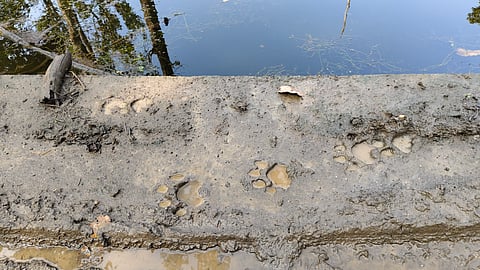
Fresh pug marks on mud, Pench National Park Anwesha Santra
A walking safari changes the nature of the experience. Visitors can examine pugmarks, scratch marks on trees, medicinal plants, insects and birdlife, while naturalists explain how different elements of the ecosystem interact. The absence of a vehicle engine and the constant movement between potential sightings also gives naturalists more time to interpret the forest.
But taking visitors on foot or setting up camps in forest landscapes requires careful management. Pugdundee limits its cycling and mobile-camping groups to eight to ten people. Khanduja said the camps were staffed by locally trained teams and followed strict cleaning and waste-management protocols. Teams were expected to leave campsites in better condition than they had found them.
Advertisement
There is also a regulatory dimension. The National Tiger Conservation Authority's tourism guidelines call for visitor limits based on the carrying capacity of individual habitats, monitoring of tourism's impact on wildlife and community-based tourism strategies that ensure long-term local benefits. Group-size restrictions are one part of responsible operation, but regular ecological monitoring is necessary to establish whether these activities are having the intended low impact.
The Road To Carbon Neutrality By 2028
Pugdundee's environmental commitments extend to its lodge operations. The company has adopted solar net metering to reduce its dependence on conventional electricity and has set a carbon-neutral target for 2028.
Khanduja identified solar power as the biggest operational change towards this goal. He put the current contribution of solar energy at approximately 70 per cent of the company's energy requirements. Reaching 100 per cent, he said, had been difficult because of existing electricity department regulations.
Pugdundee has also incorporated vernacular architecture, native planting around its lodges, reduced use of single-use plastic and locally sourced food into its operations. These measures address different aspects of the environmental impact of running a jungle lodge, from construction and landscaping to everyday consumption.
Advertisement
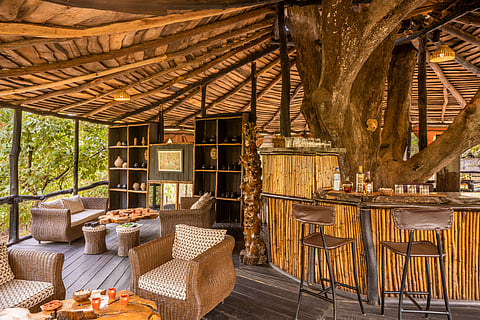
Inside a Tree House by Pugdundee Safaris Supplied
But the real measure of responsible wildlife tourism lies in what it leaves behind. Local employment must translate into better livelihoods, training must open up long-term career paths, and conservation must involve the people who live alongside these forests. For Pugdundee, bringing local residents into its workforce, creating opportunities for women naturalists and working with nearby farmers are steps towards that goal. The challenge will be to demonstrate how these initiatives translate into lasting benefits for the communities and landscapes around its lodges.
"Our goal is to send every guest back as an ambassador for wildlife and conservation," Khanduja said. That ambition will carry greater weight when the people who call these forests home are also active participants in protecting them and share in the benefits that wildlife tourism generates.
FAQs
1. What is Pugdundee Safaris known for?
Pugdundee Safaris is a wildlife hospitality company operating jungle lodges across Central India. It offers wildlife experiences including jeep safaris, walking expeditions, cycling trips and mobile camps, alongside naturalist training and conservation initiatives.
Advertisement
2. How does Pugdundee Safaris support local communities?
More than 70 per cent of Pugdundee's workforce comprises local residents. The company also trains local employees, sources products and services from nearby communities, works with local farmers and supports education initiatives.
3. Does Pugdundee Safaris employ women naturalists?
Yes. Pugdundee Safaris has seven women naturalists who lead guests on wildlife safaris and nature experiences. Some have entered the profession through its PRONAT naturalist training programme.
4. What is the PRONAT programme by Pugdundee Safaris?
PRONAT is Pugdundee's professional naturalist training programme, conducted with Wildlife Forestry Services. It combines theoretical learning and practical forest experience to prepare participants for careers in wildlife interpretation and guiding.
5. What are Pugdundee Safaris' sustainability goals?
Pugdundee Safaris is working towards carbon neutrality by 2028. Its initiatives include solar energy adoption, local sourcing, native planting around lodges, reduced single-use plastic and responsible waste management.
Advertisement
Published At: